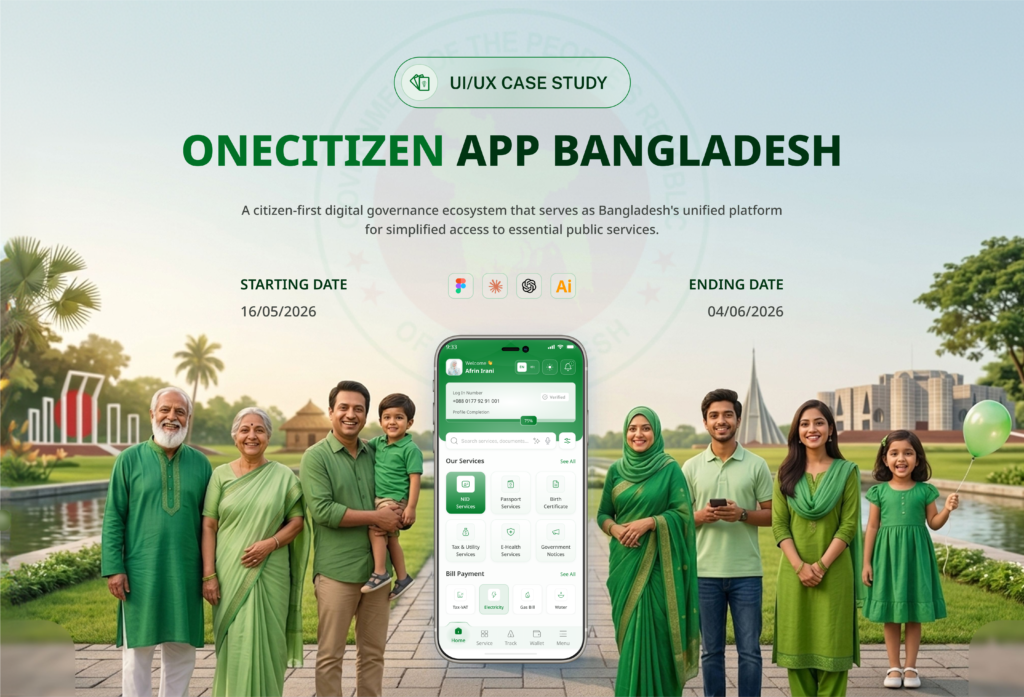
One Citizen app
Tools



Platform
Mobile application
Industry
Government Service
Duration
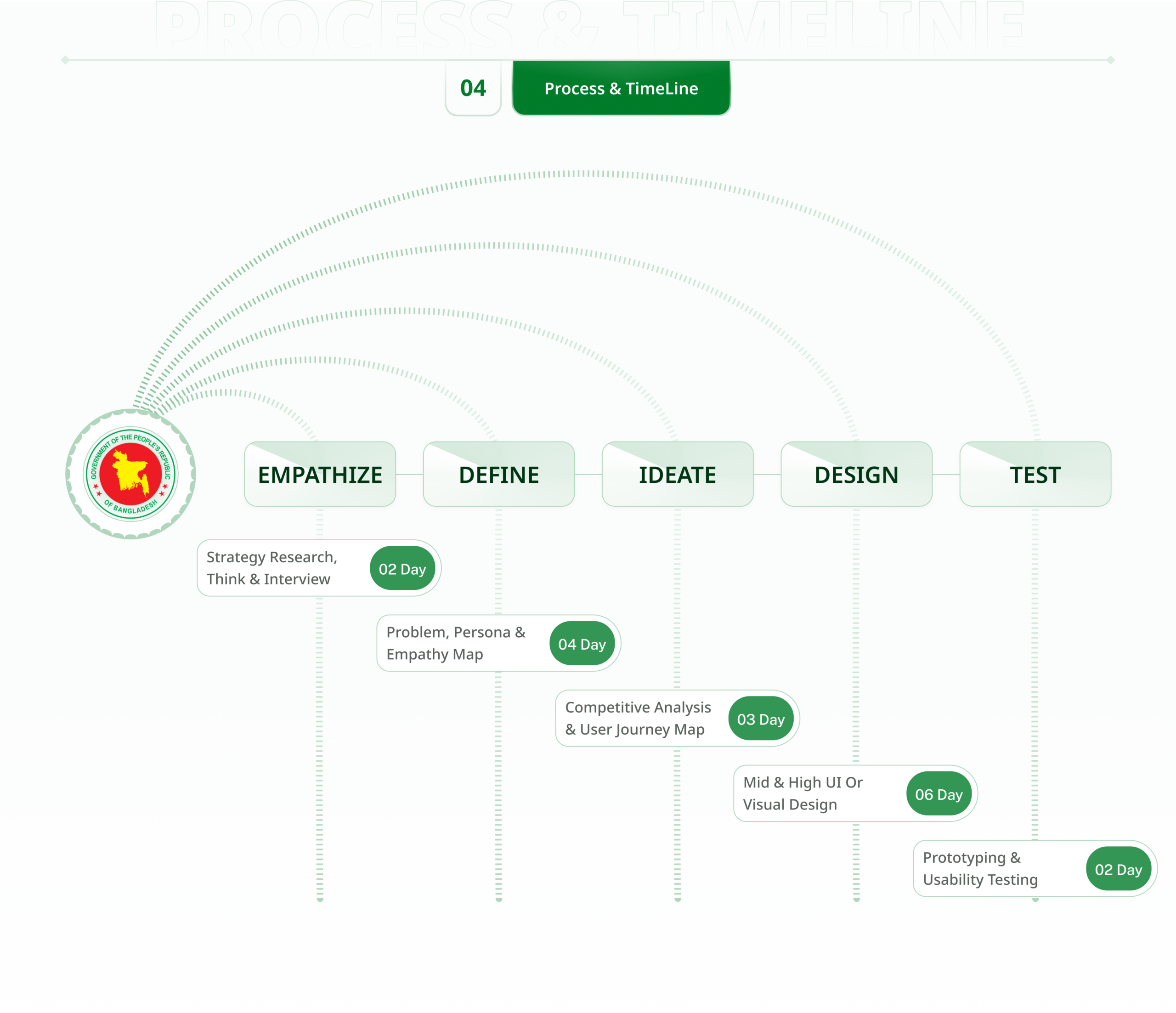
16 May 2026 – 4 June 2026 (approx. 3 weeks)
OVERVIEW
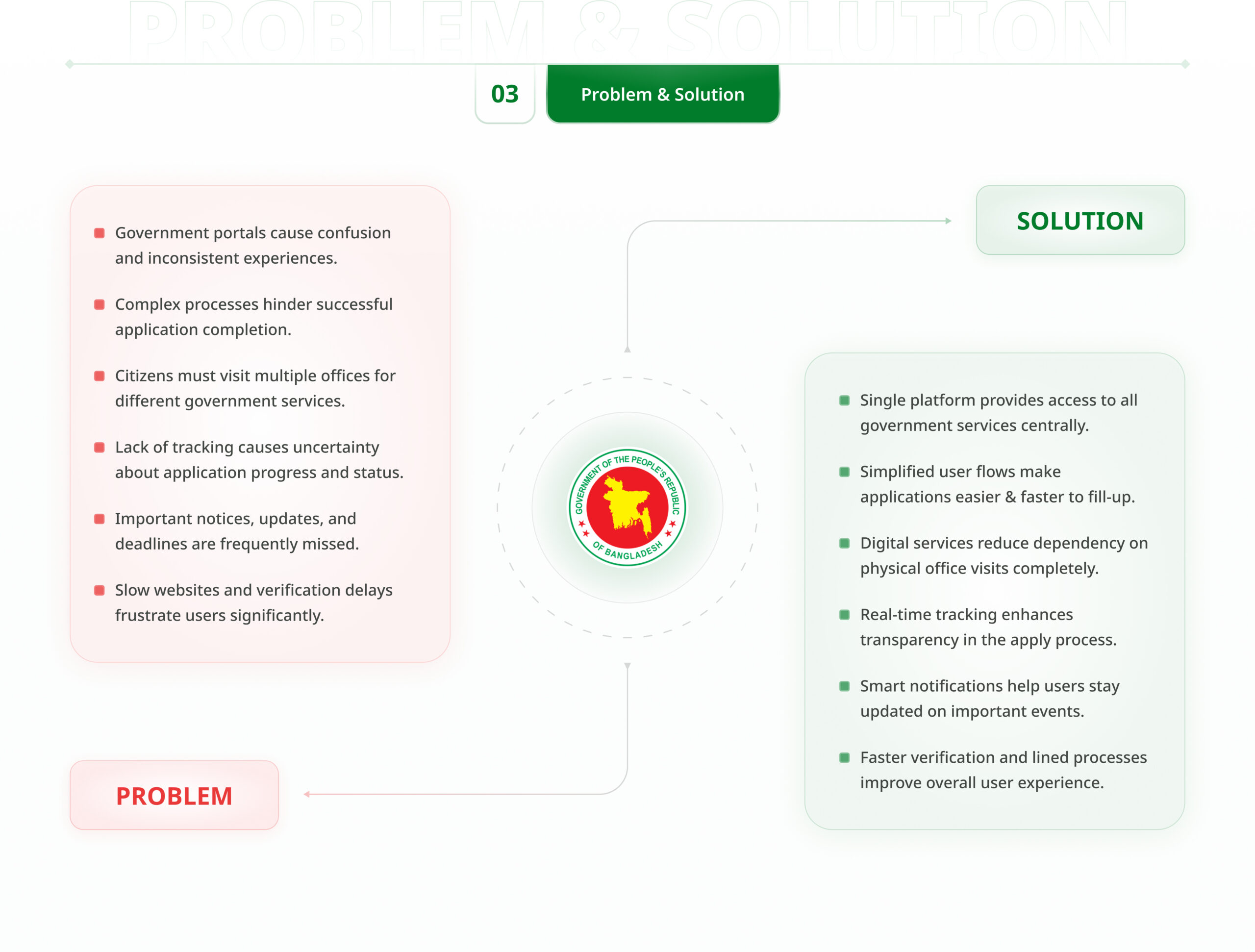
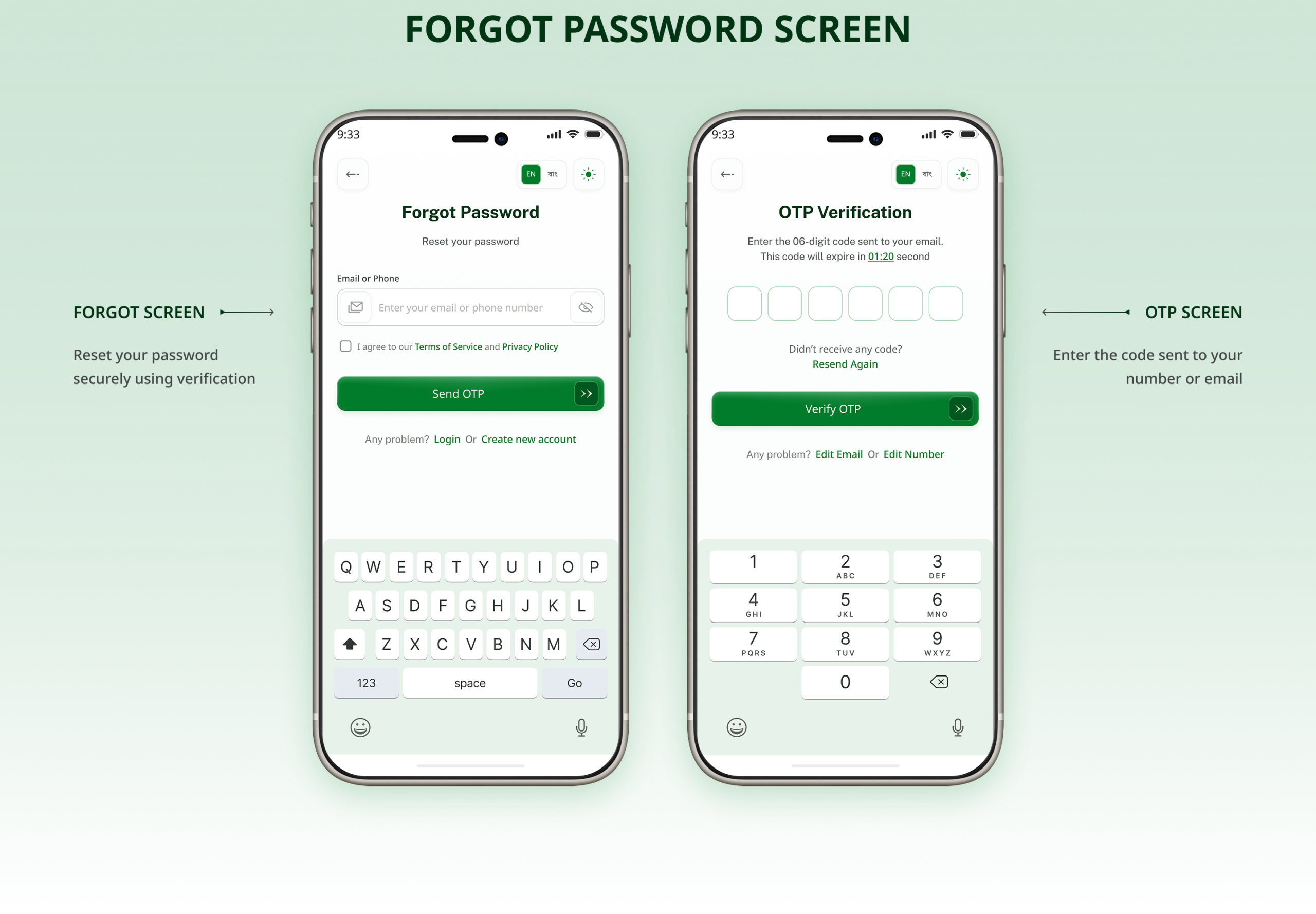
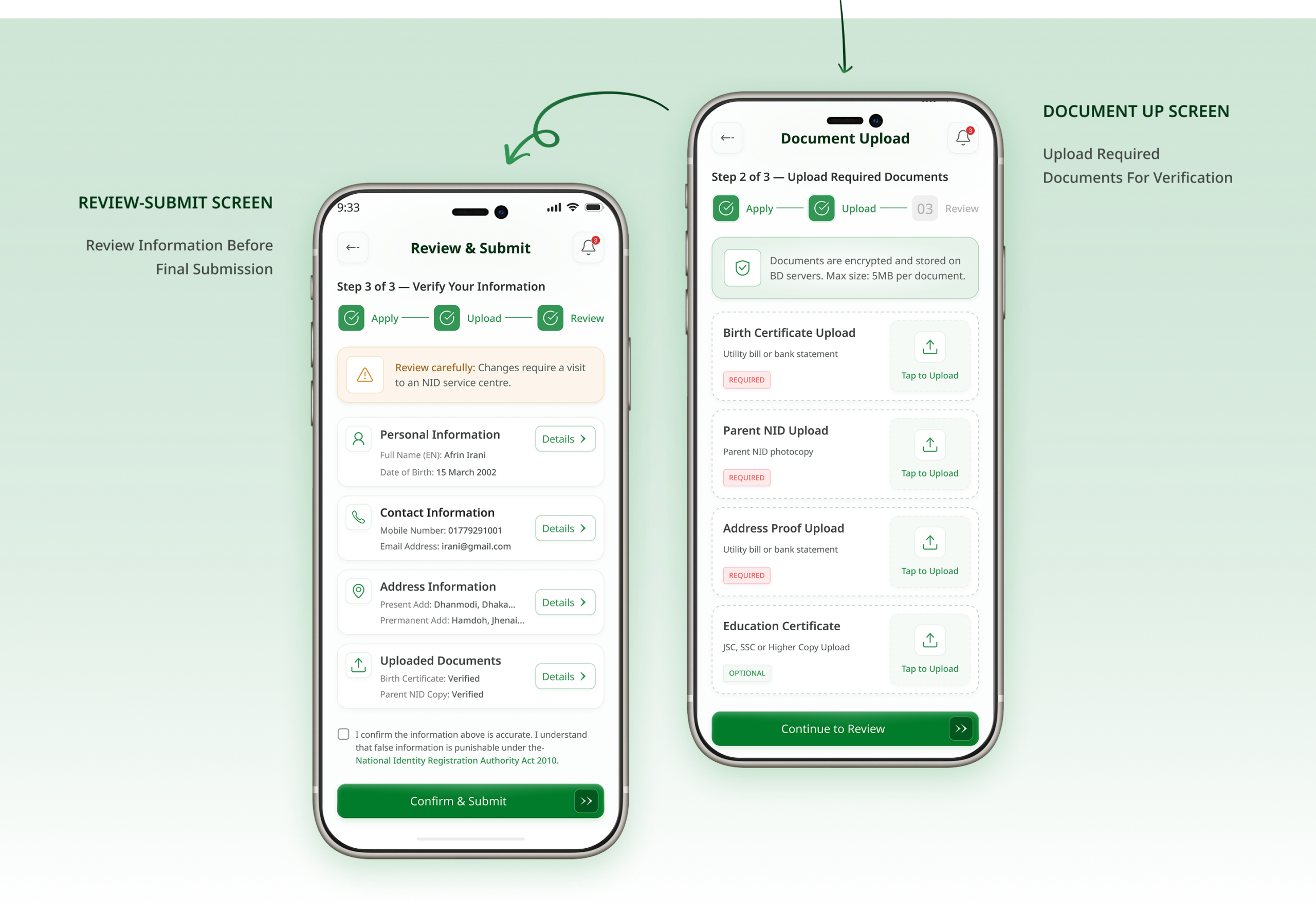
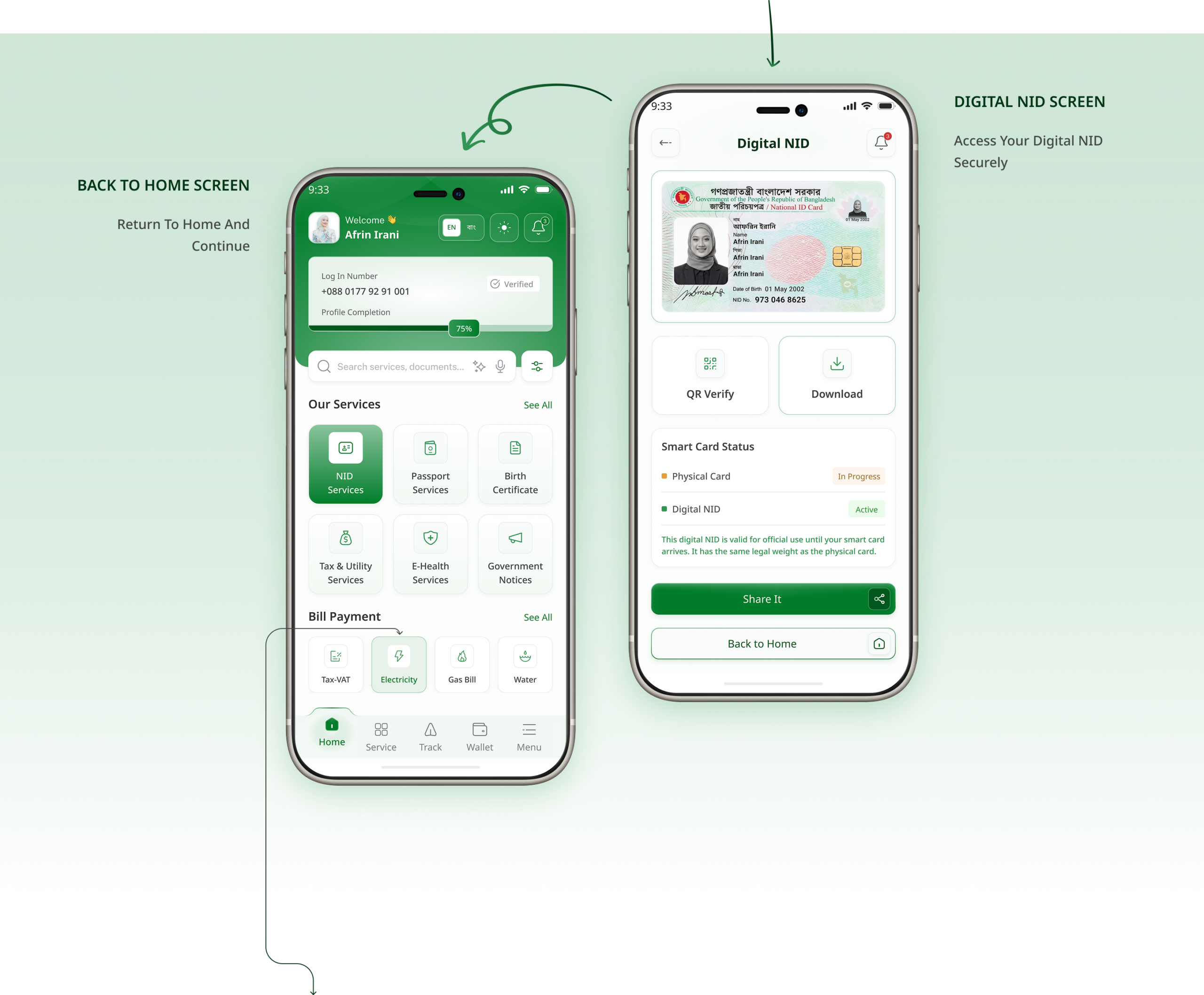
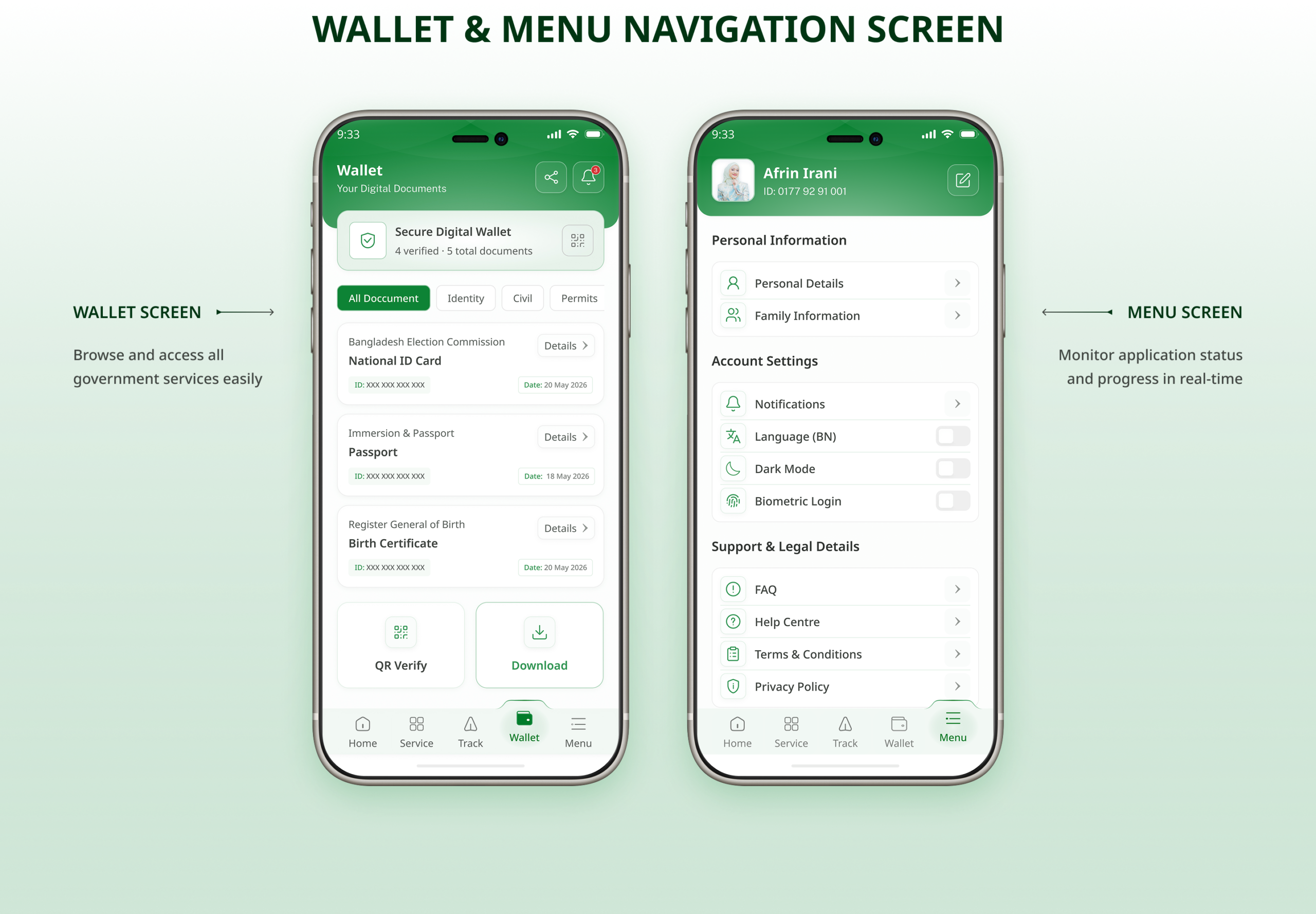
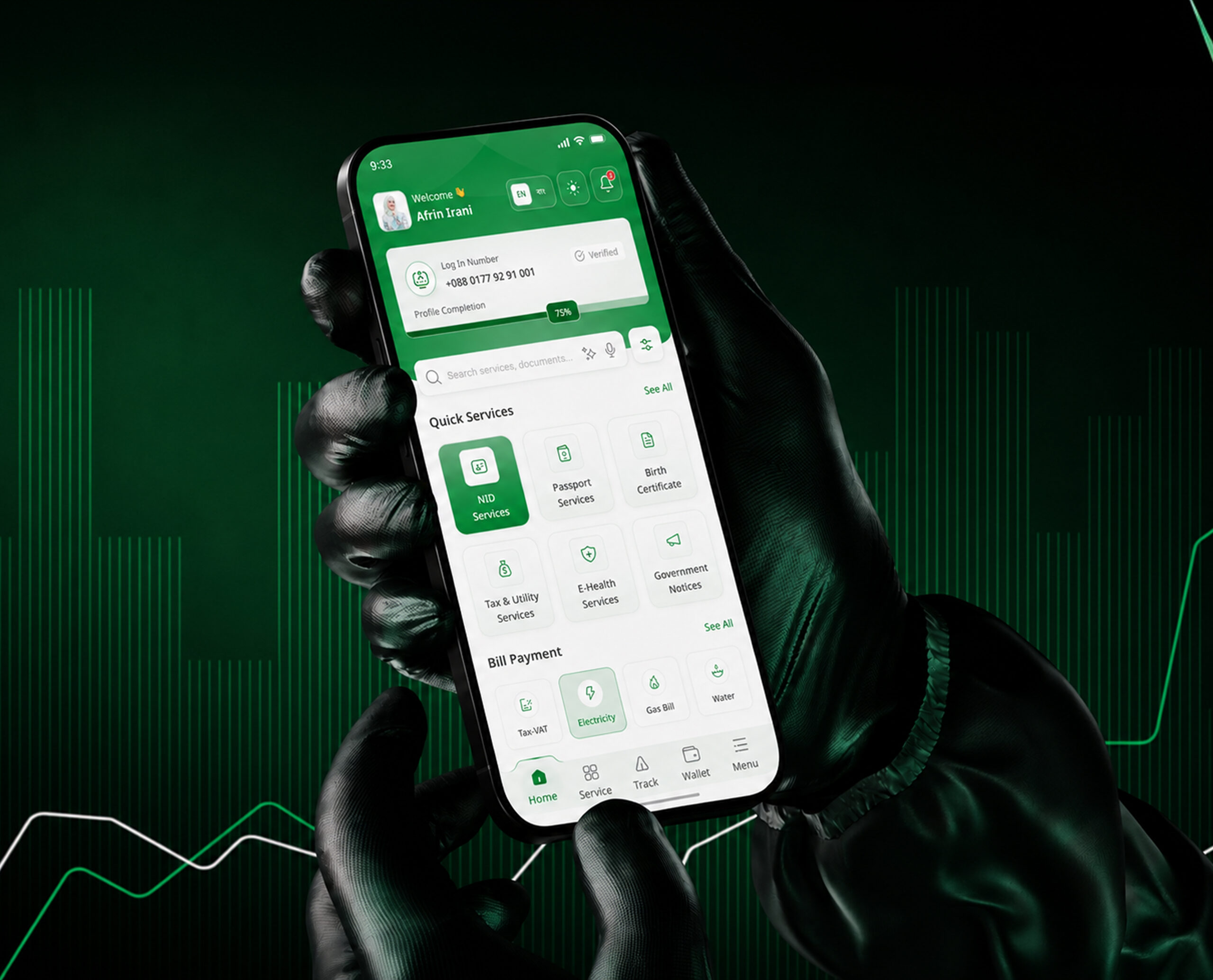
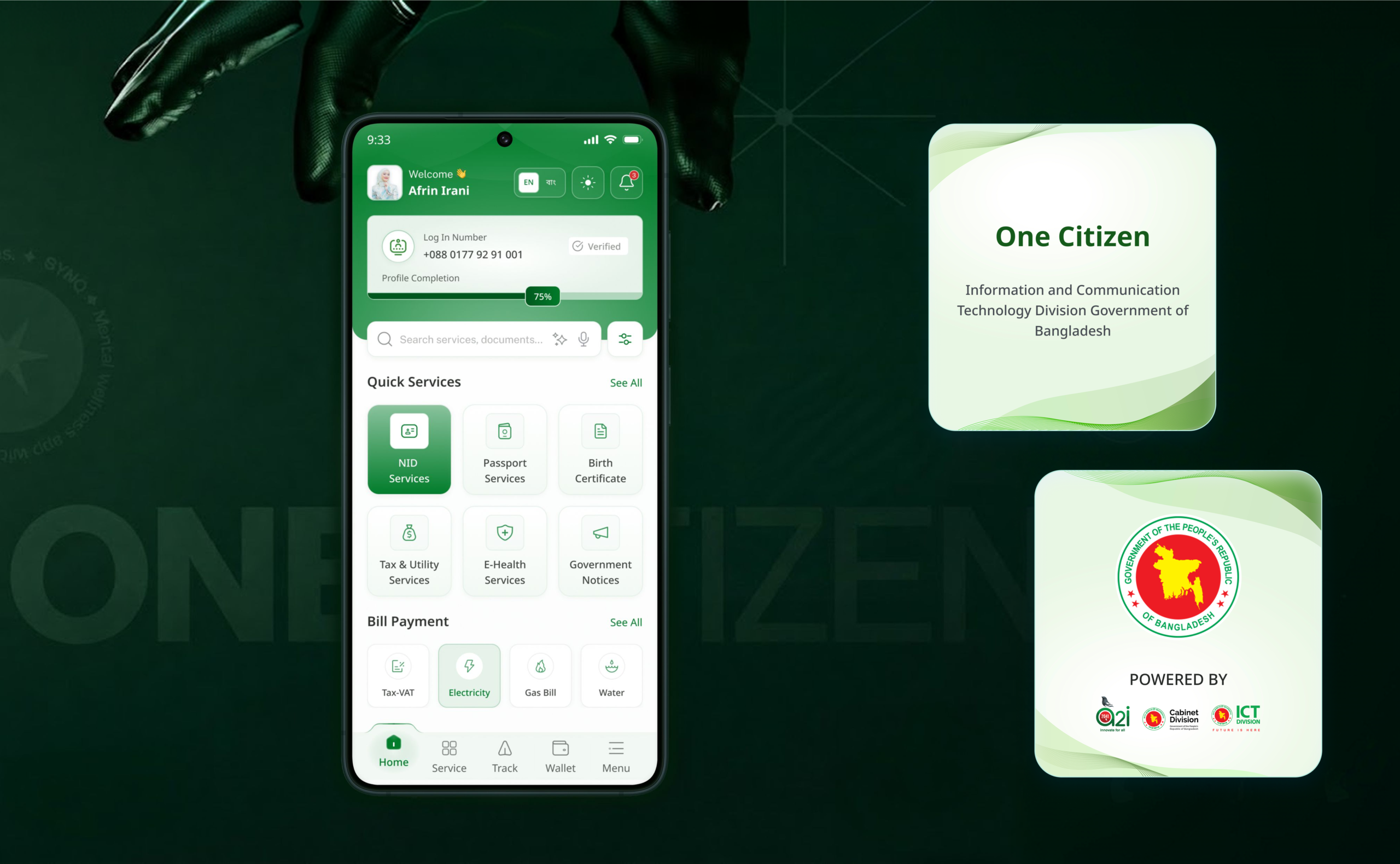
OneCitizen BD is a unified government service platform designed to simplify how citizens in Bangladesh access public services. Today, essential services — NID, Passport, Birth Certificate, Utility Payments, and Health Services — are scattered across multiple websites and offices, creating confusion and inefficiency for users.
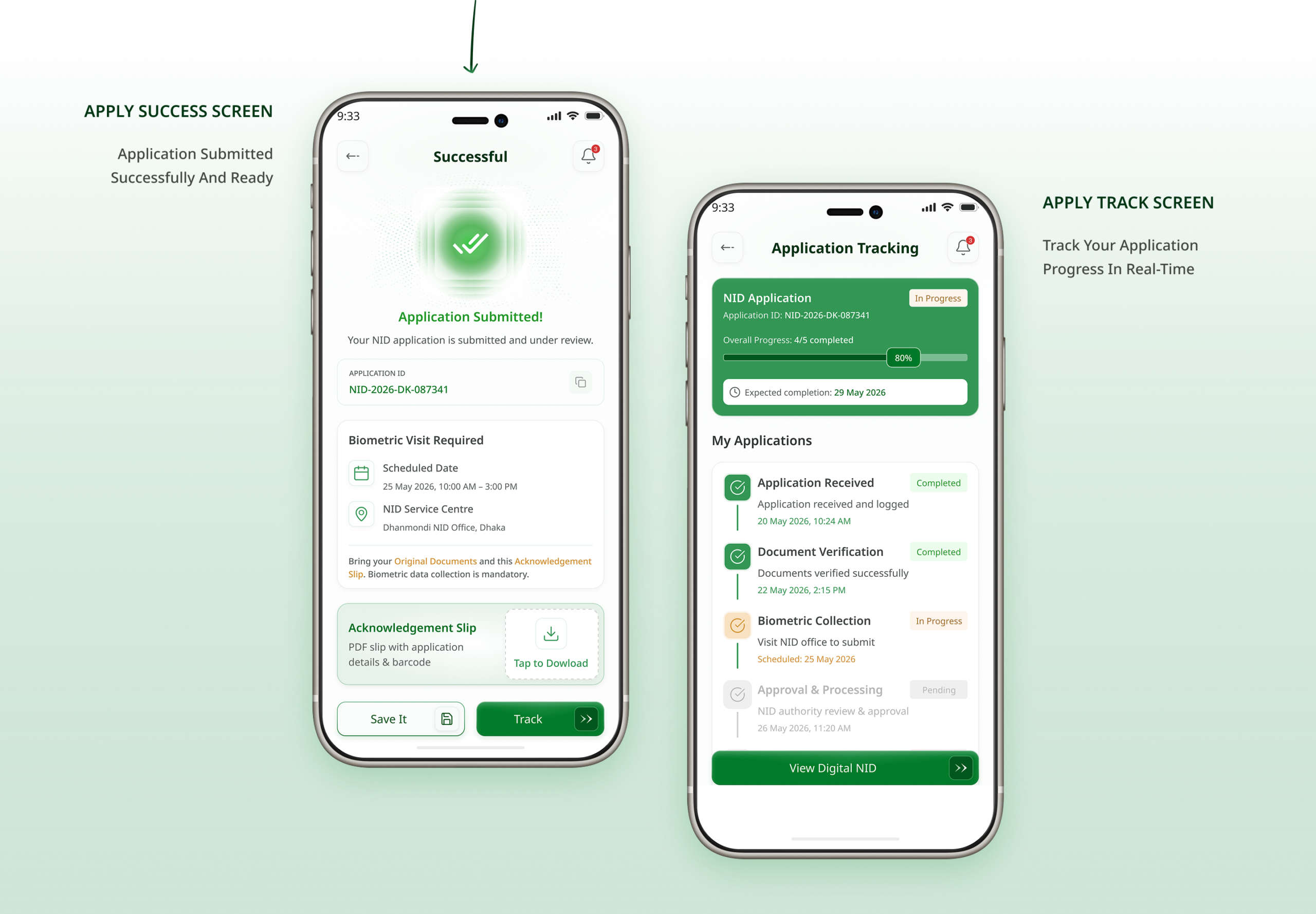
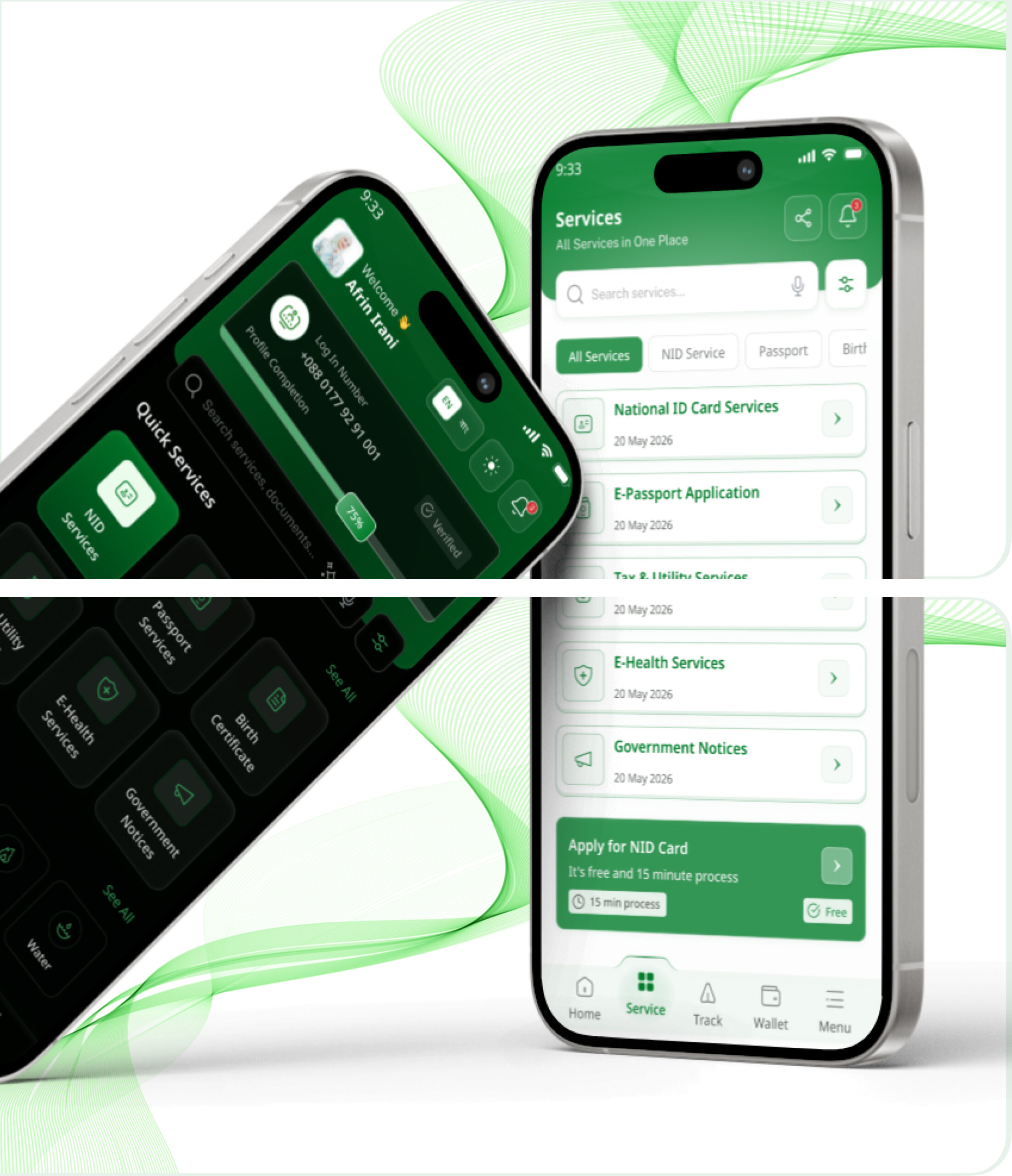
This project brings those services together into a single, secure, mobile-first app. Citizens can apply for services, track application progress, manage digital documents, and make payments, all from one place. The design focused on accessibility, transparency, and convenience — making sure both urban and rural users, from tech-savvy professionals to elderly citizens with low digital literacy, could navigate government services with confidence.
Disclaimer: This is a conceptual UI/UX case study created for educational and portfolio purposes only. It is not affiliated with, endorsed by, or officially connected to any Government of Bangladesh organization or agency.
My Role
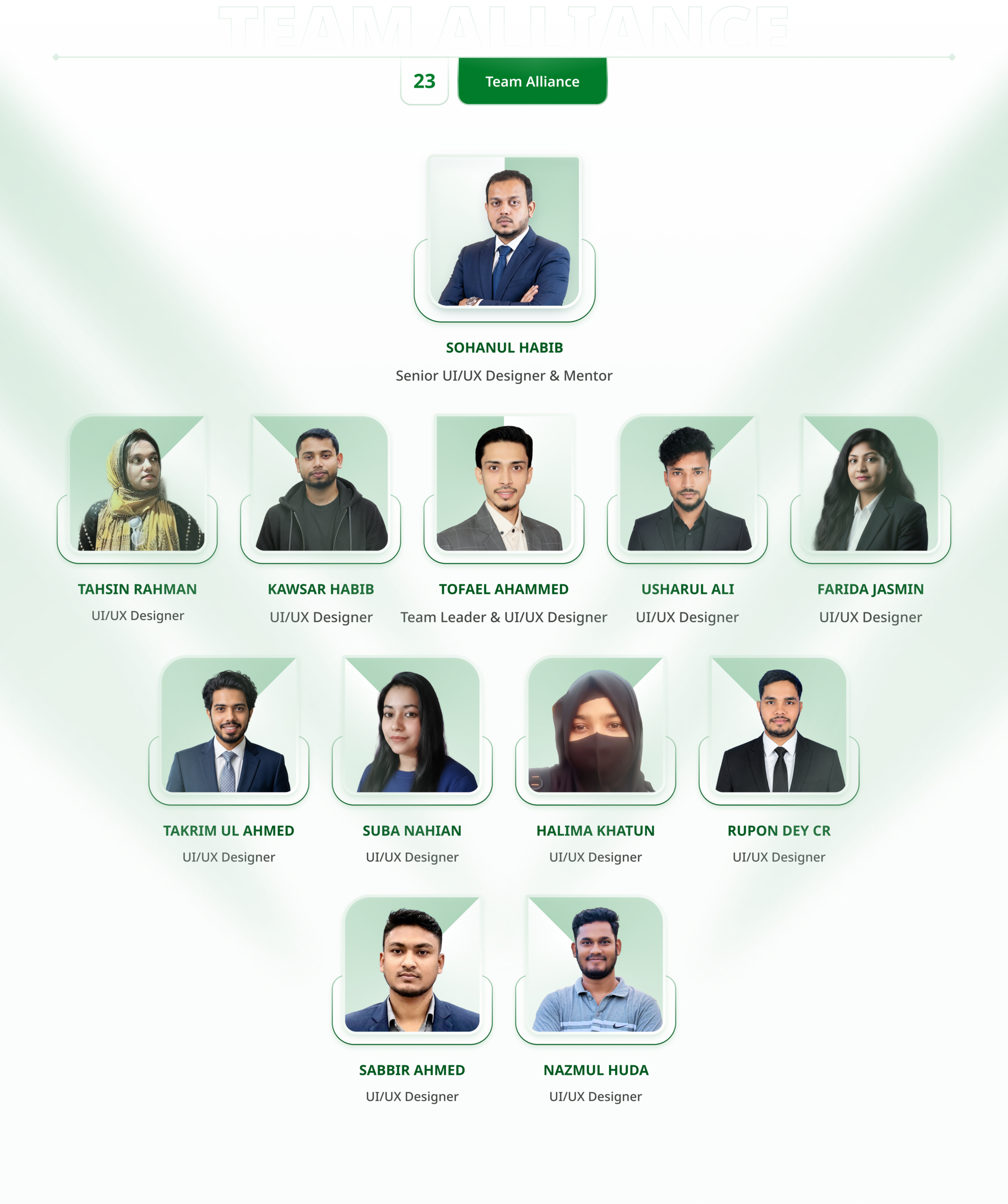
I was one of the UI/UX Designers on this 12-member team, working alongside a Team Leader and a Senior UI/UX Mentor. Rather than owning a single stage, I contributed across the full end-to-end process — from early research through to final prototyping and testing.
My Responsibility
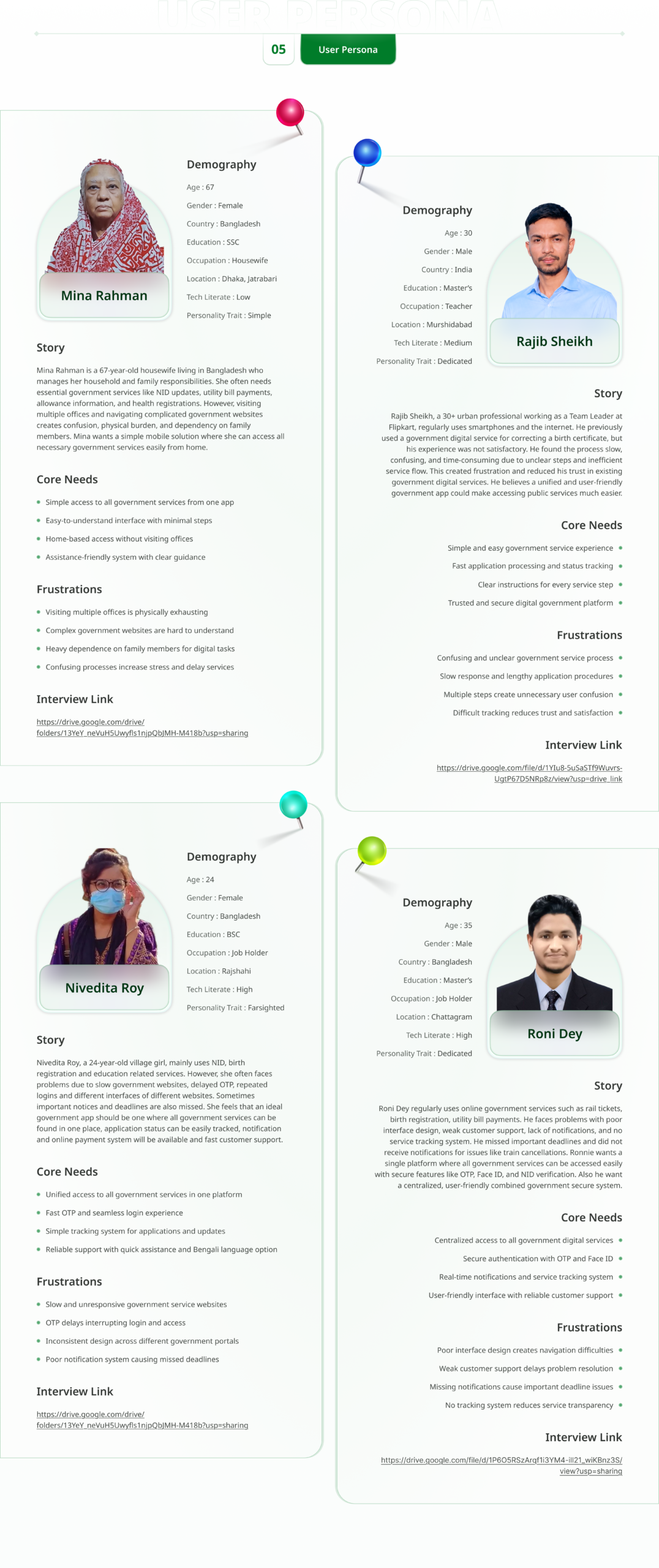
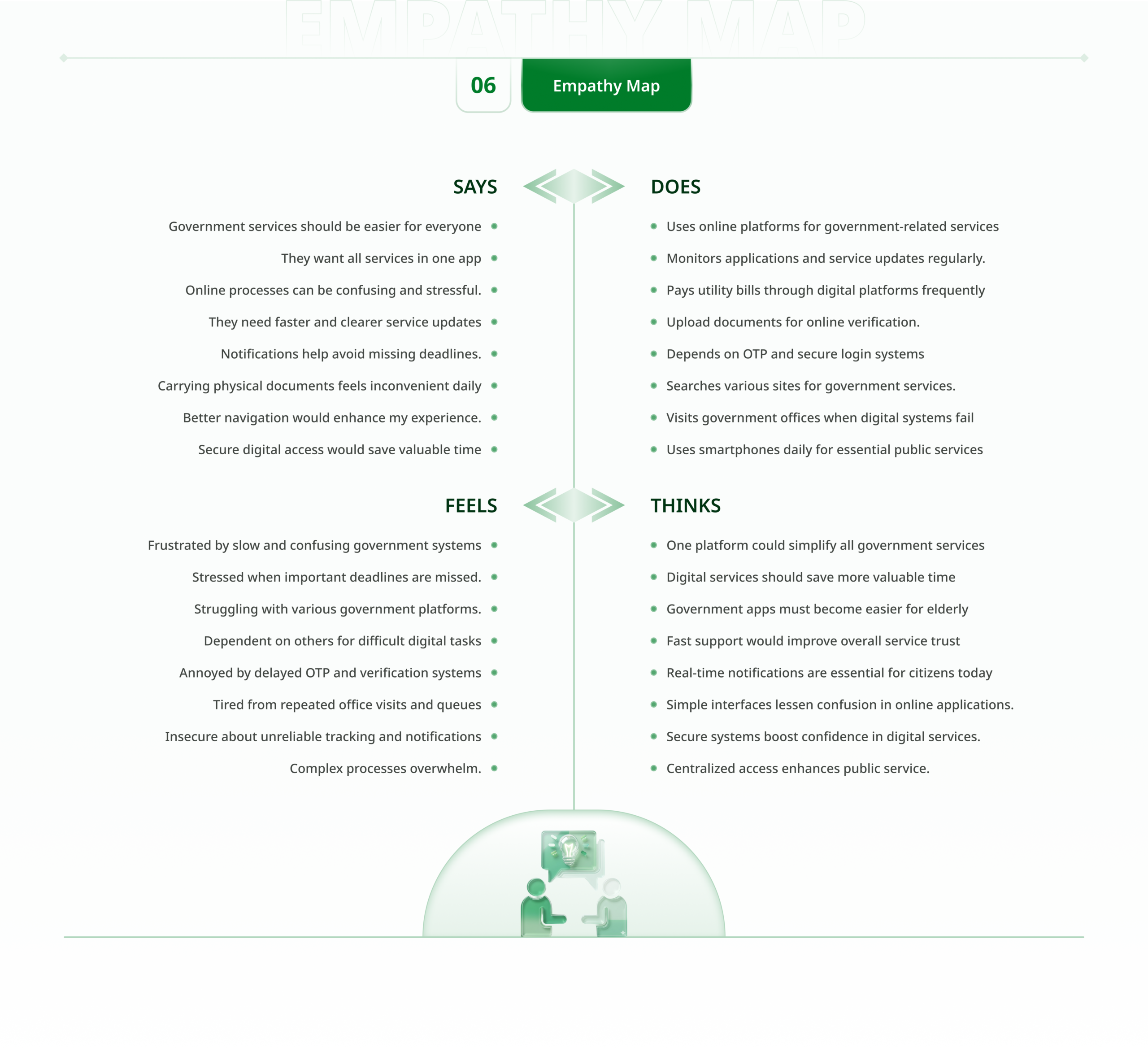
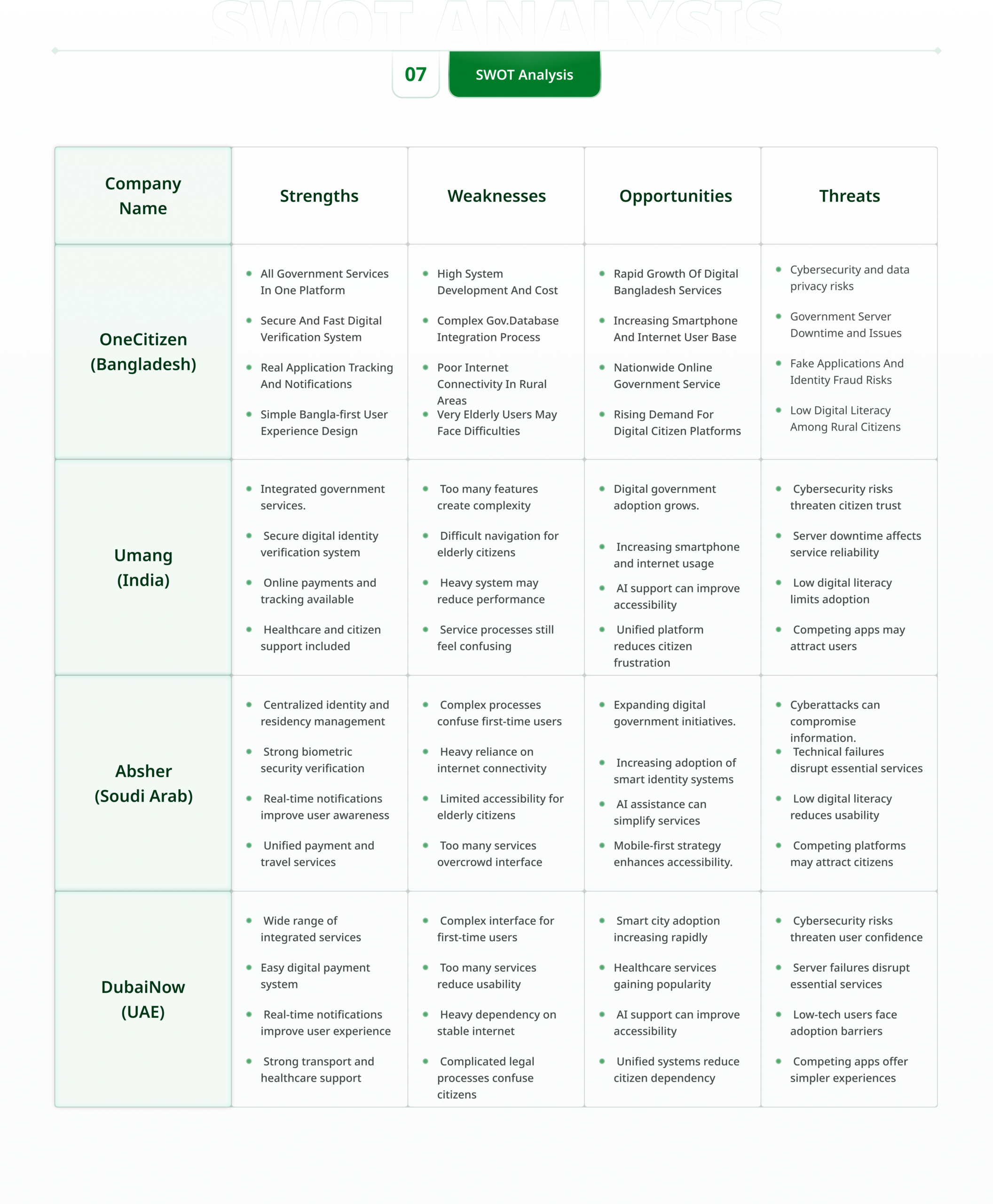
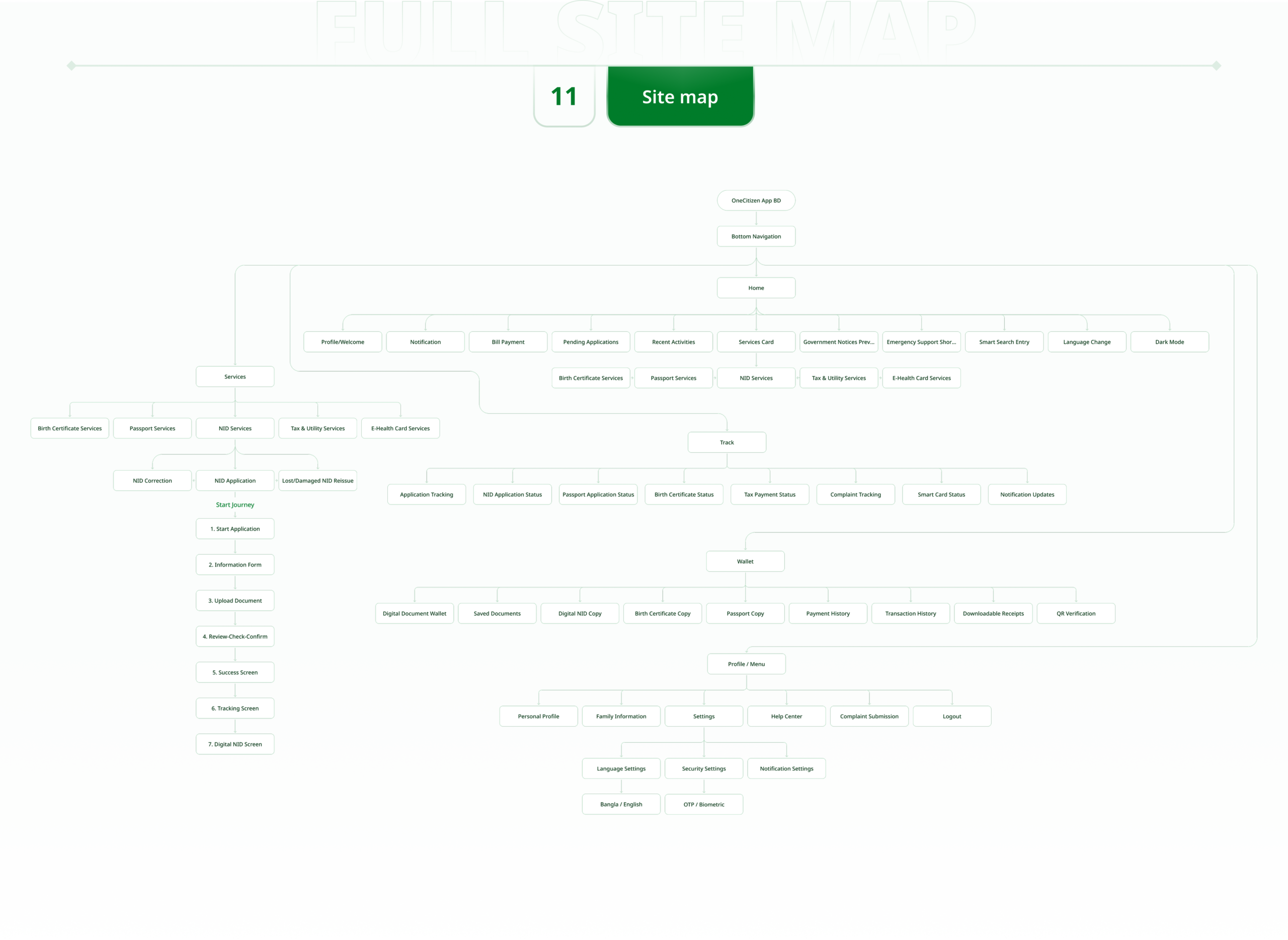
I conducted user interviews and synthesized the findings into personas and an empathy map, ran competitive analysis (SWOT and feature comparisons) against Umang (India), Absher (Saudi Arabia), and DubaiNow (UAE), helped structure the information architecture (site map) and map out core user flows, contributed to the visual design system and high-fidelity screens, and took part in prototyping and moderating usability testing sessions.
UNDERSTANDING THE USERS
User Research
I looked closely at how users behave to find out what they really need from the product.
Pain Points
I found the exact moments where users feel frustrated or stuck in their daily routine.
Persona
I made a simple user profile so every design choice stayed focused on the right audience.
Empathy Map
I mapped out how users feel and think, and what they do, while using the product.
USER RESEARCH
Research combined direct interviews with citizens across different regions of Bangladesh, alongside a competitive review of similar government “super-apps” from other countries. The goal was to understand not just what services people needed, but how confidence, trust, and digital literacy shaped their experience of government platforms — especially for elderly and first-time digital users.
PAIN POINTS
1
Visiting multiple offices is physically exhausting, especially for elderly and rural citizens
2
Complex, inconsistent government websites are hard to understand and navigate
3
Heavy dependence on family members to complete digital tasks
4
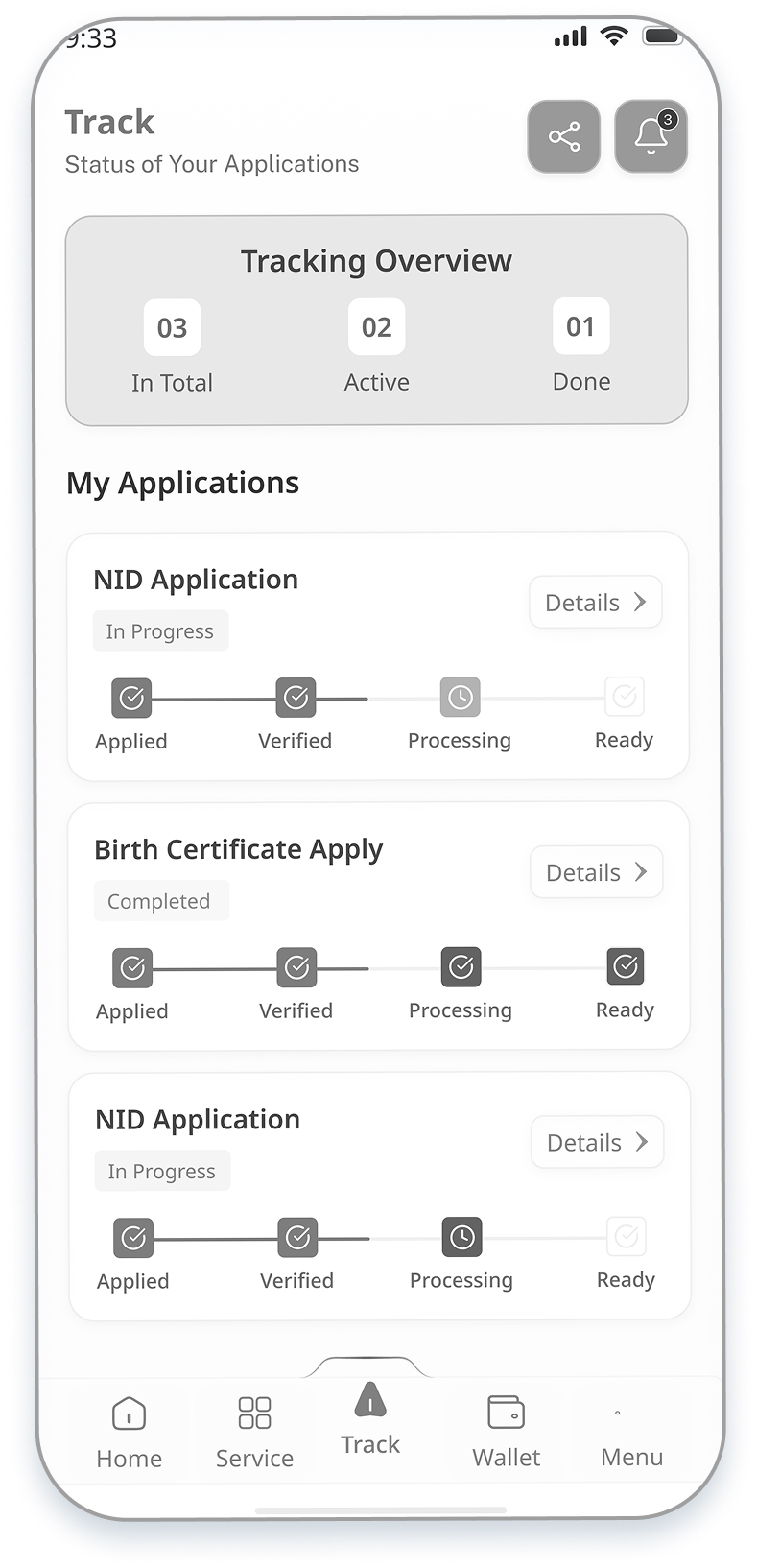
No reliable way to track application status, reducing trust
PERSONA
EMPATHY MAP
COMPETITOR ANALYSIS
INFORMATION ARCHITECTURE
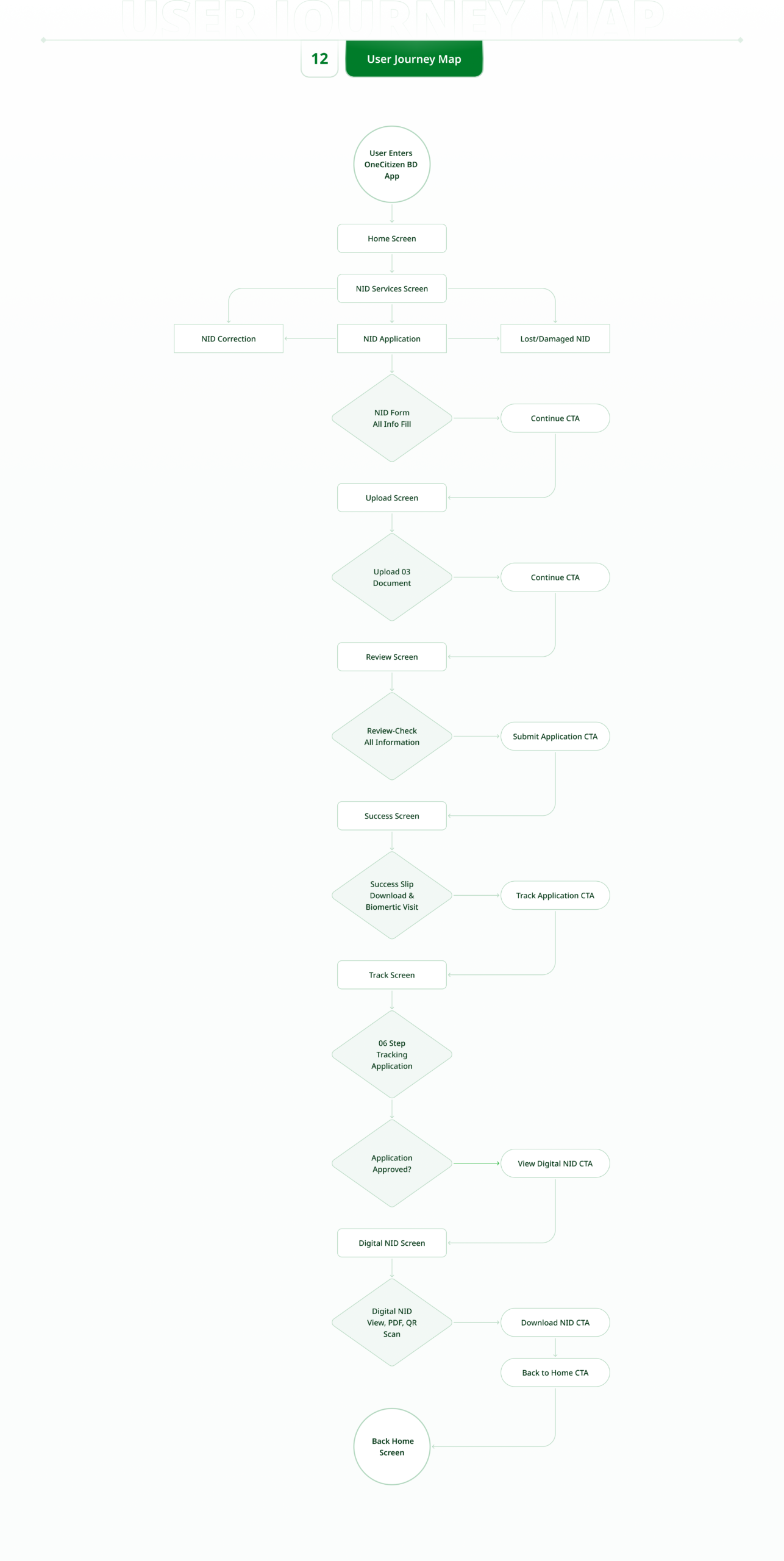
USER FLOW
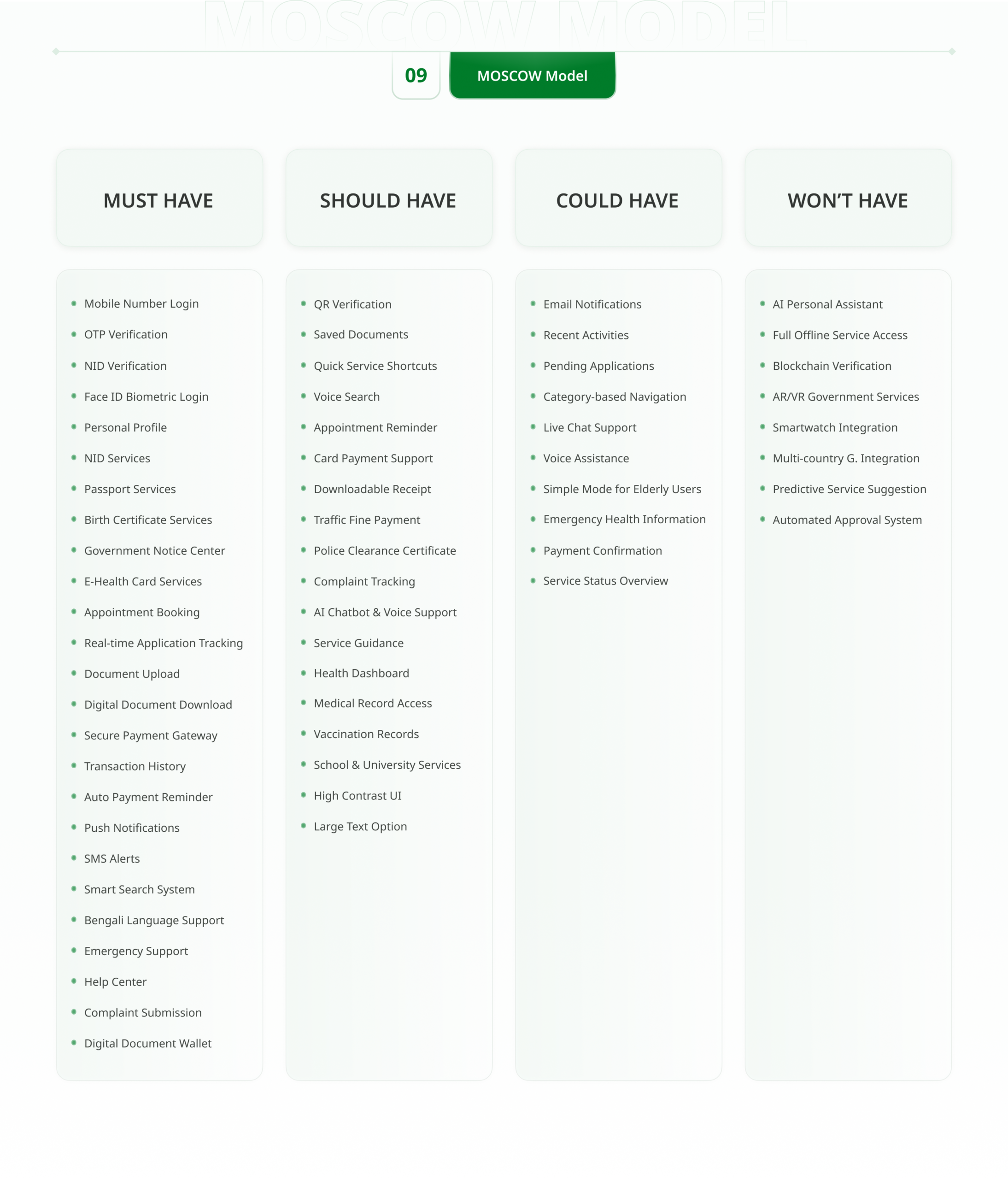
MOSCOW TECHNIQUE
STARTING THE DESIGN
PAPER WIREFRAMES
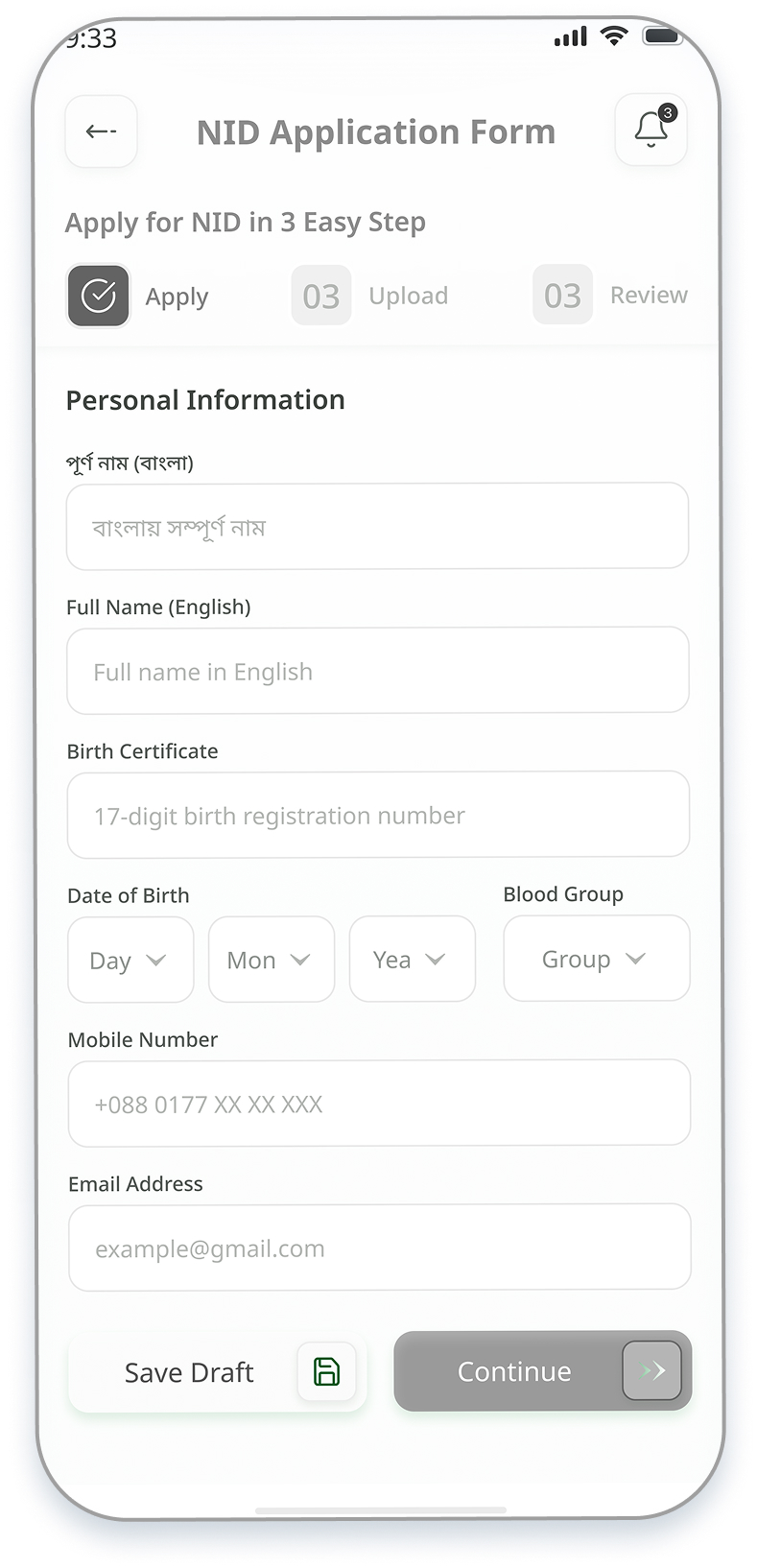
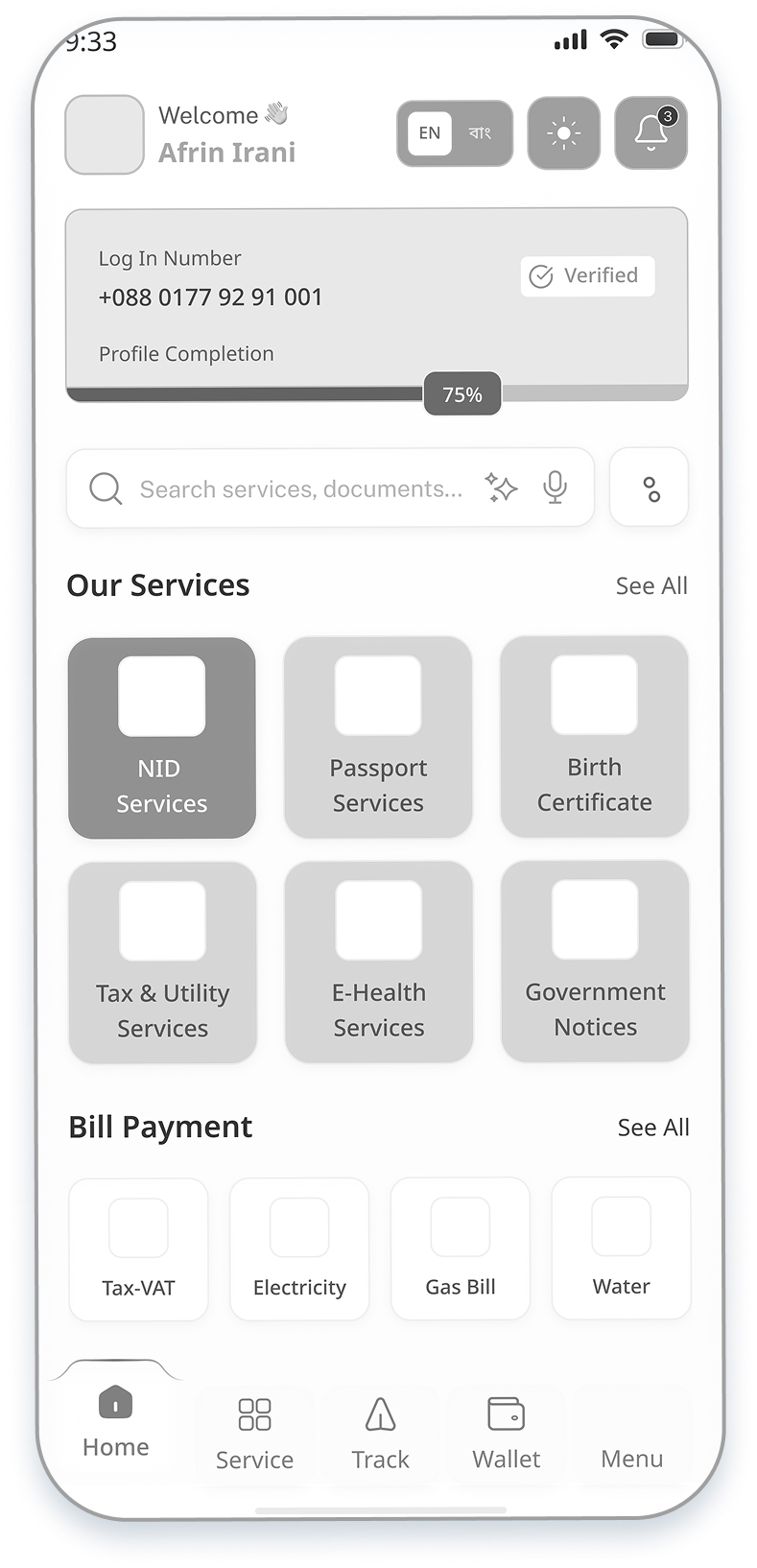
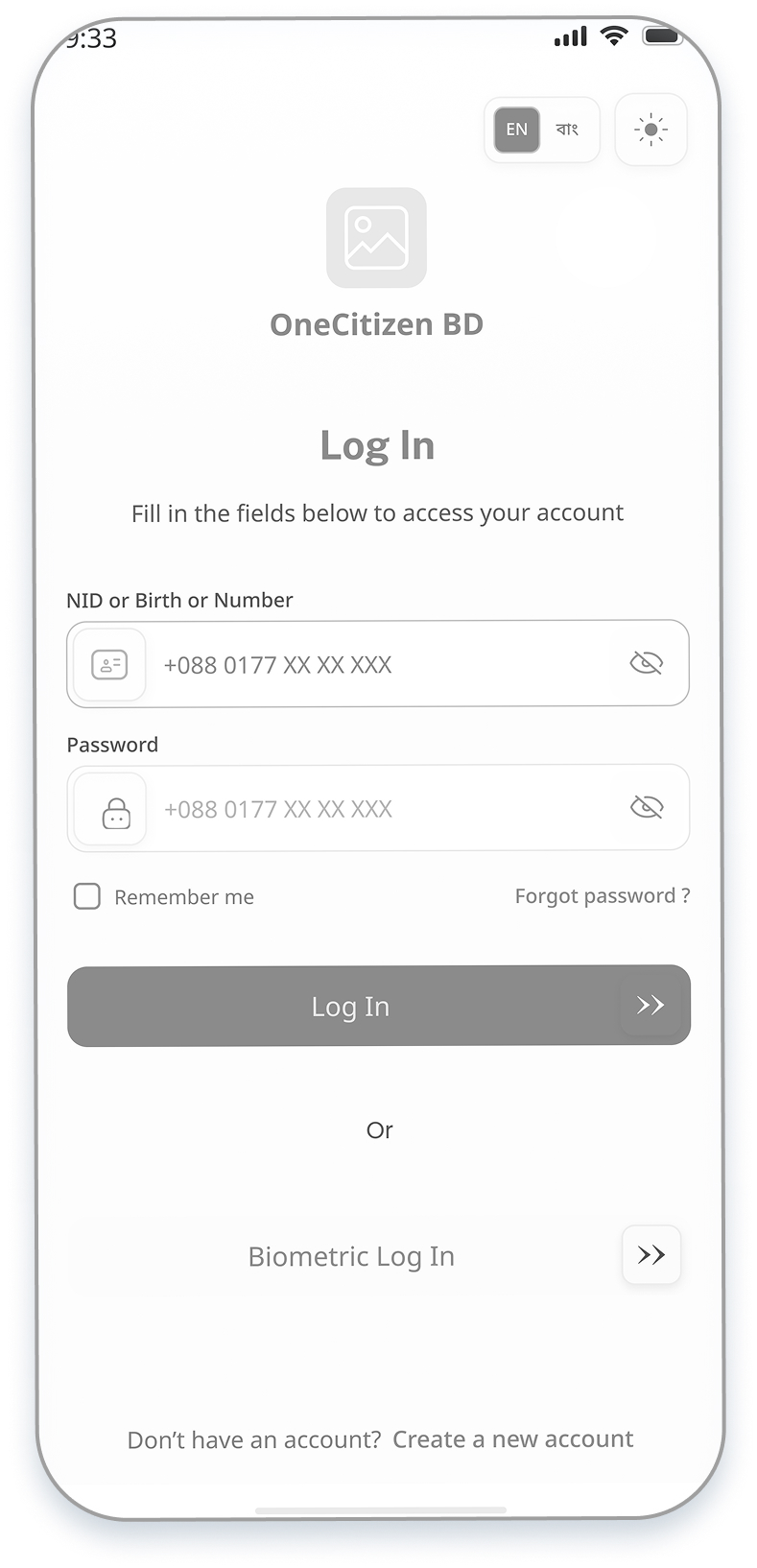
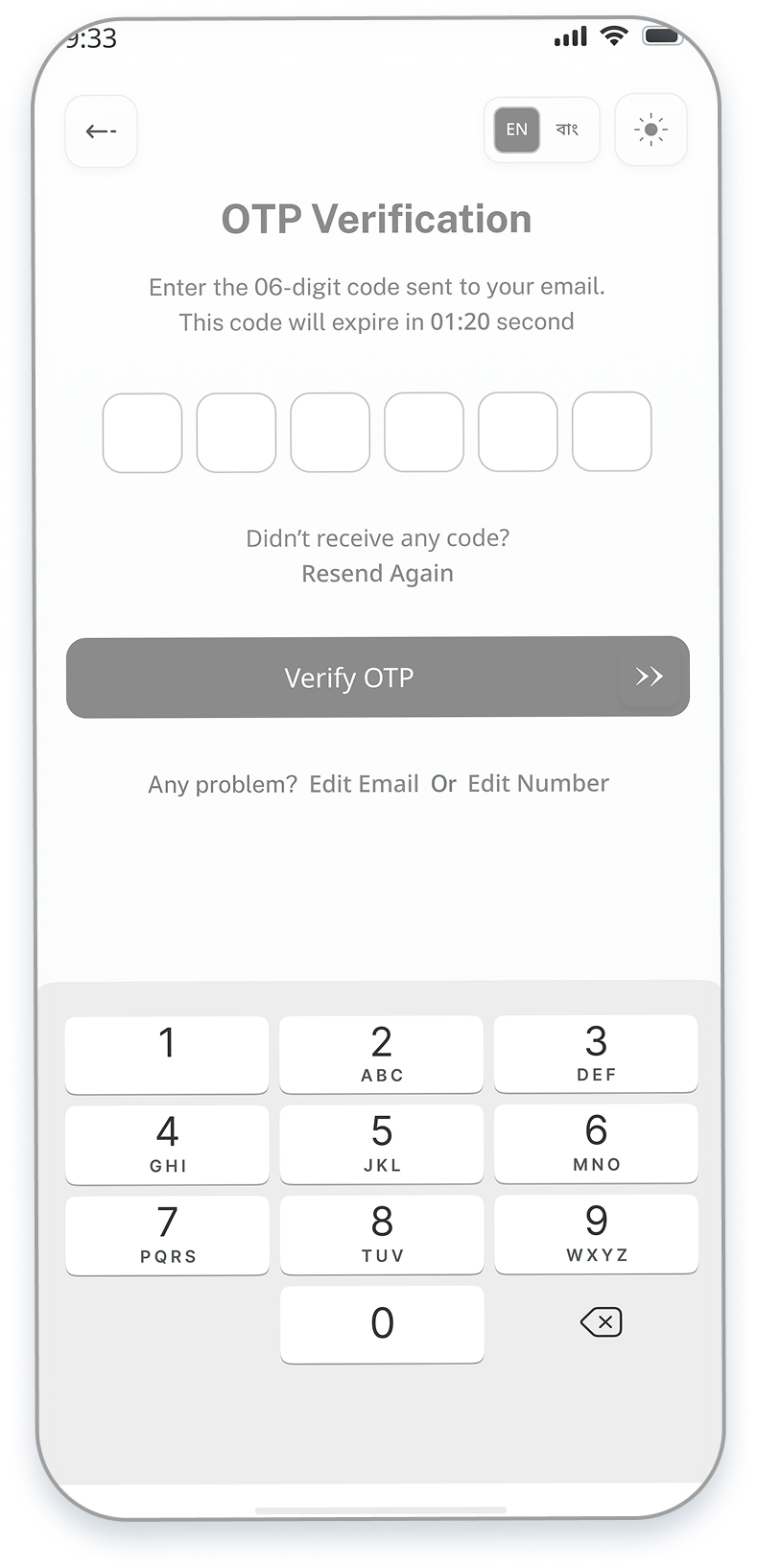
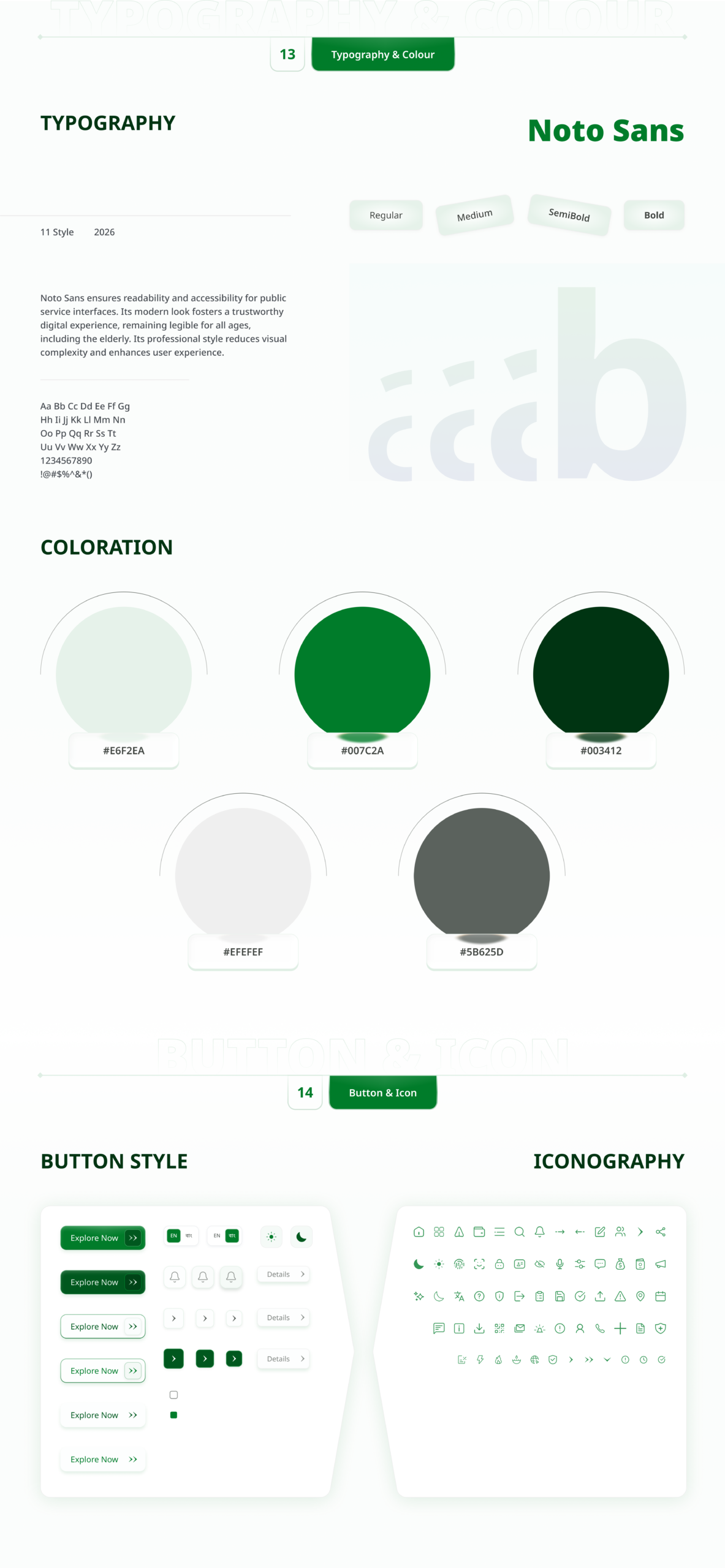
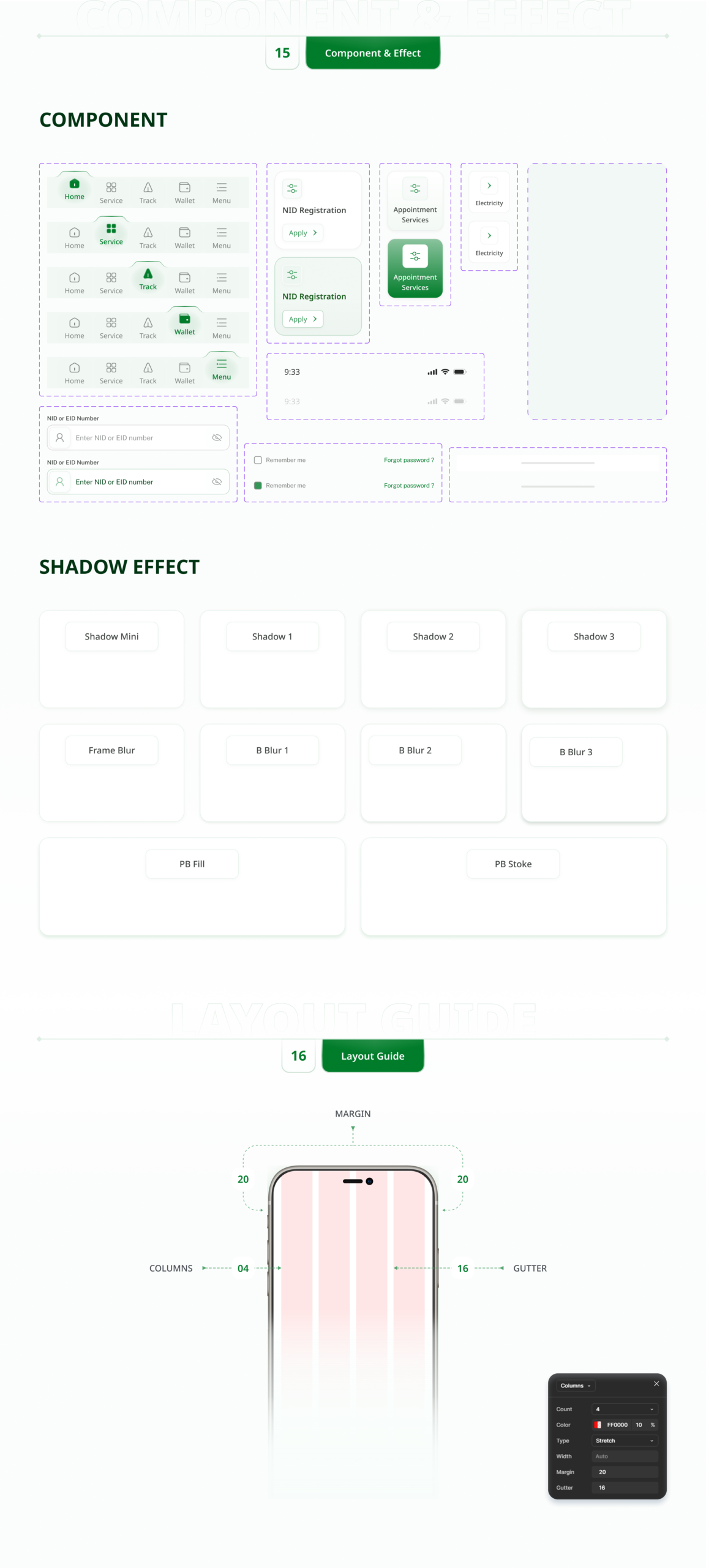
DESIGN SYSTEM
DIGITAL WIREFRAME
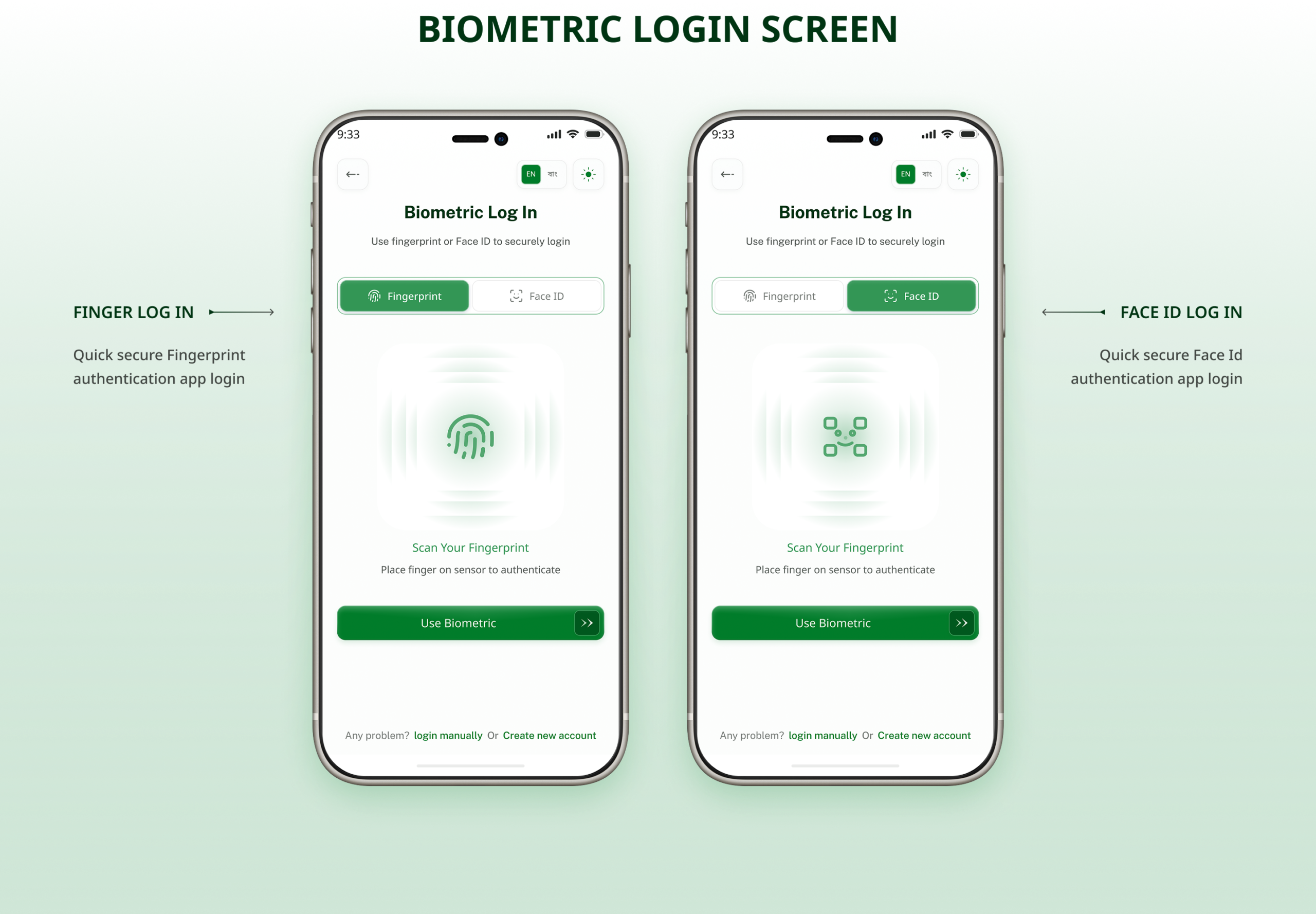
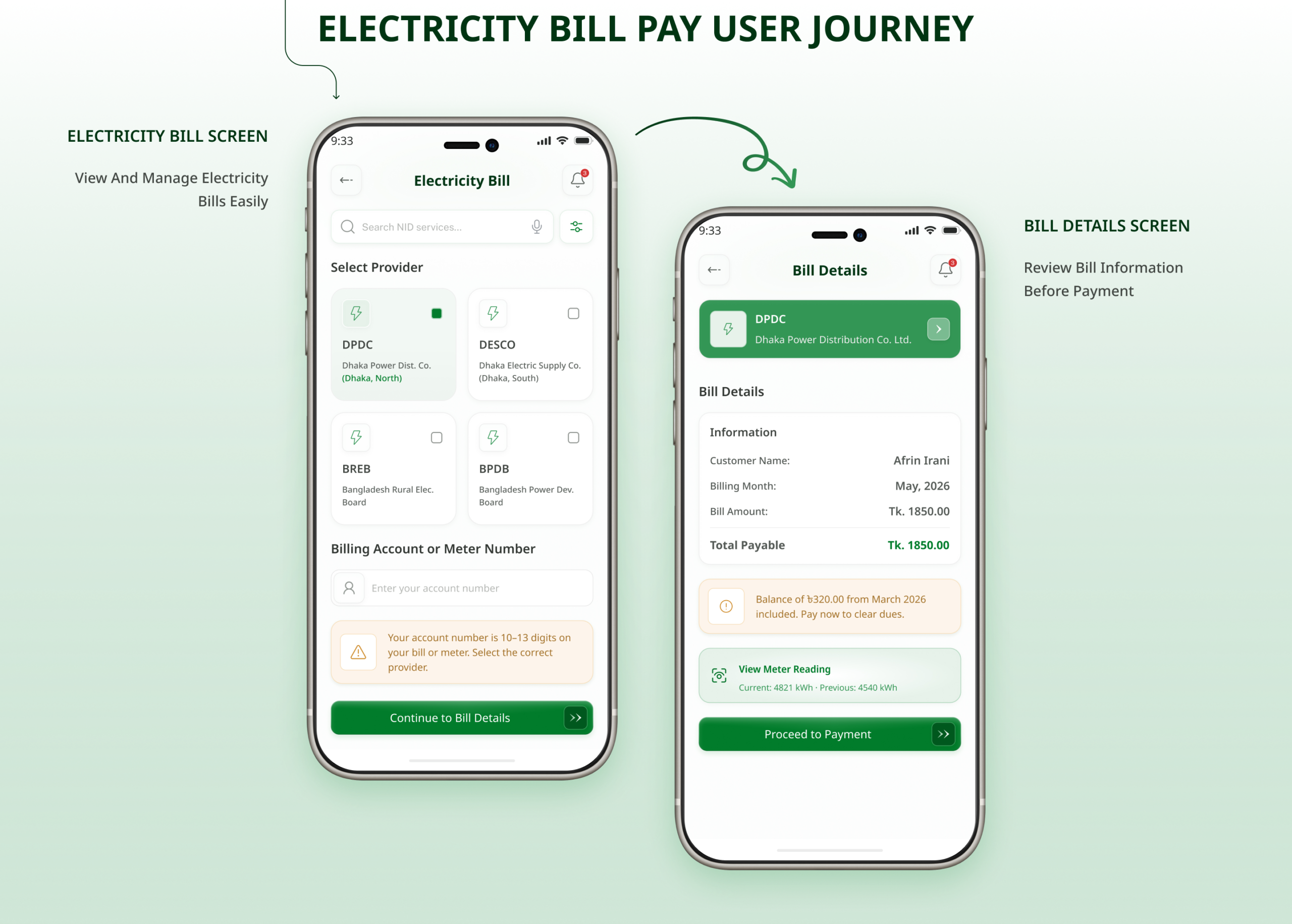
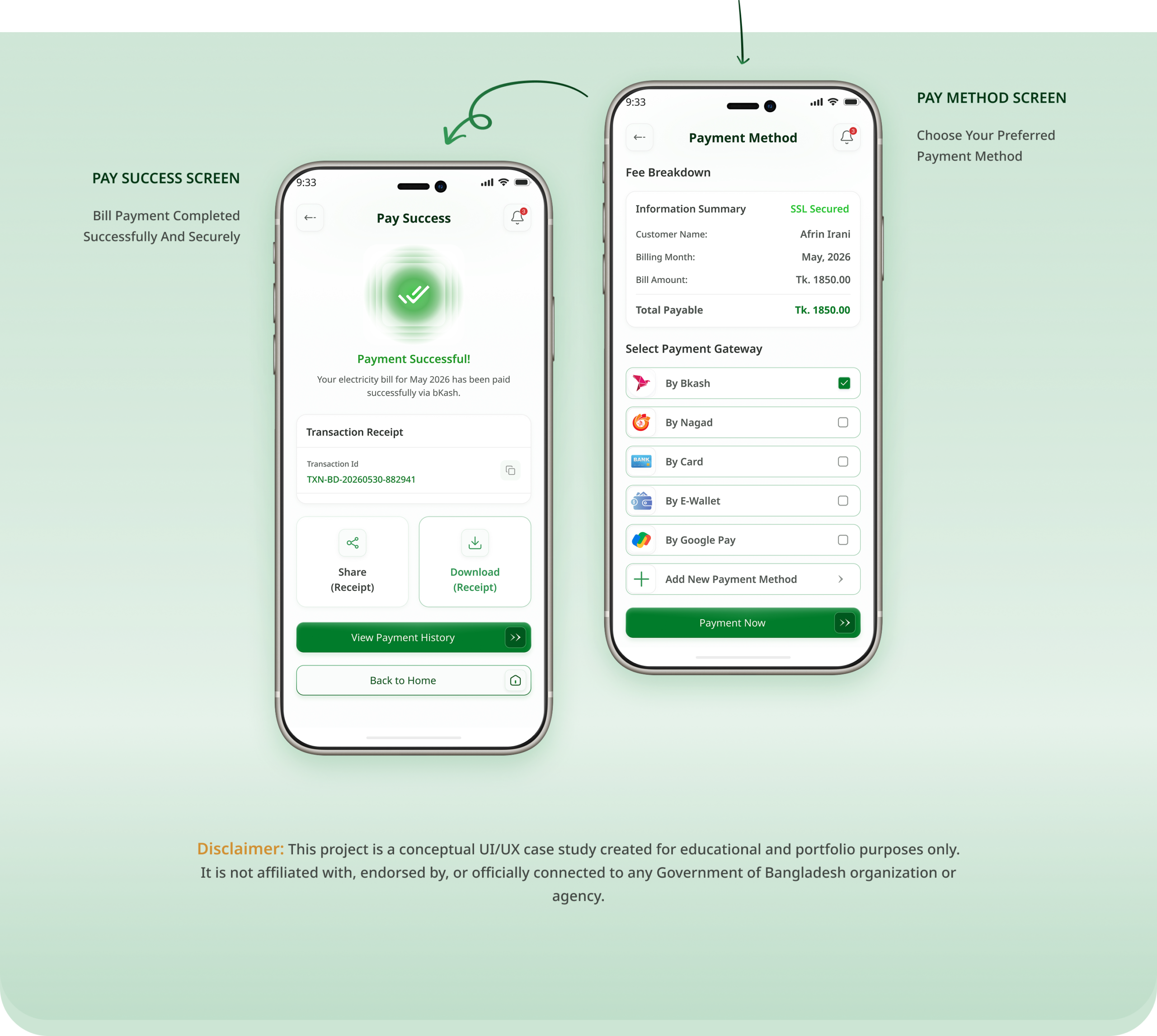
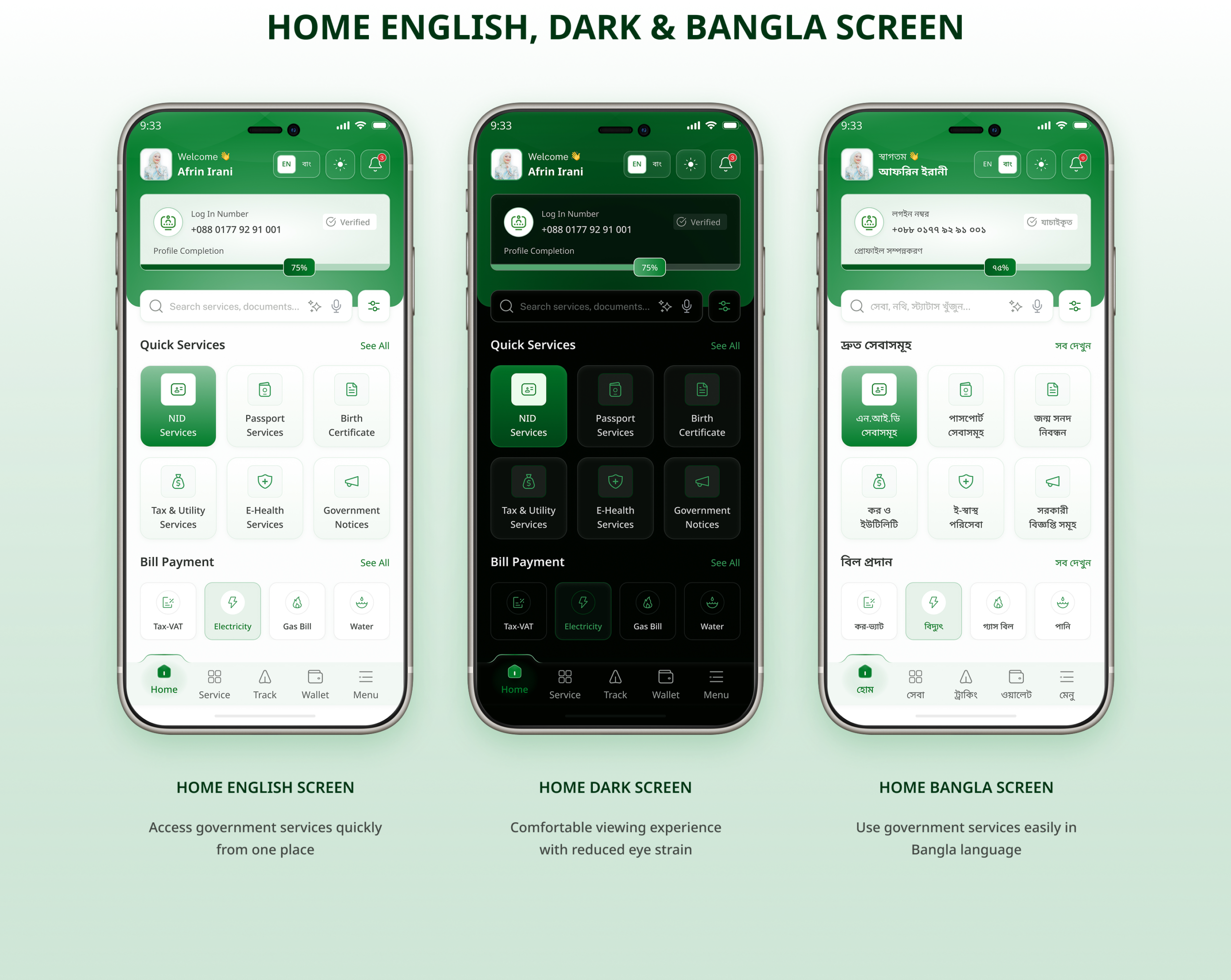
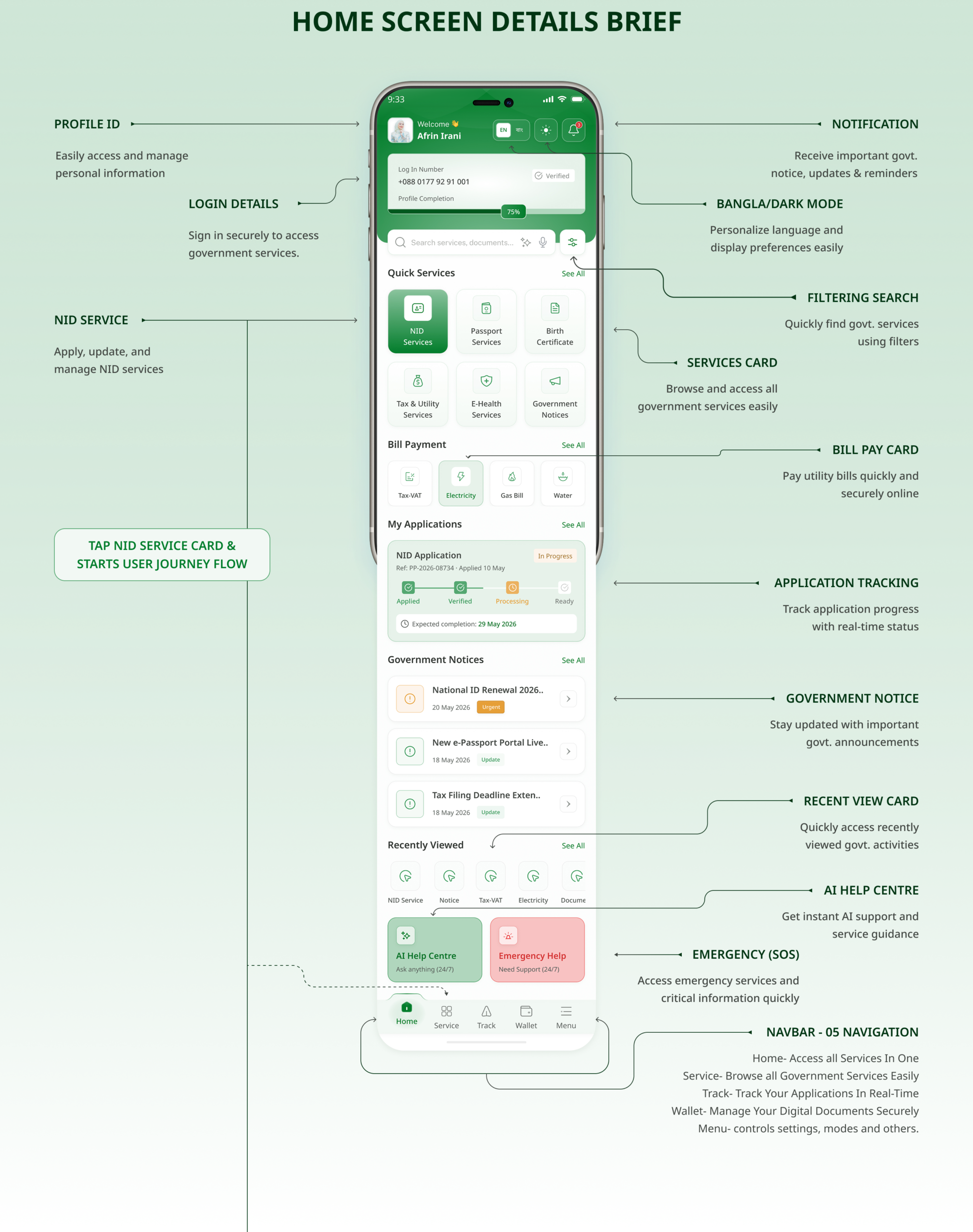
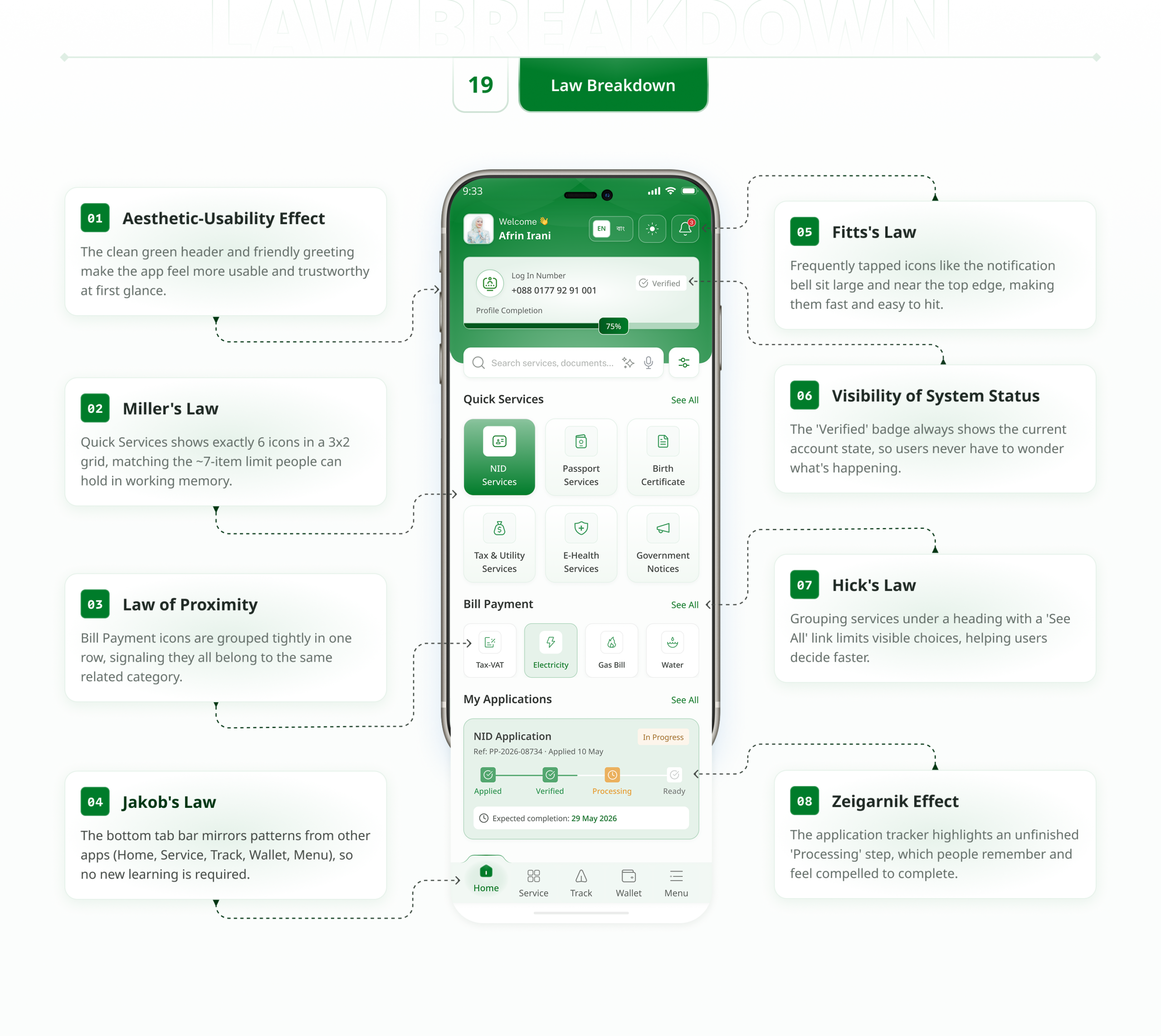
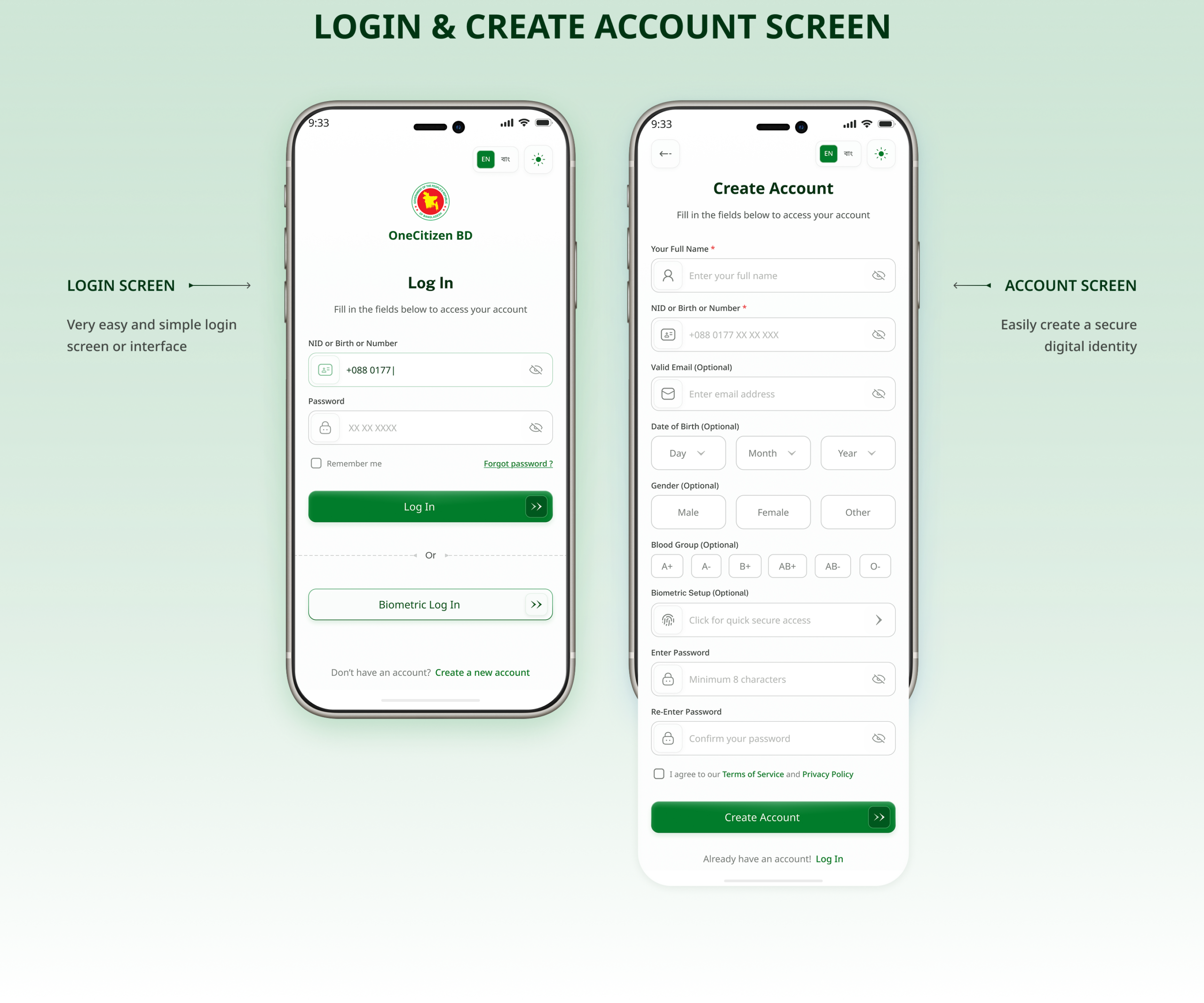
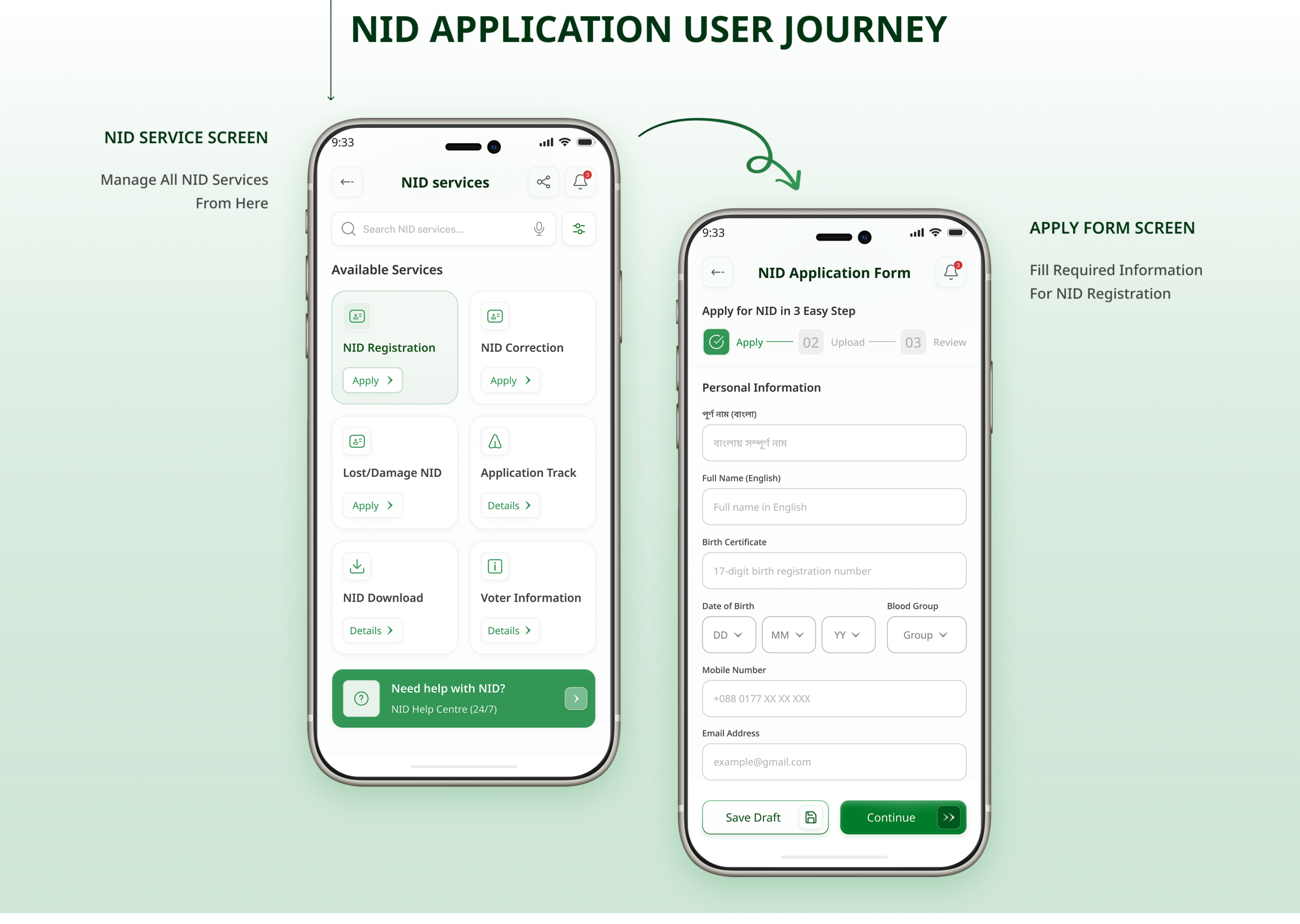
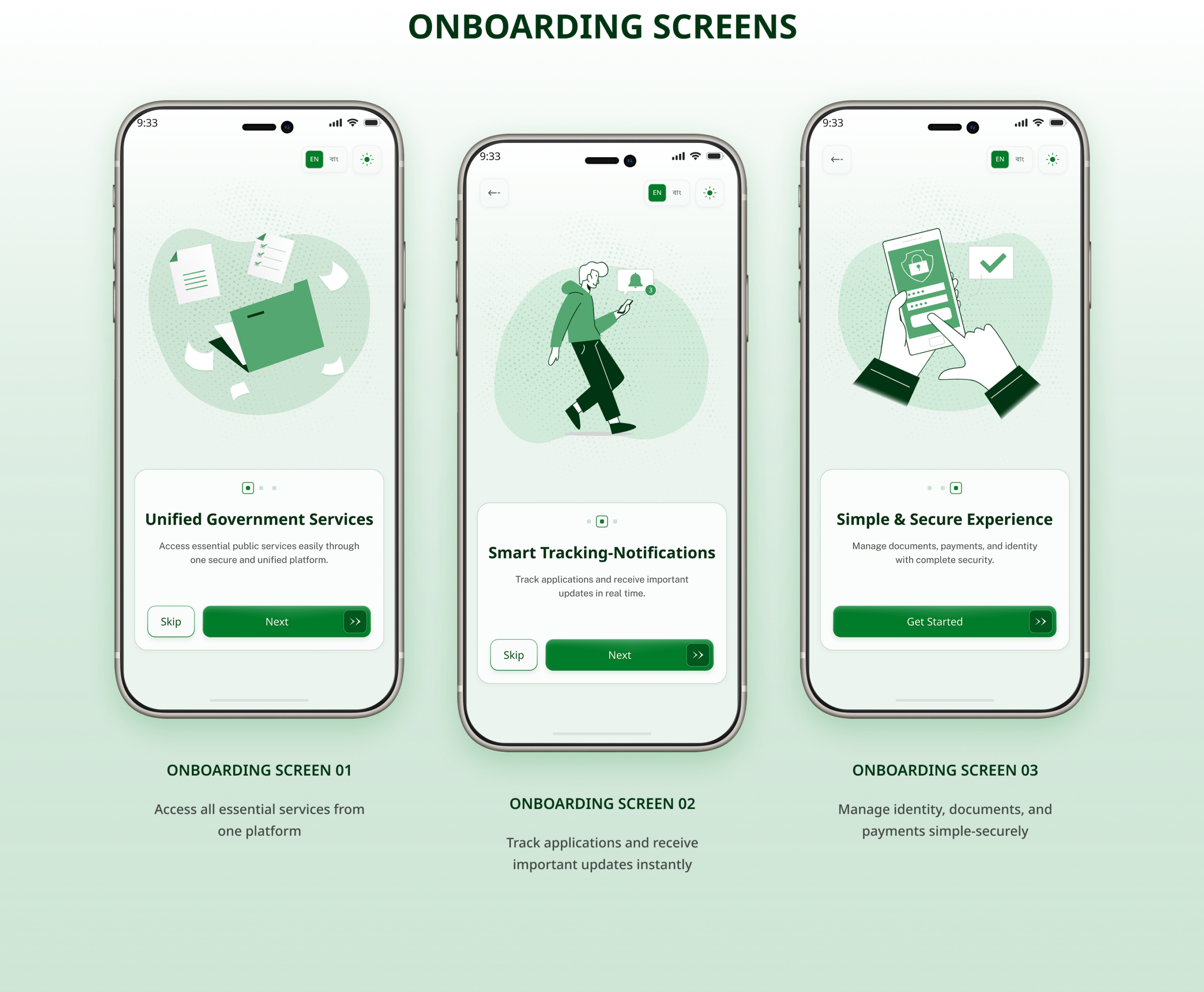
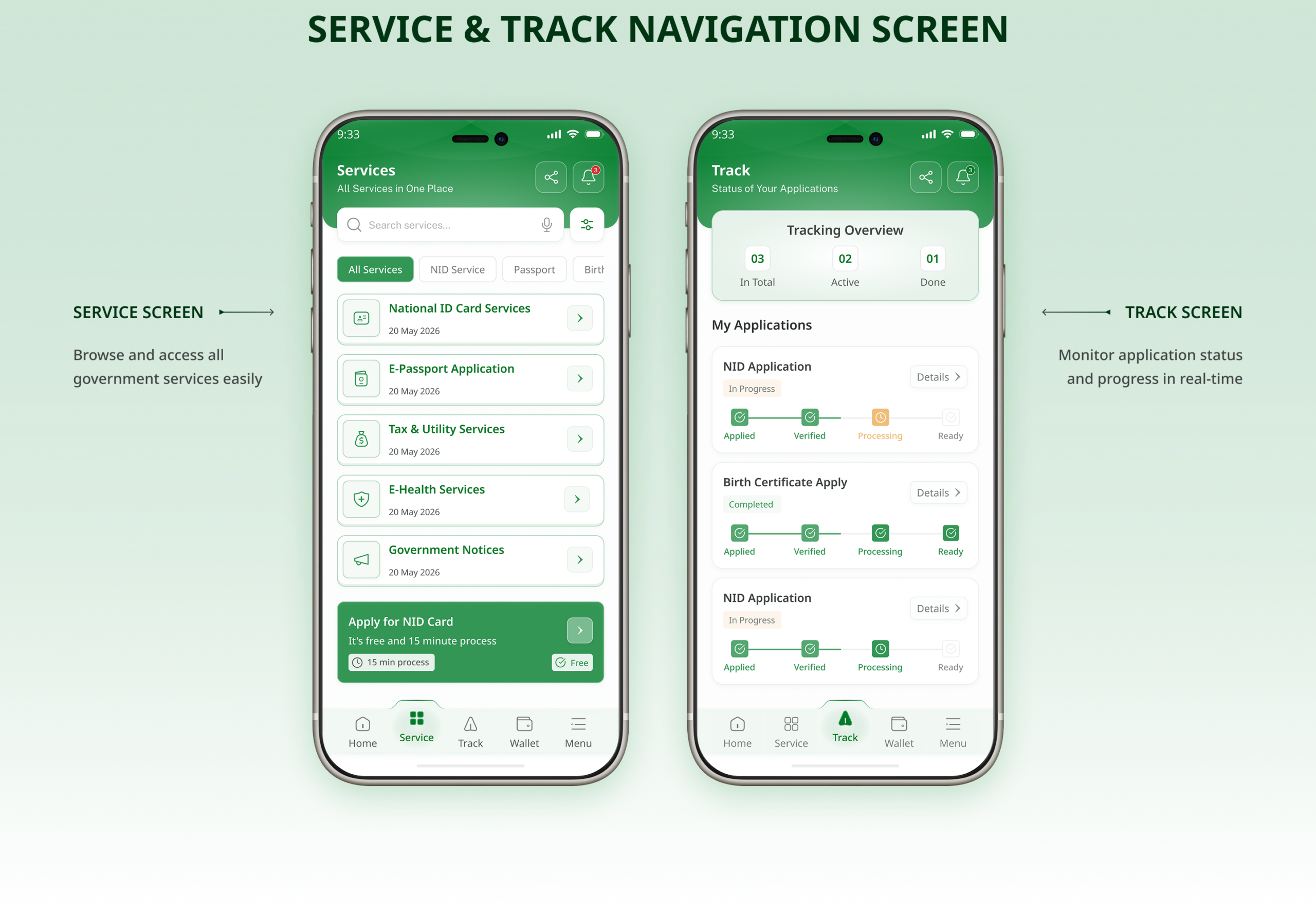
MOCKUPS
USABILITY TESTING
IMPACT & TAKEAWAYS
Impact
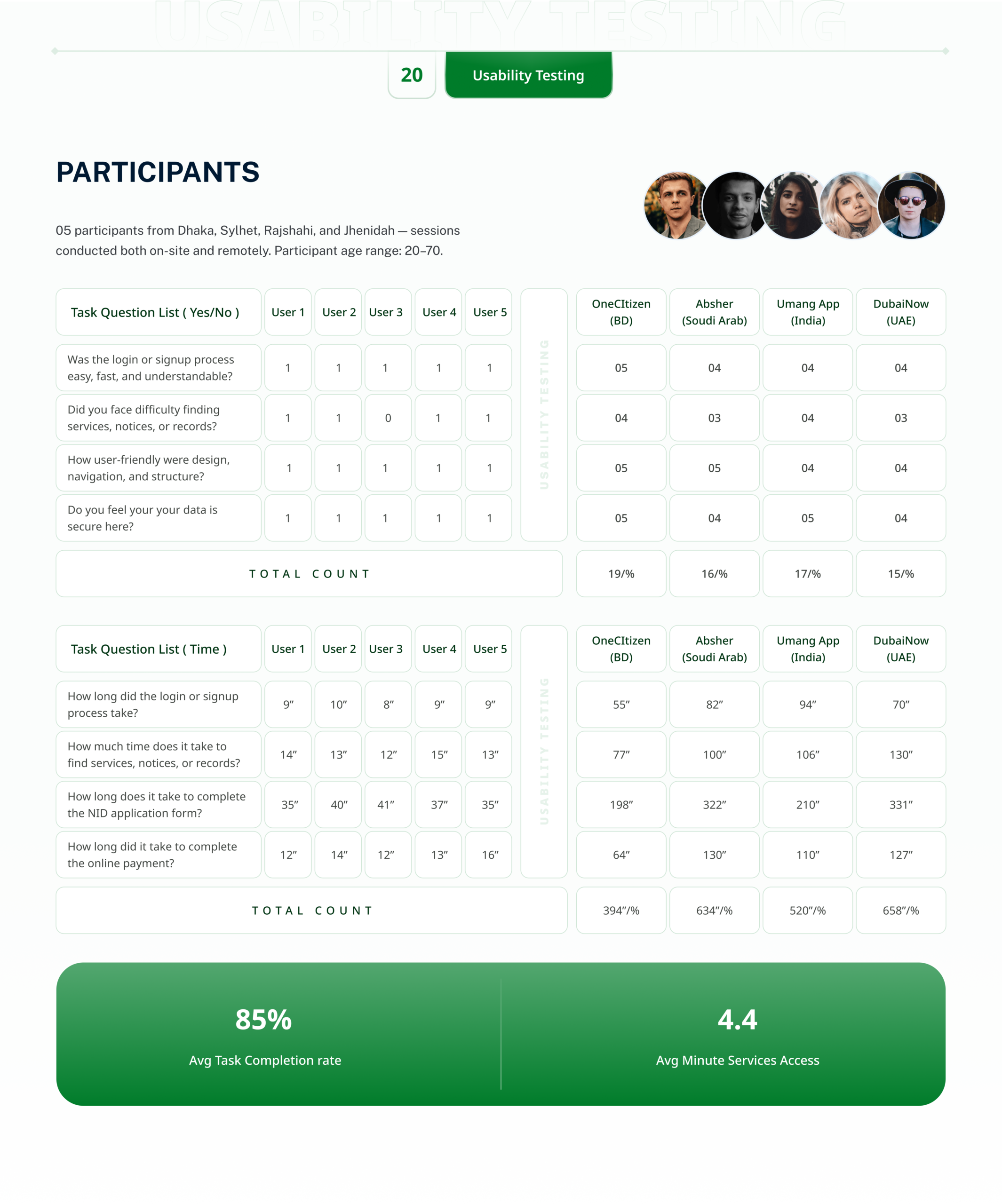
♦ Reached an 85% average task completion rate in usability testing, outperforming the three benchmarked competitor apps on the same tasks
♦ Cut average time to access a service to 4.4 minutes, noticeably faster than Umang, Absher, and DubaiNow in side-by-side testing
♦ Brought 10+ scattered government services (NID, passport, birth certificate, utility payments, health) together into one citizen-first platform
What I Learned
♦ Citizens strongly prefer one unified platform over switching between disconnected websites and offices
♦ Real-time application tracking meaningfully builds trust and reduces user uncertainty
♦ Accessibility choices — large text, simple mode, Bangla language support — are essential for elderly and low-literacy users to act independently
Future Plan
♦ Expand AI-assisted support (chatbot/voice guidance) to help users navigate services more independently
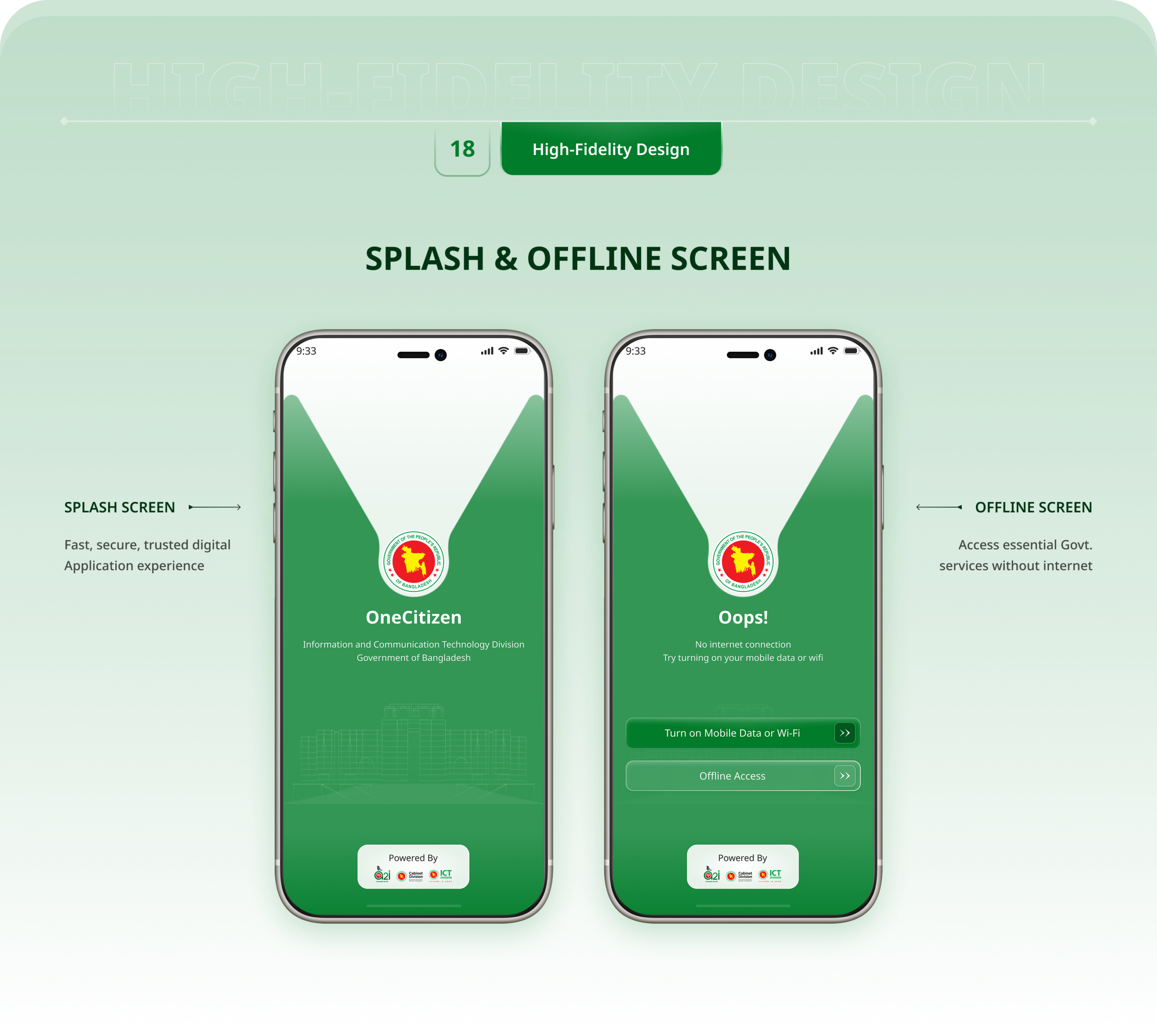
♦ Improve low-connectivity and offline access for rural users with weaker internet infrastructure
♦ Run wider usability testing across more regions and age groups before moving into full development
Challenges Overcome
♦ Balancing a feature-rich platform (20+ services) with a simple, uncluttered interface for elderly and first-time digital users
♦ Designing one consistent system on top of complex, siloed government databases
♦ Aligning design decisions and workflow across a 12-member team within a tight ~3-week timeline
TEAM