
National E-Health Card
A secure digital health platform for Bangladeshis to manage records, access services, and get emergency support anytime.
Tools



Platform
Mobile application
Industry
Health
Duration
4 weeks
OVERVIEW
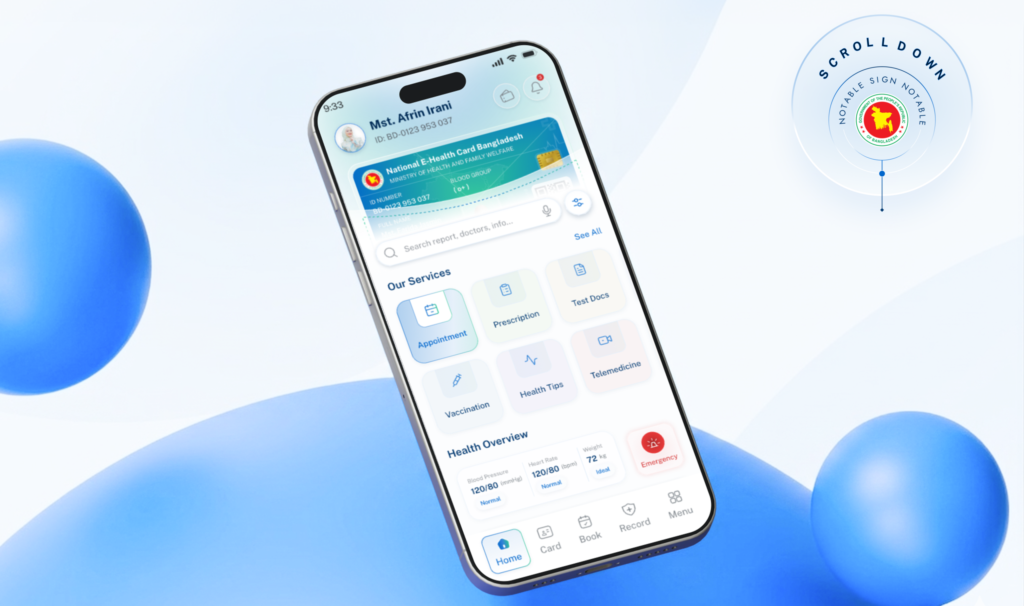
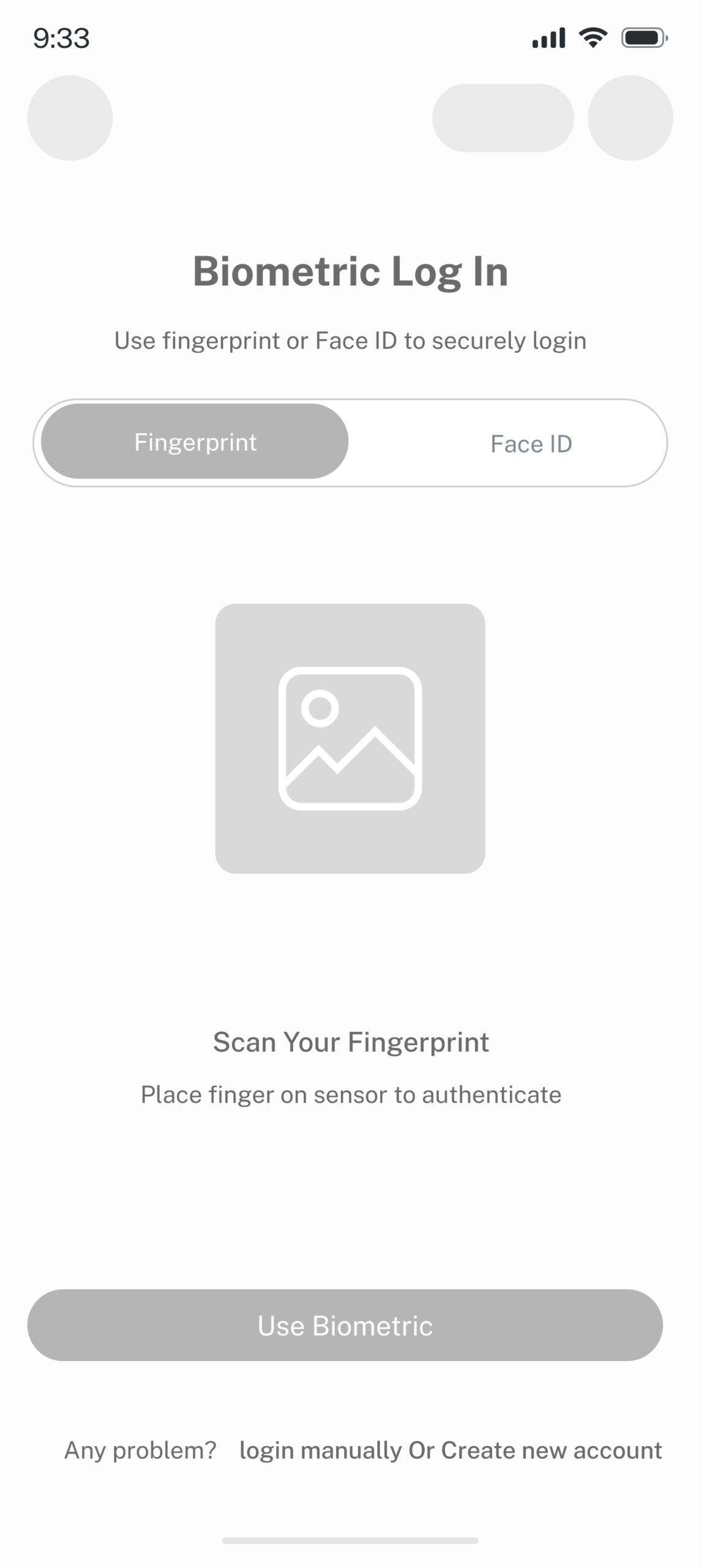
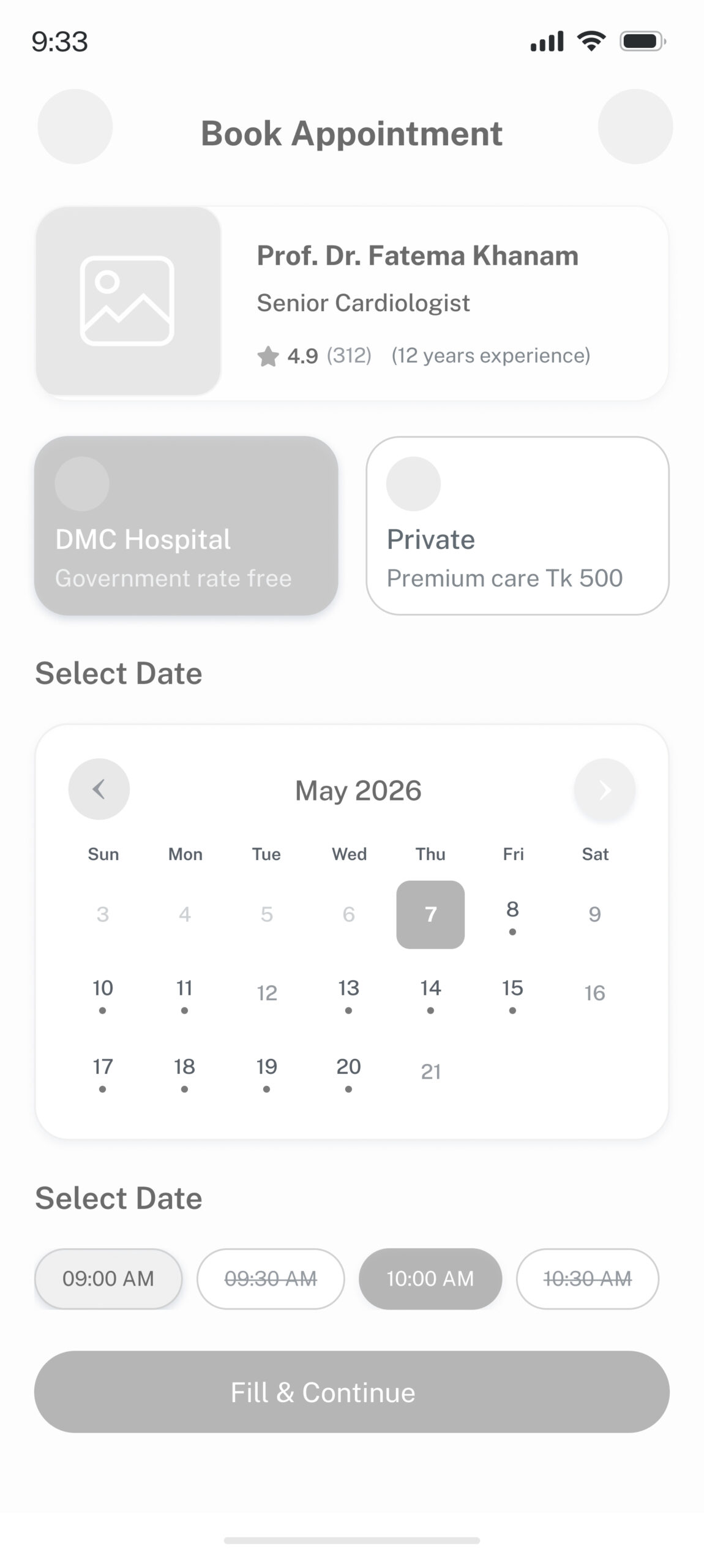
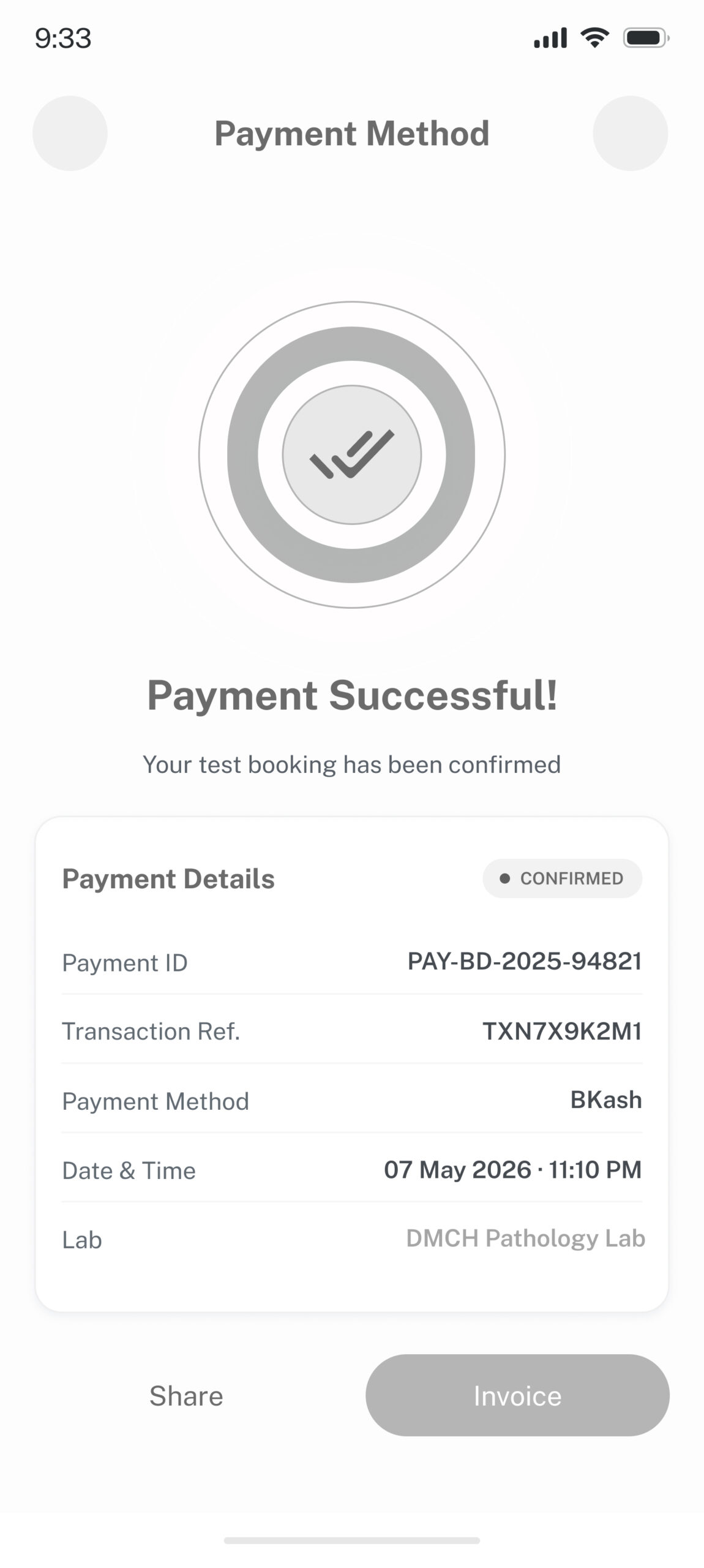
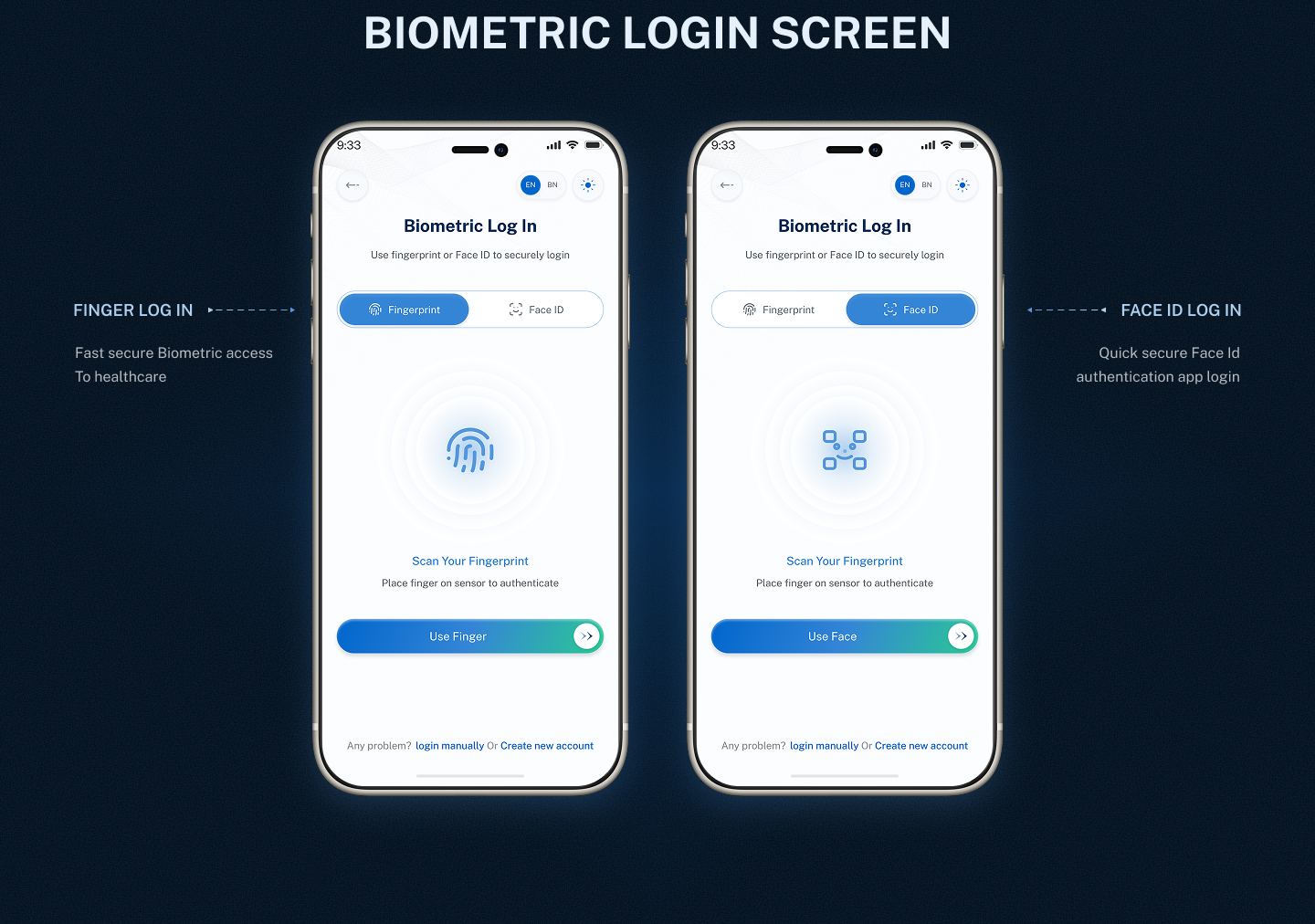
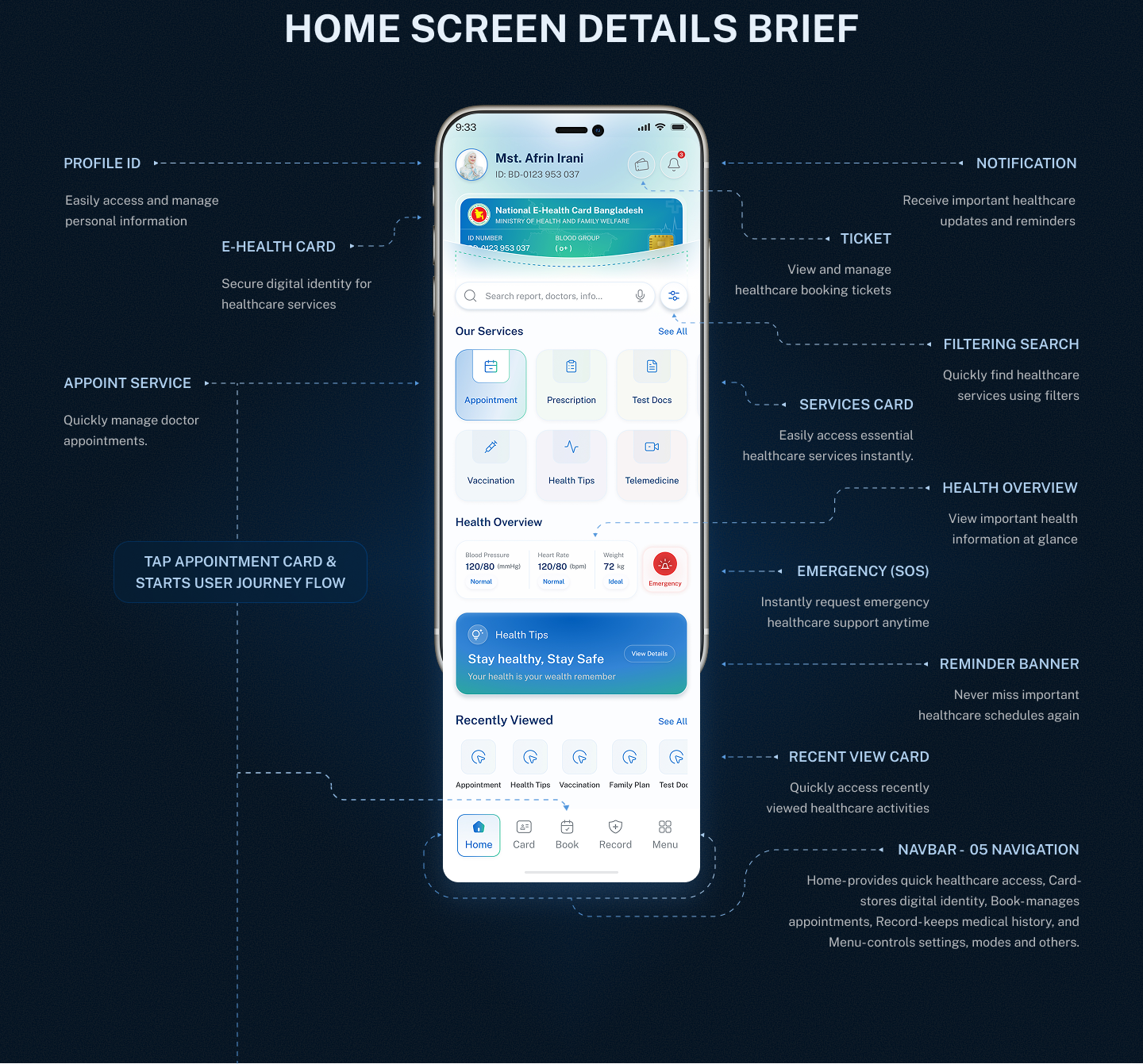
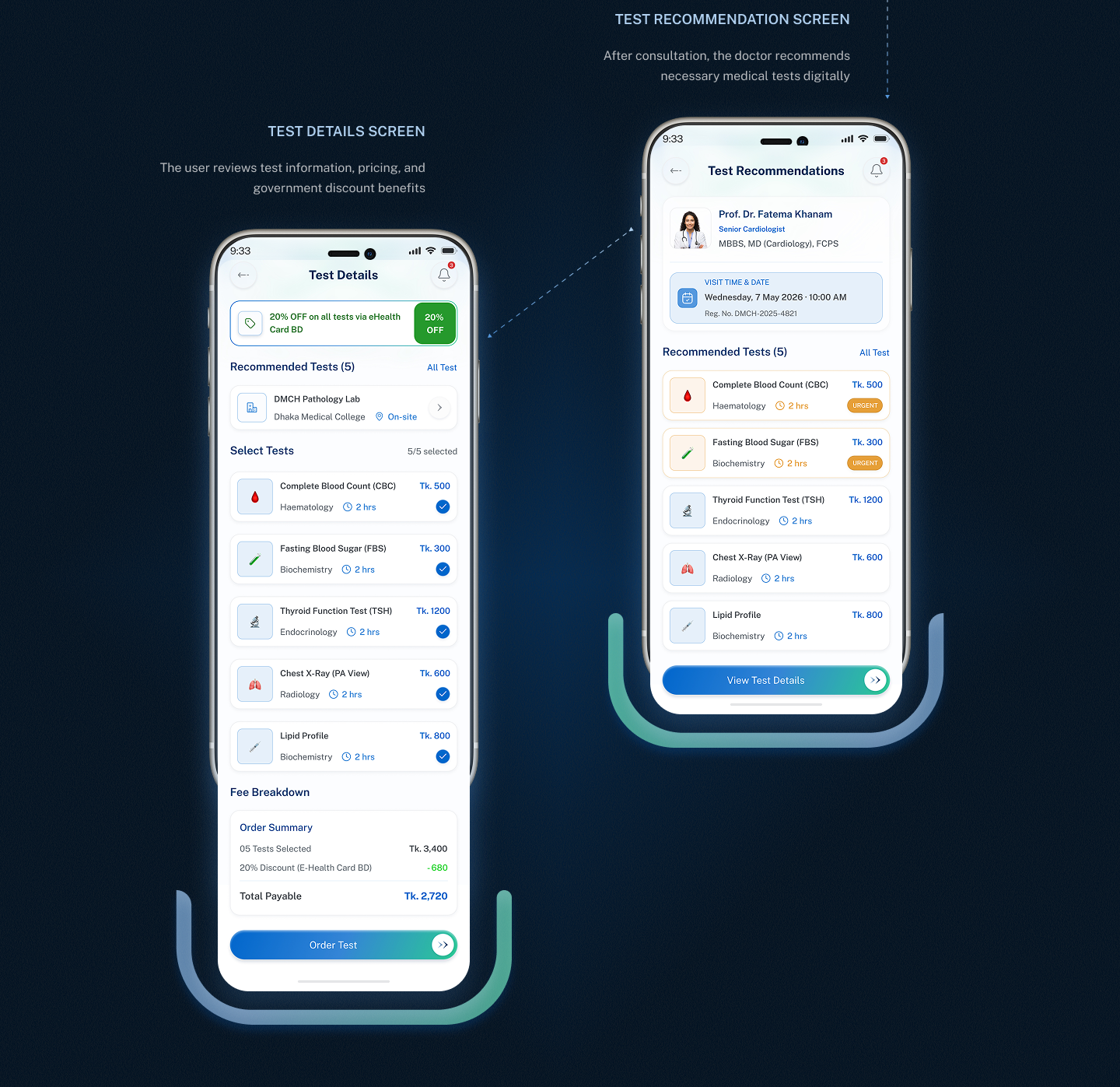
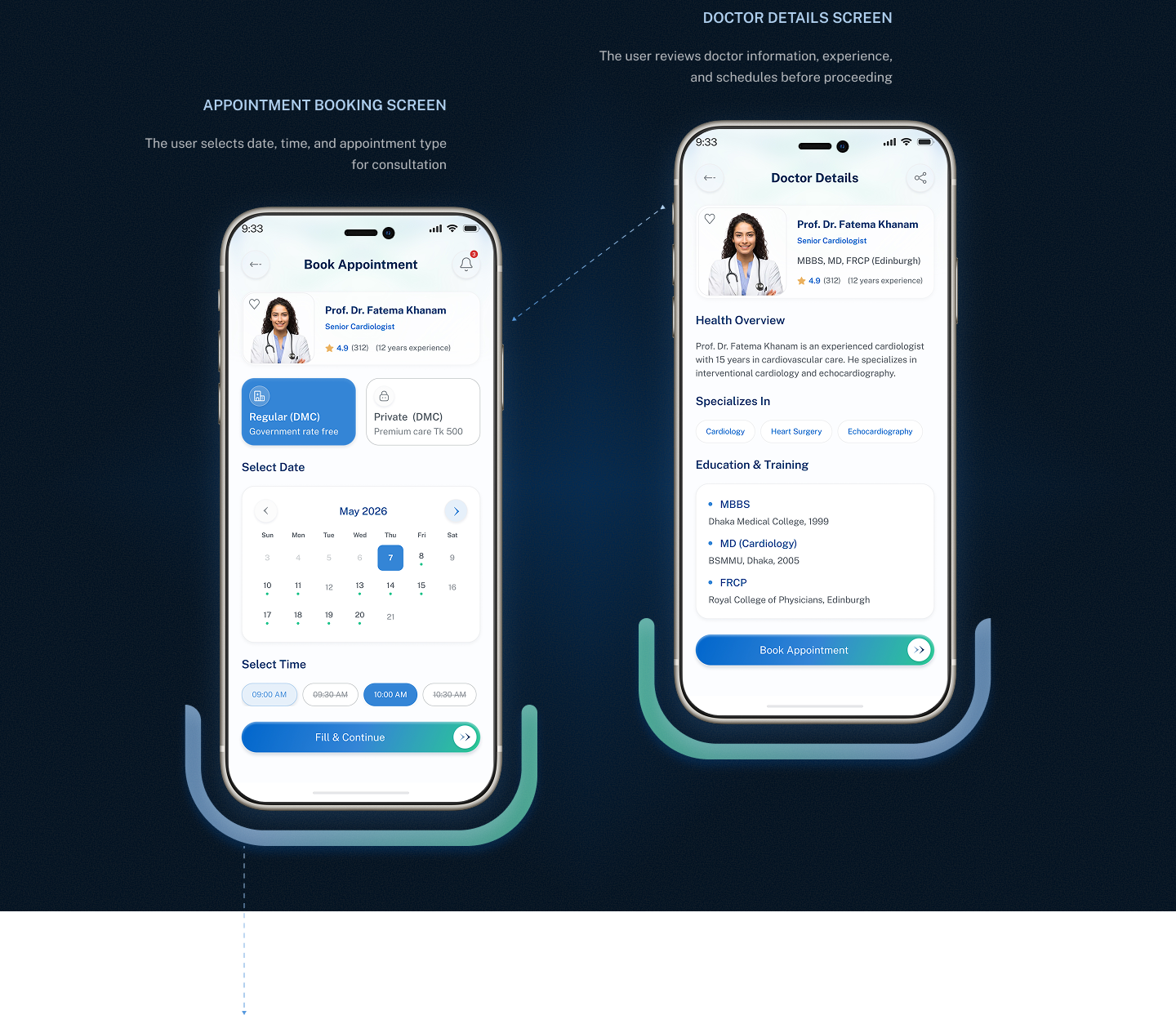
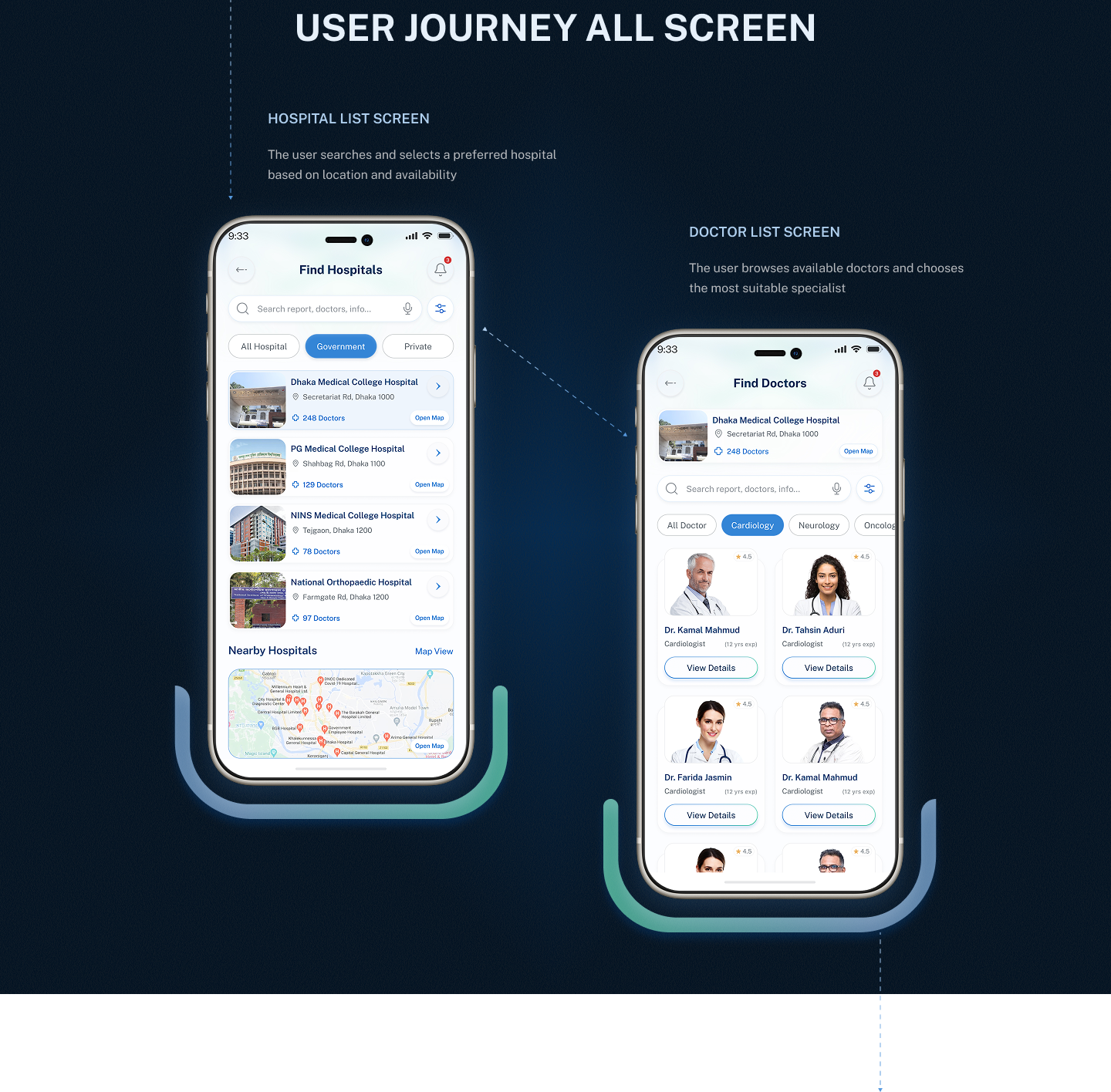
National E-Health Card Bangladesh is a government-focused digital healthcare mobile application designed to centralise citizens’ medical information into one secure platform. The app helps users book doctor appointments, access prescriptions, store test reports, manage vaccination records, and use emergency healthcare services digitally.
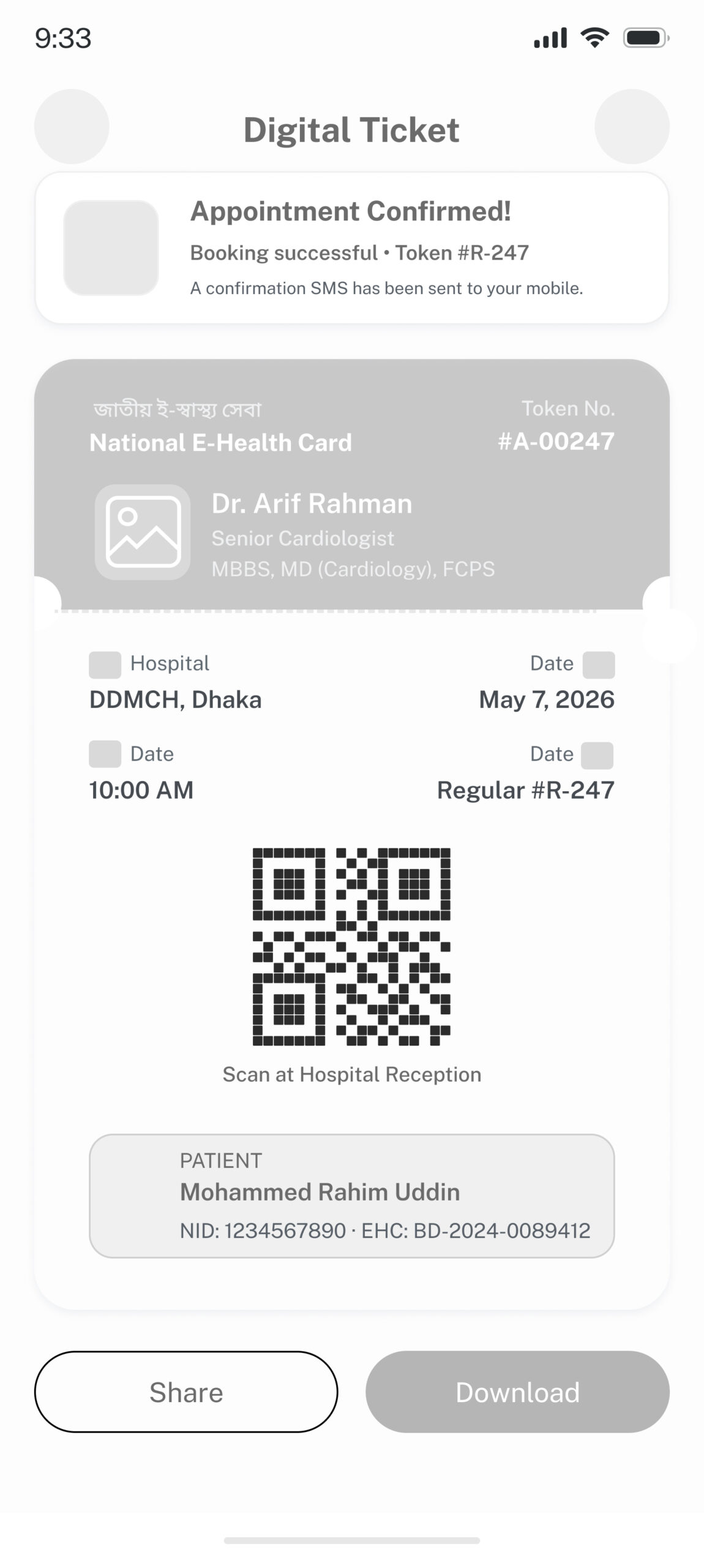
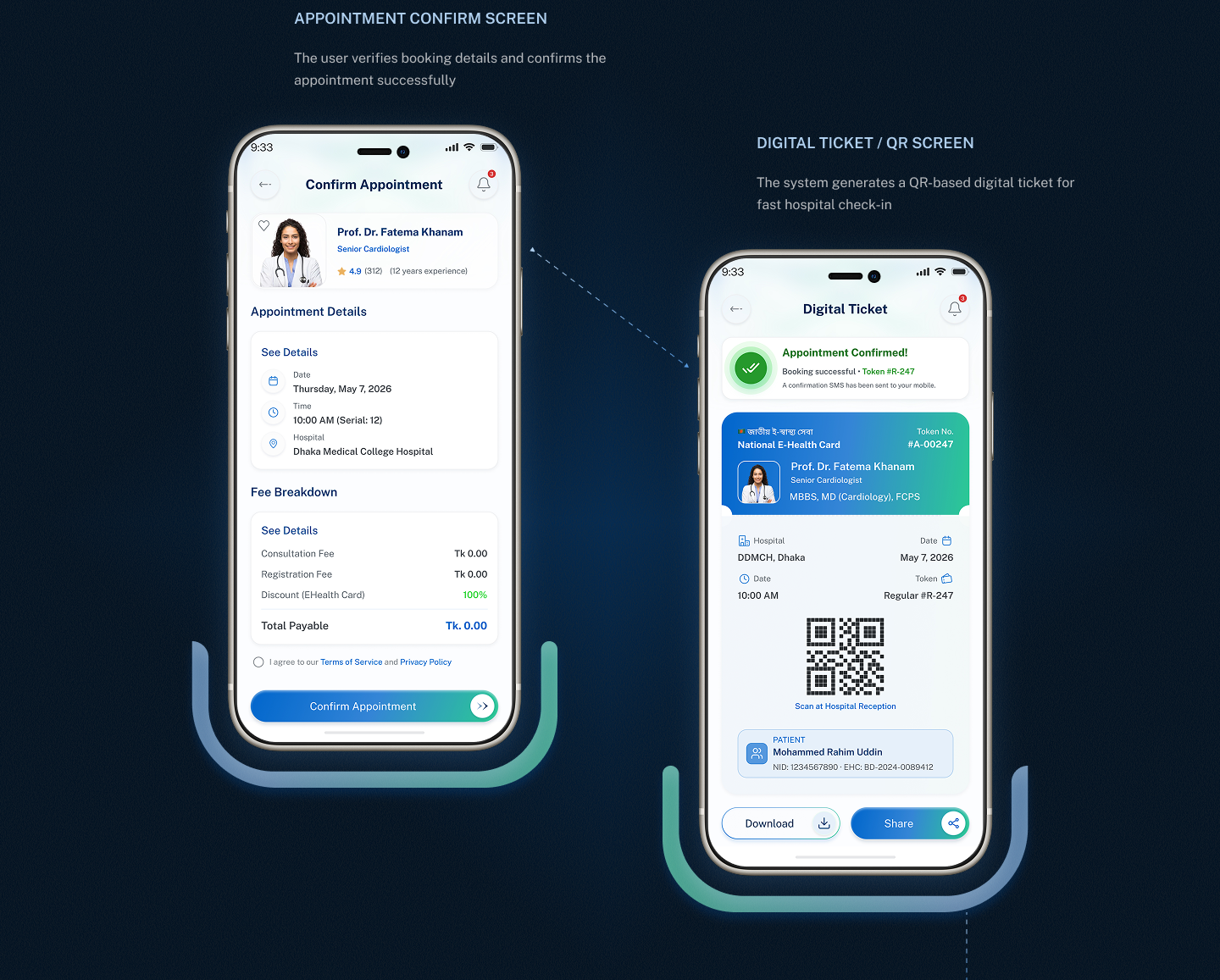
A QR-based digital health card enables faster hospital check-ins and secure patient identification. Cloud-based medical record storage reduces paper dependency and prevents loss of important health documents. The platform also supports family healthcare management, emergency support, and quick access to medical information anytime.
This project combines modern UI/UX principles with Bangladesh’s healthcare challenges to create a simple, accessible, and human-centred healthcare solution.
My Role
As part of a team project, I led the UX/UI design — from early research to the final prototype
My Responsibility
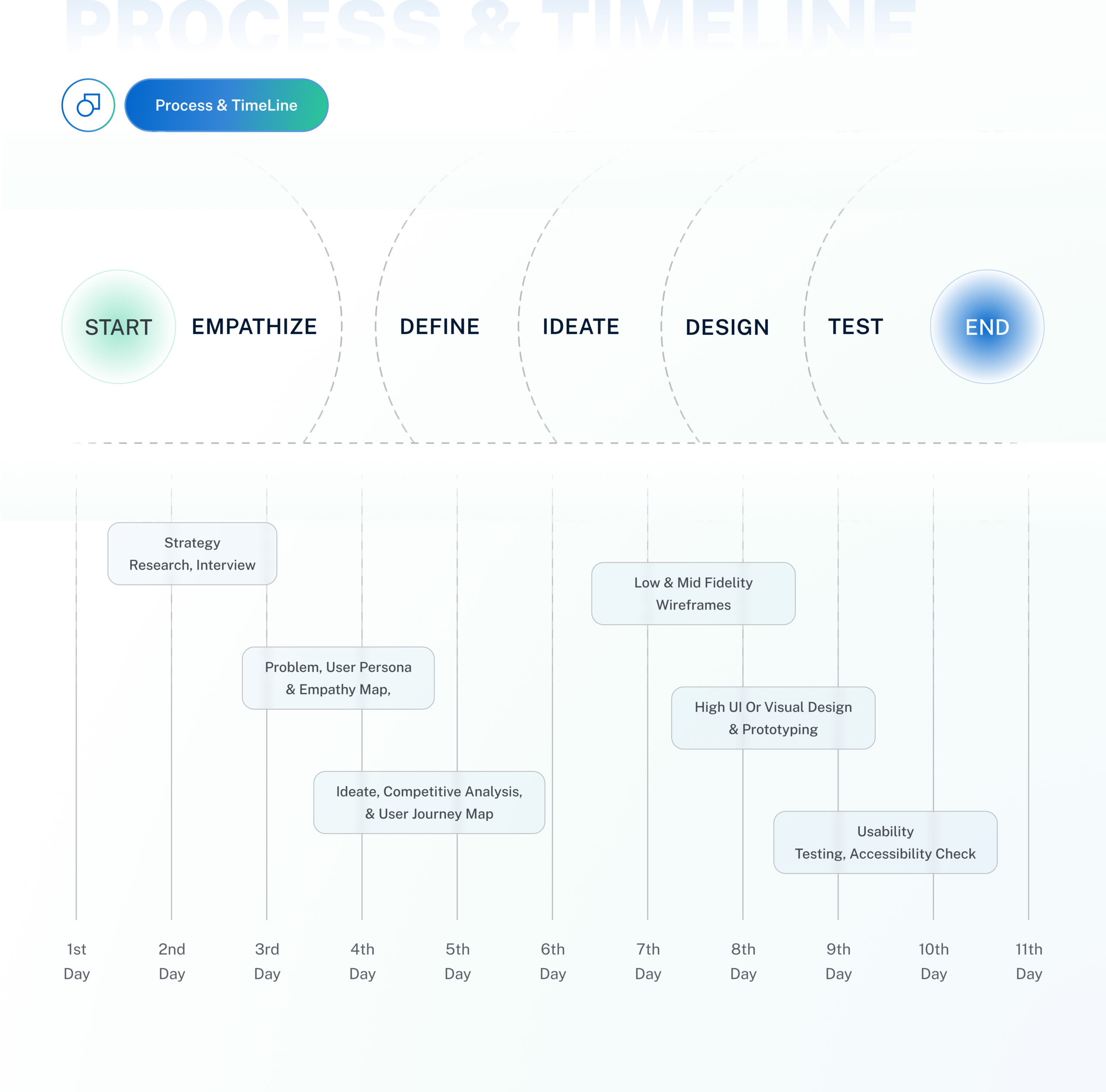
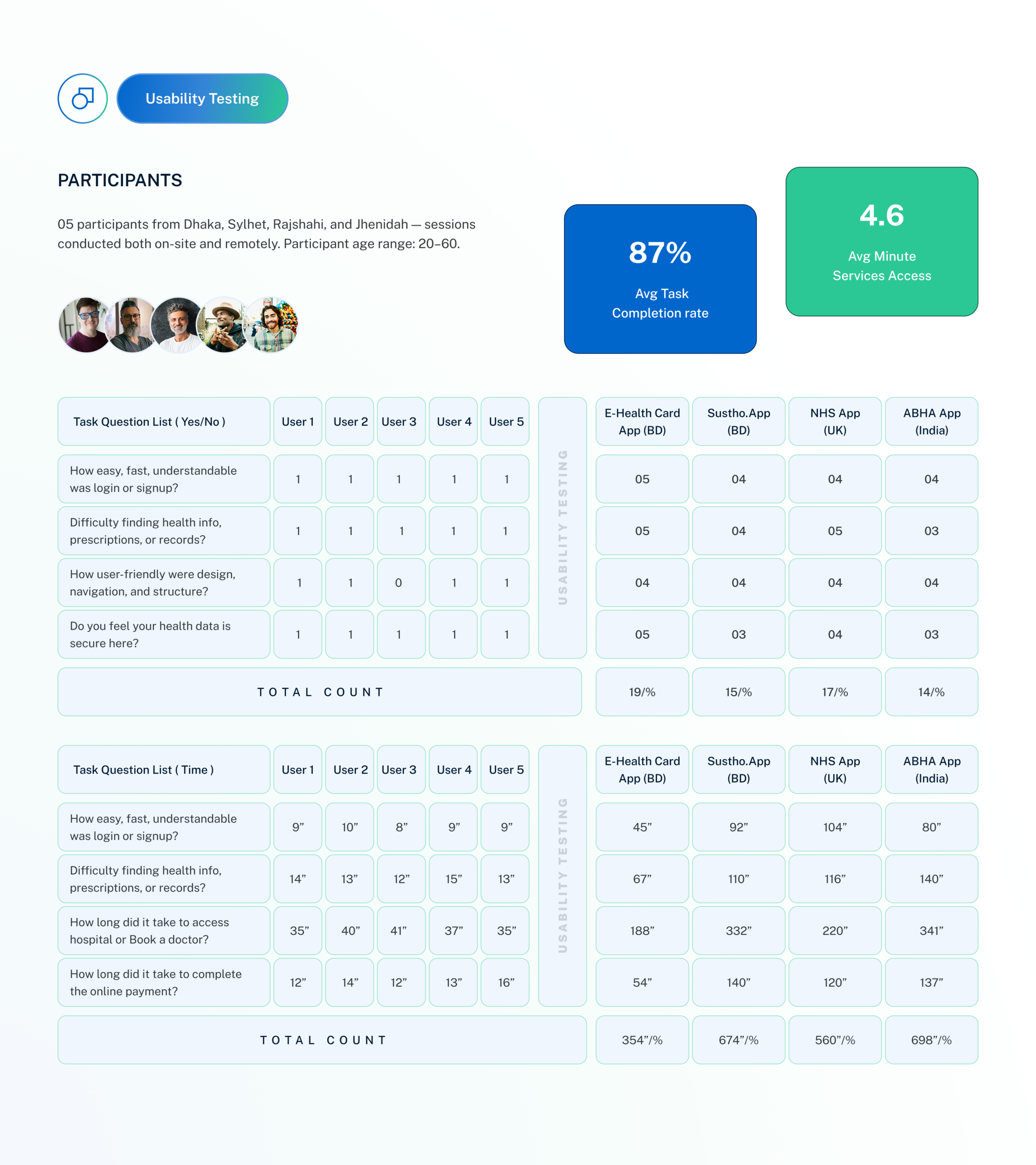
Within the team, I was responsible for conducting user research and building personas, designing the information architecture and wireframes, creating the visual design system, and developing the final interactive prototype. I also worked closely with my teammates on usability testing and incorporated their feedback throughout the iterative design process.
UNDERSTANDING THE USERS
User Research
I looked closely at how users behave to find out what they really need from the product.
Pain Points
I found the exact moments where users feel frustrated or stuck in their daily routine.
Persona
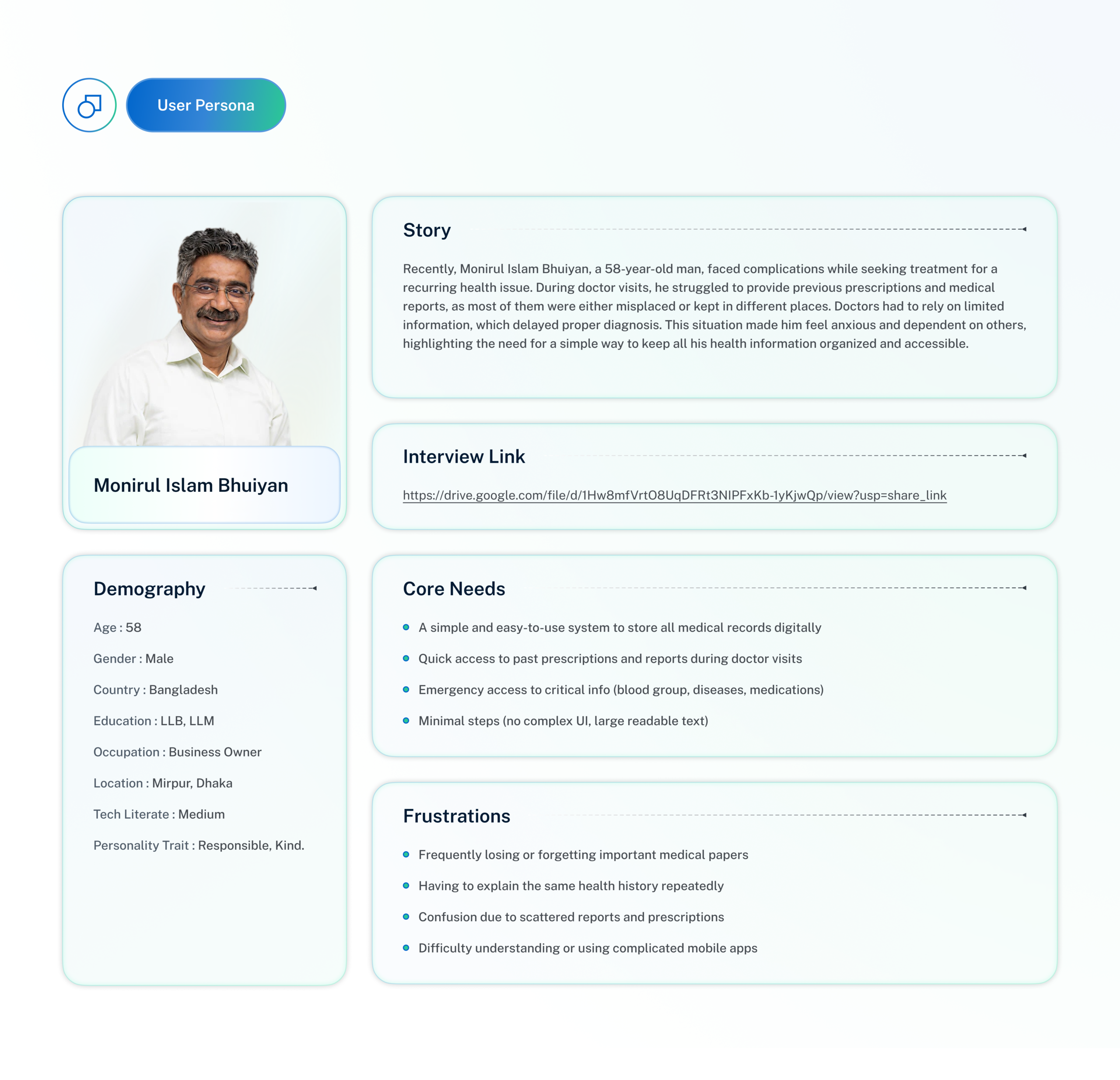
I made a simple user profile so every design choice stayed focused on the right audience.
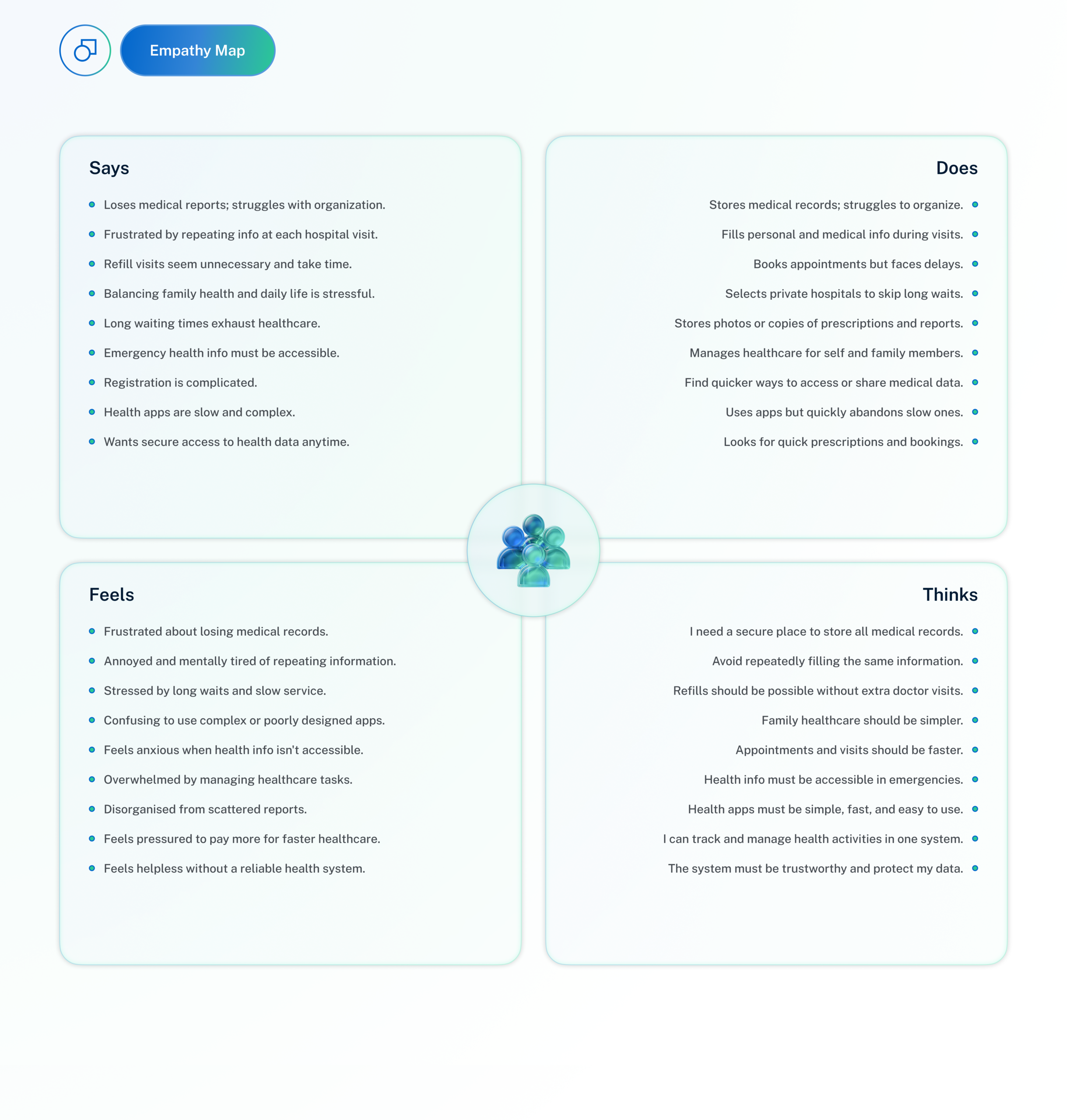
Empathy Map
I mapped out how users feel and think, and what they do, while using the product.
USER RESEARCH
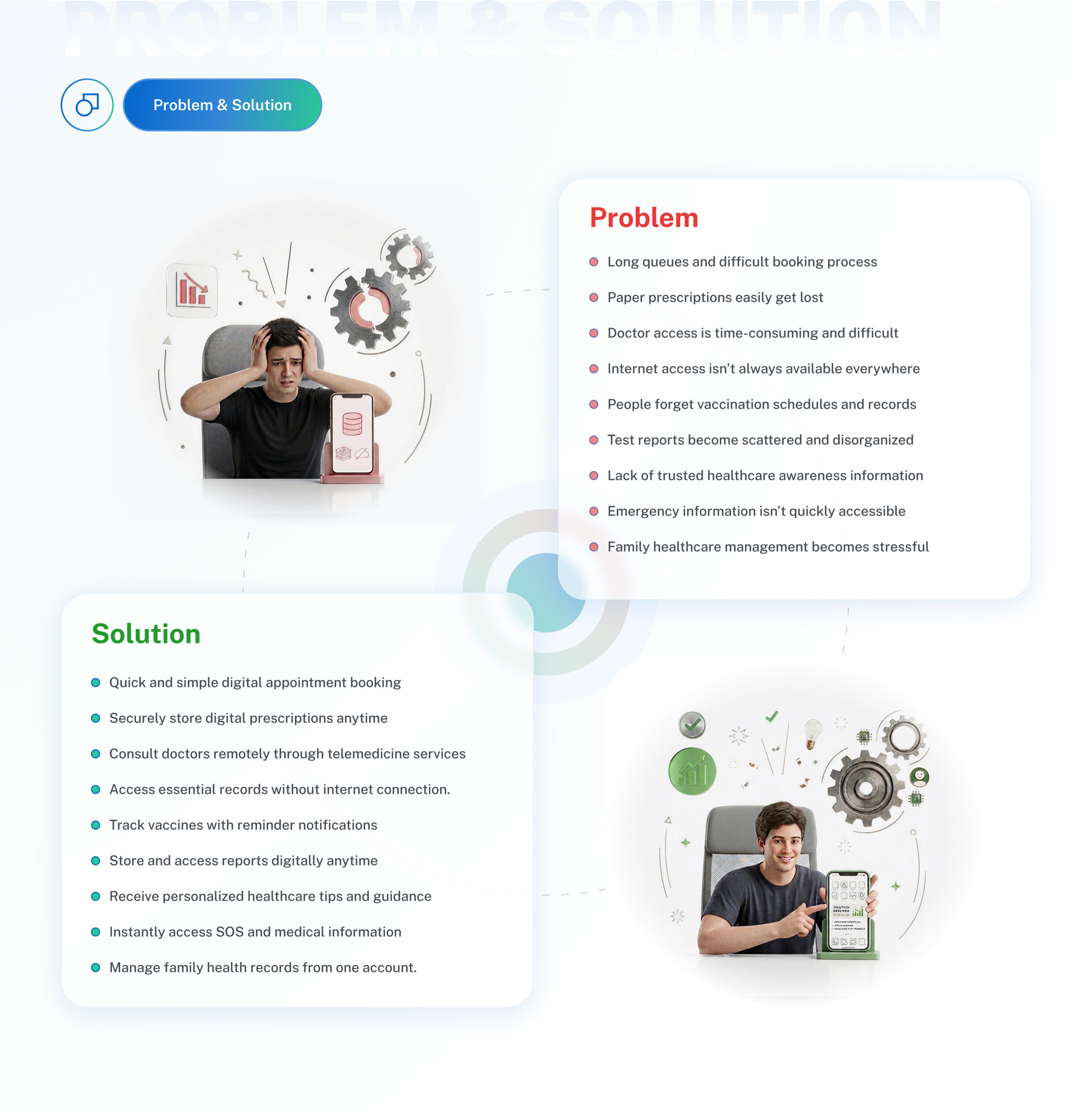
For this project, we started by understanding the real problems people face with healthcare in daily life. We talked to different users, including students, working people, and elderly family members, to learn how they manage doctor visits, prescriptions, and health records. Many users shared that they struggle with long queues, forget vaccination schedules, or lose paper prescriptions easily. We also learned that trust and simplicity are very important, especially for older users who are less familiar with technology. This research helped us understand user needs clearly and guided every design decision we made throughout the project.
PAIN POINTS
1
Long Waiting Times
Patients often spend hours waiting at hospitals just to book an appointment or see a doctor, making healthcare feel time-consuming and frustrating.
2
Lost or Damaged Prescriptions
Paper prescriptions are easy to lose or damage, forcing patients to visit doctors again just to get a new copy.
3
Poor Access During Emergencies
In urgent situations, people struggle to quickly find important medical information like blood group, allergies, or emergency contacts.
4
Disorganized Health Records
Test reports and medical history are often scattered across different papers and devices, making it hard to track a patient’s full health background.
PERSONA
EMPATHY MAP
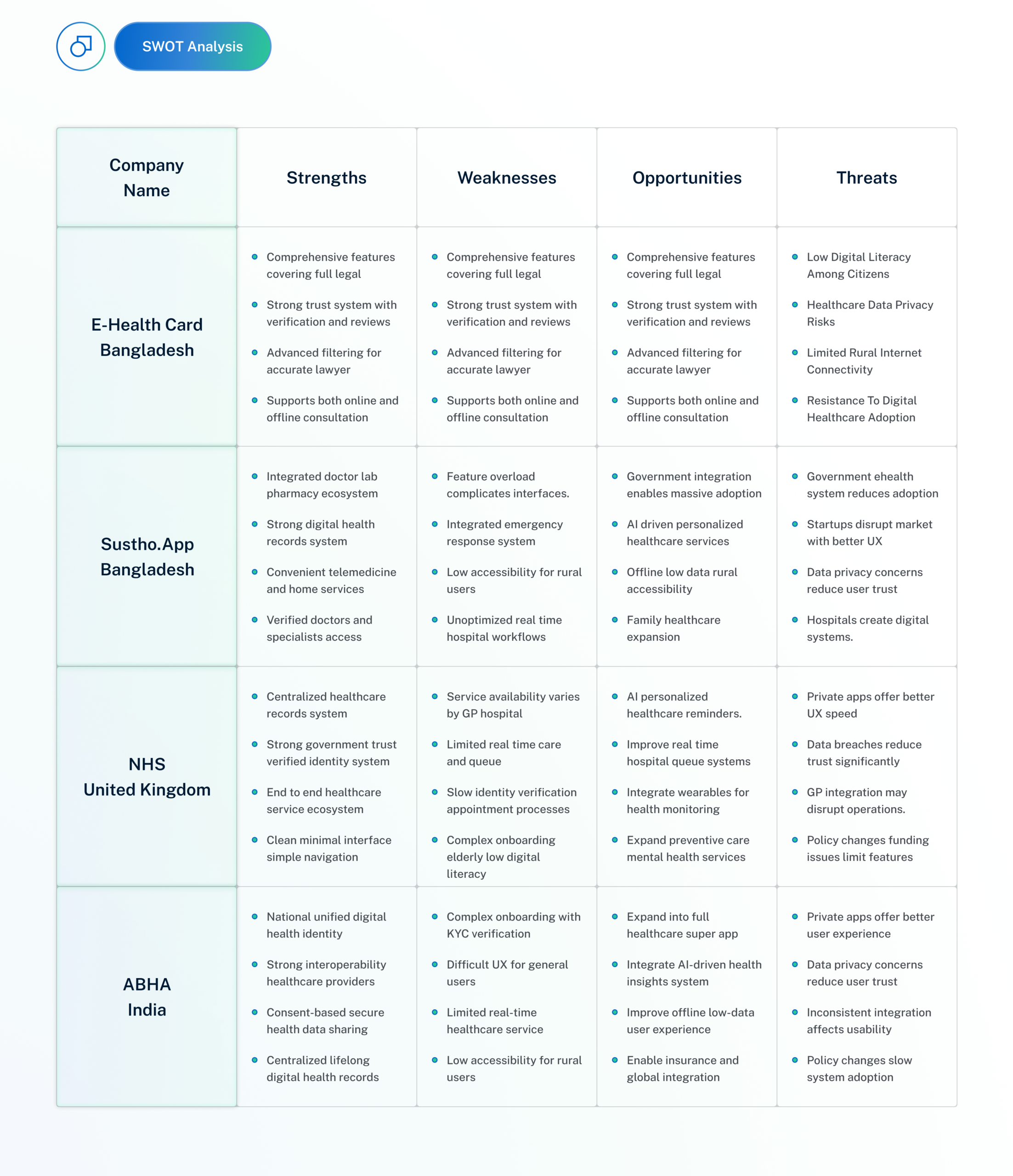
COMPETITOR ANALYSIS
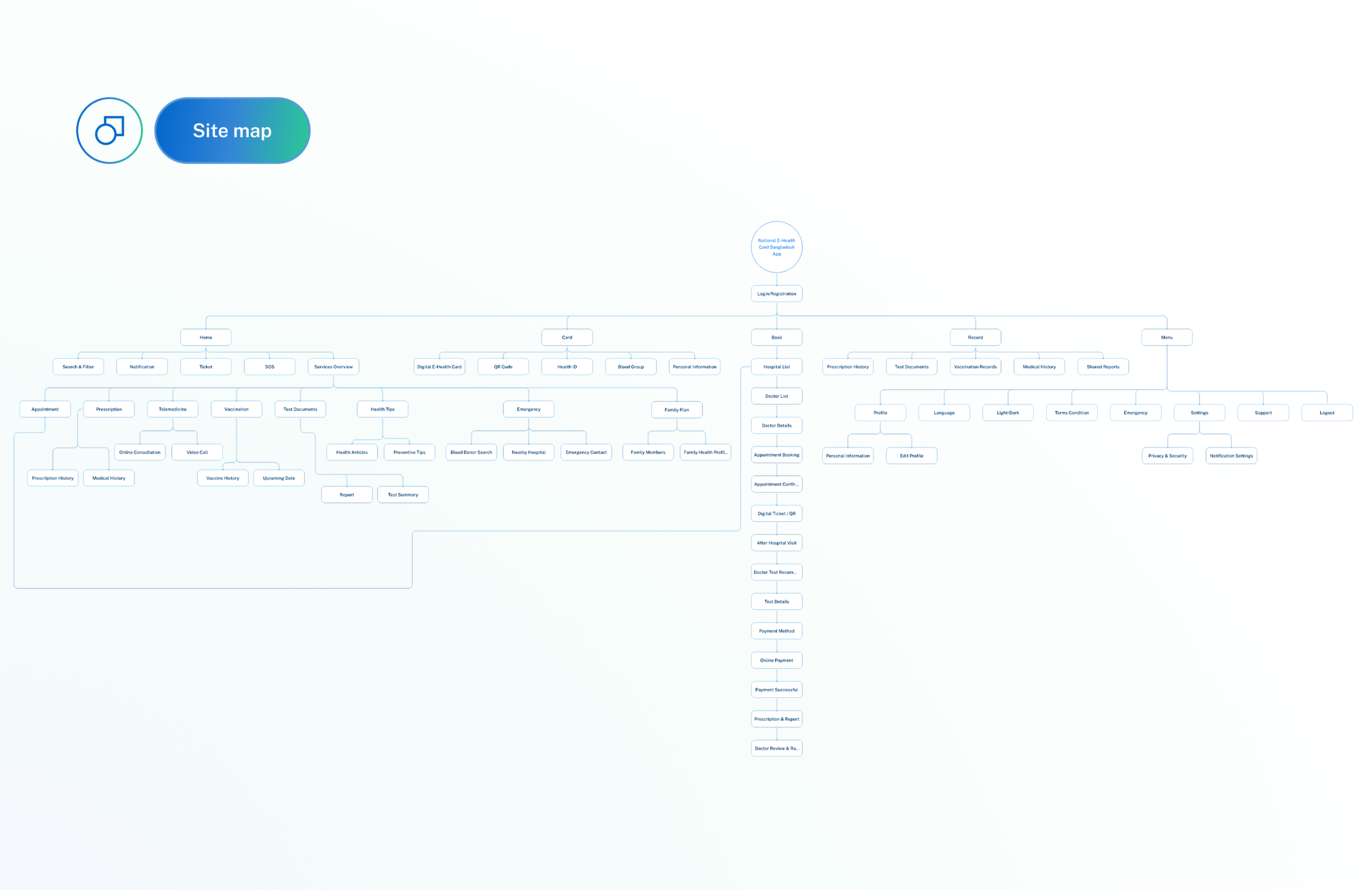
INFORMATION ARCHITECTURE
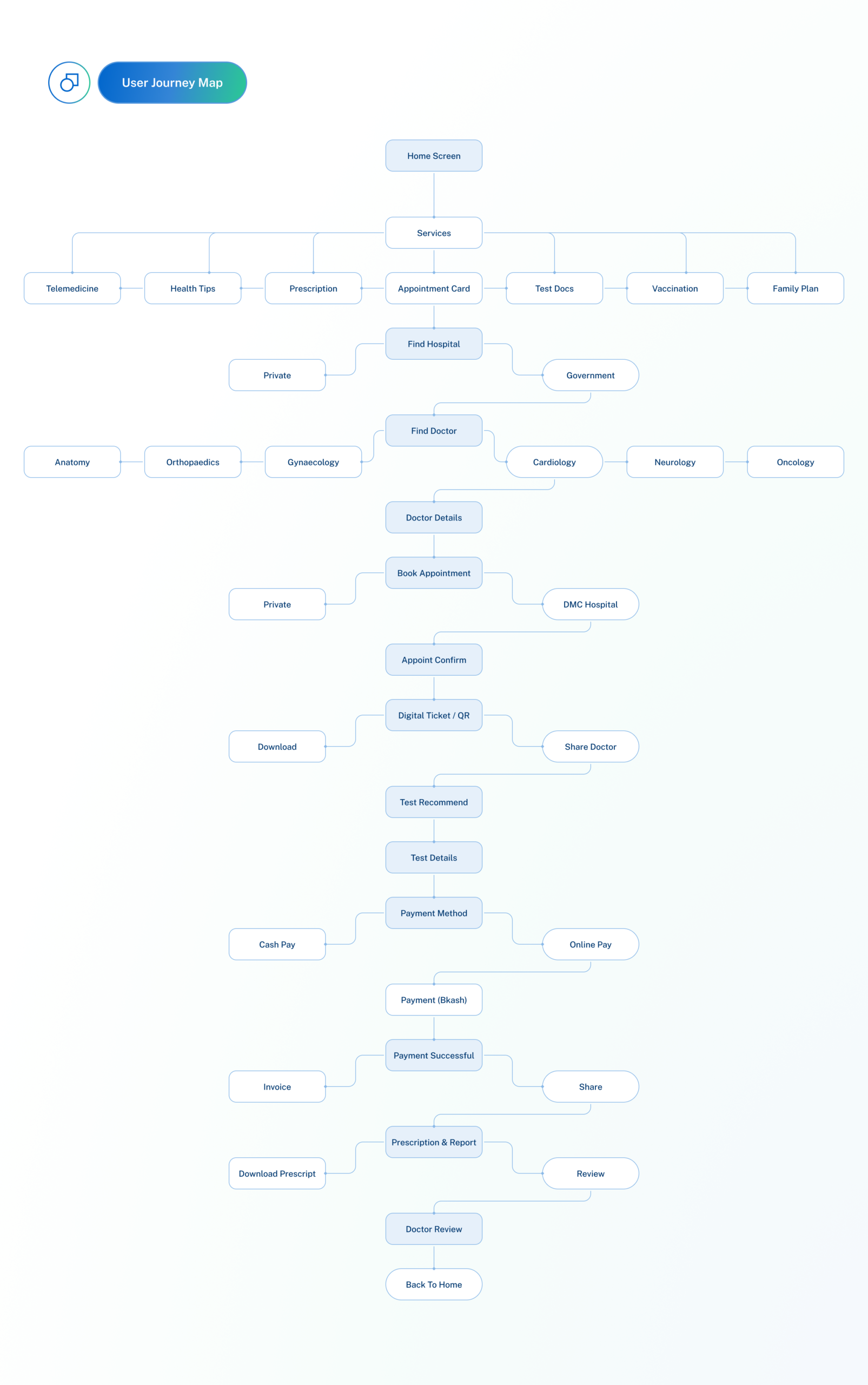
USER FLOW
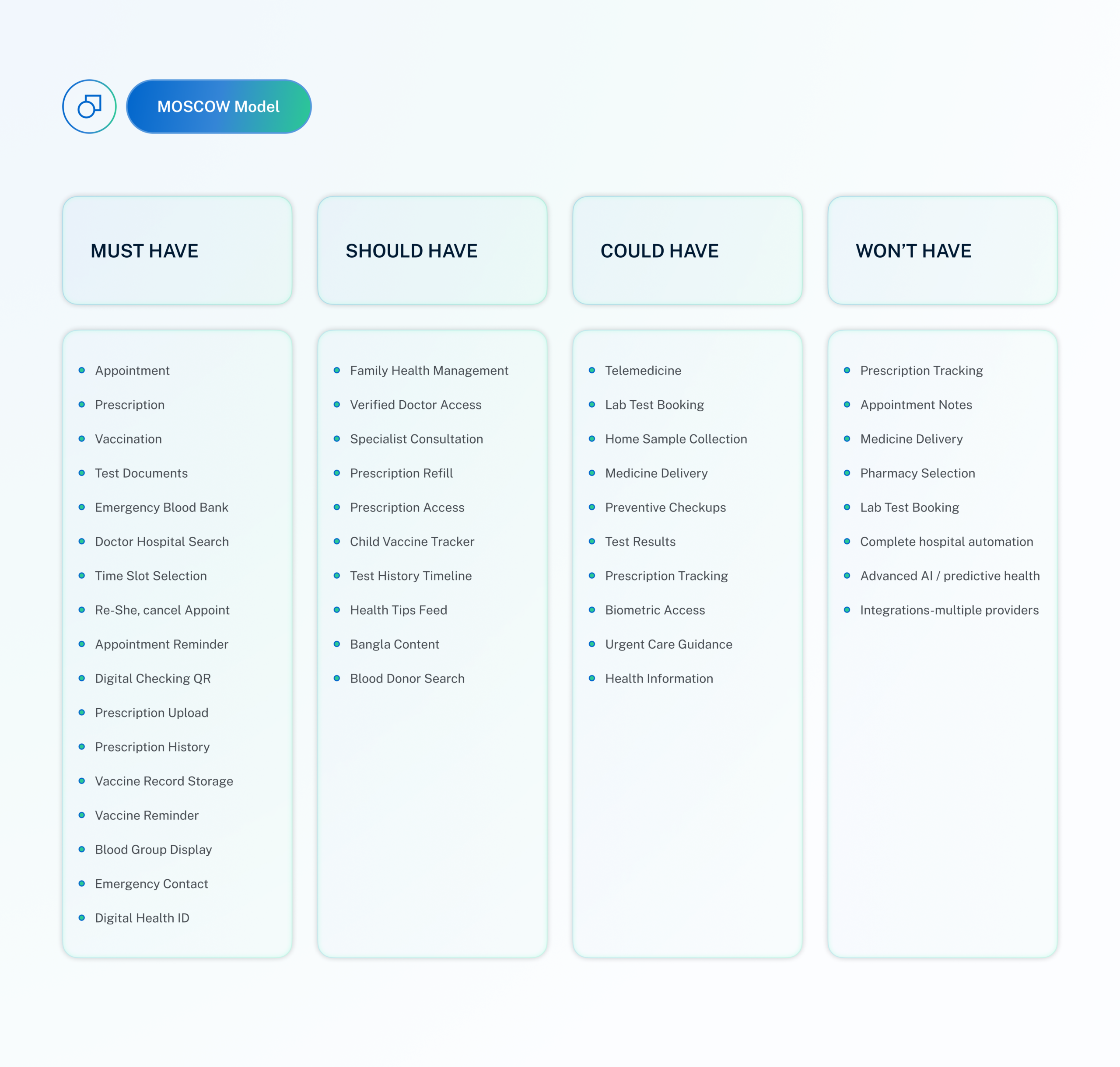
MOSCOW TECHNIQUE
STARTING THE DESIGN
PAPER WIREFRAMES
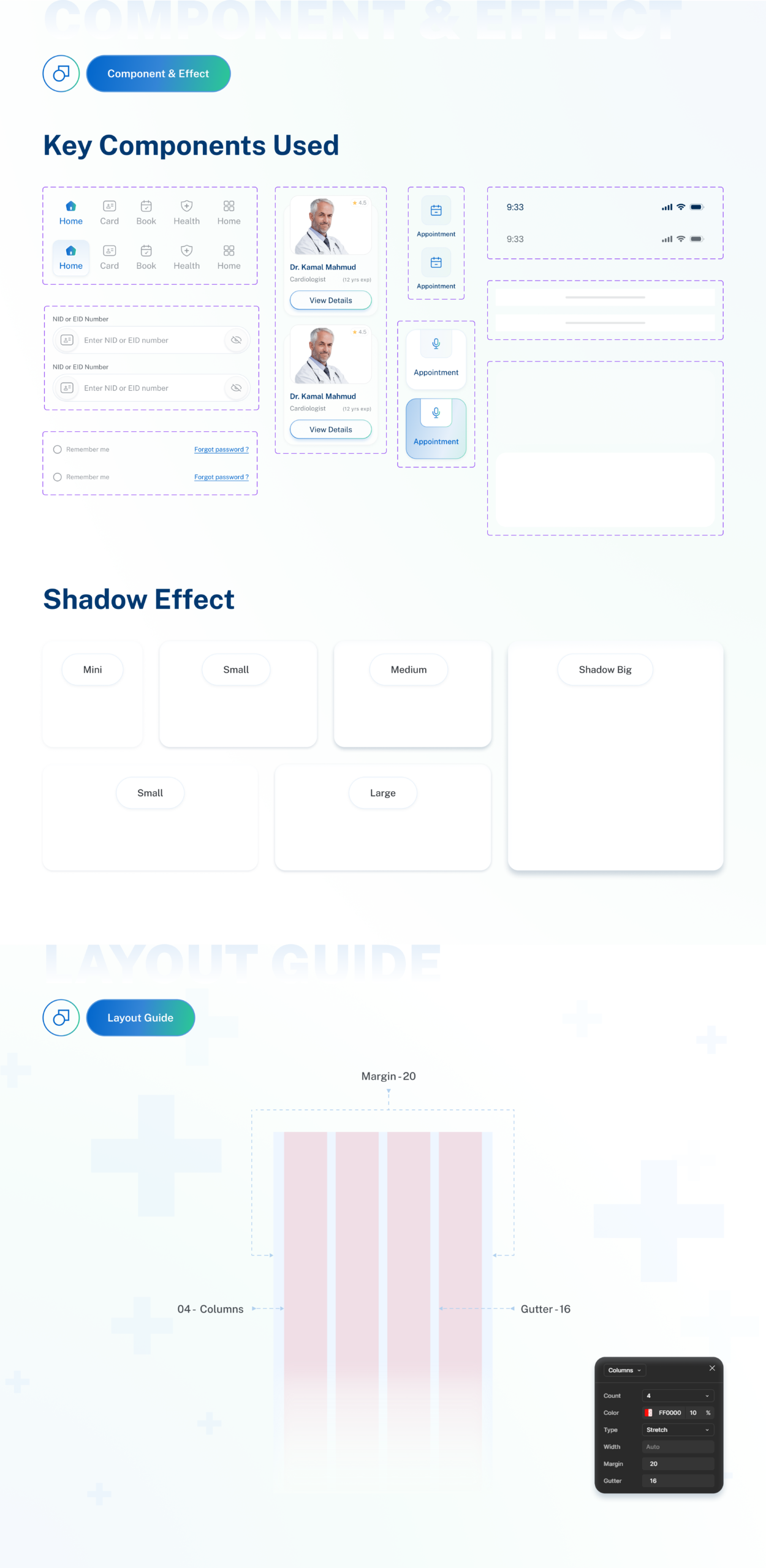
DESIGN SYSTEM
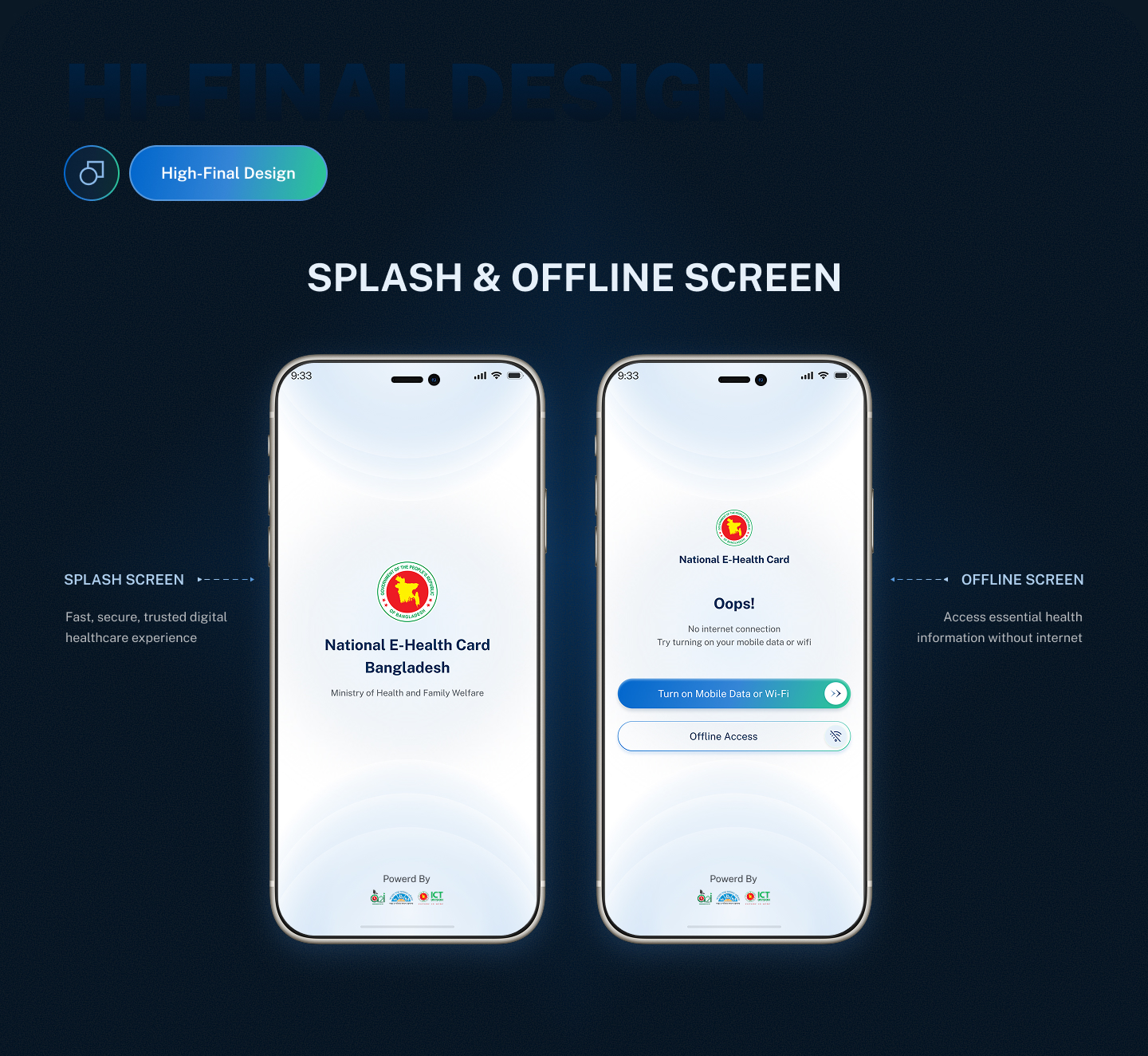
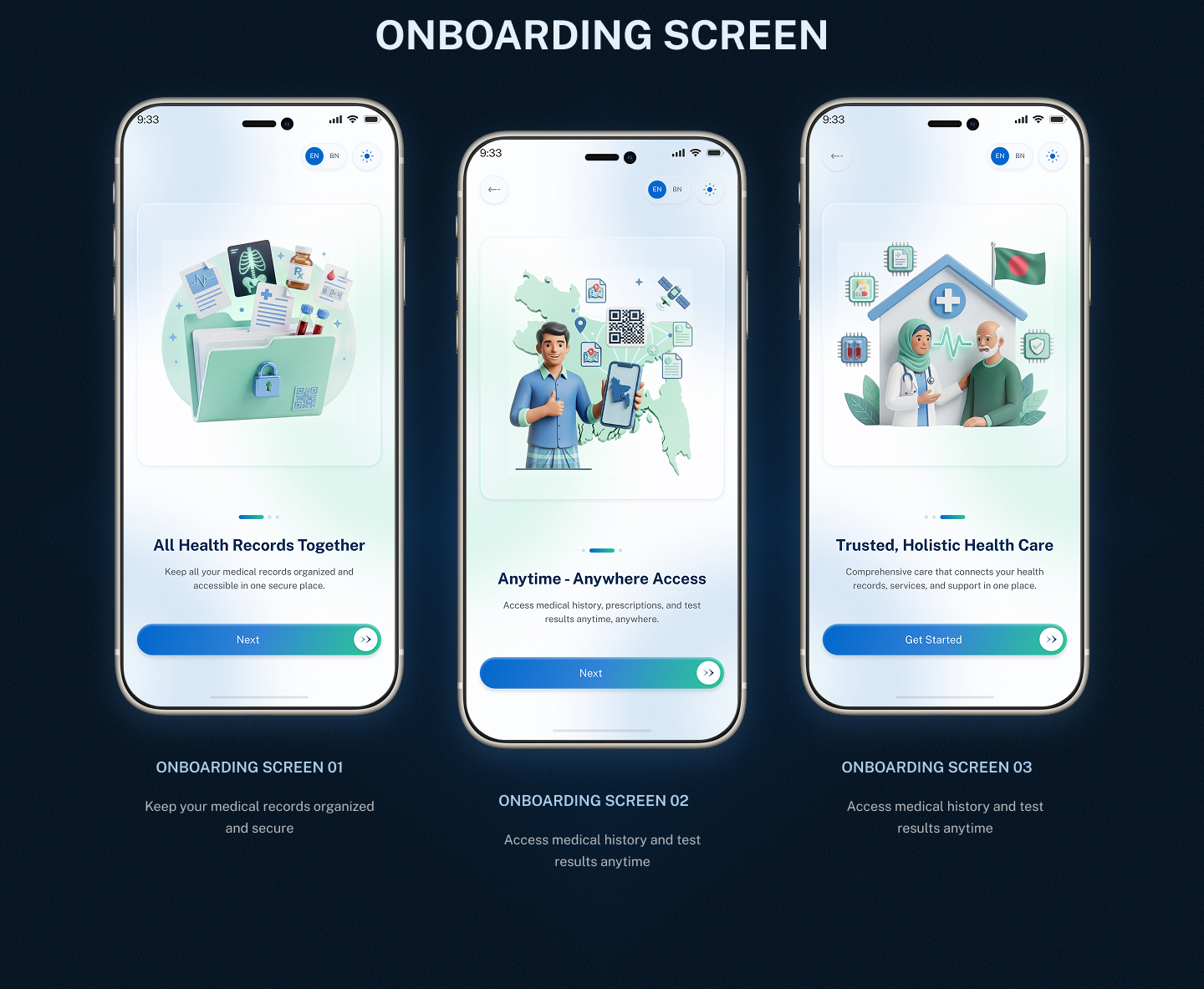
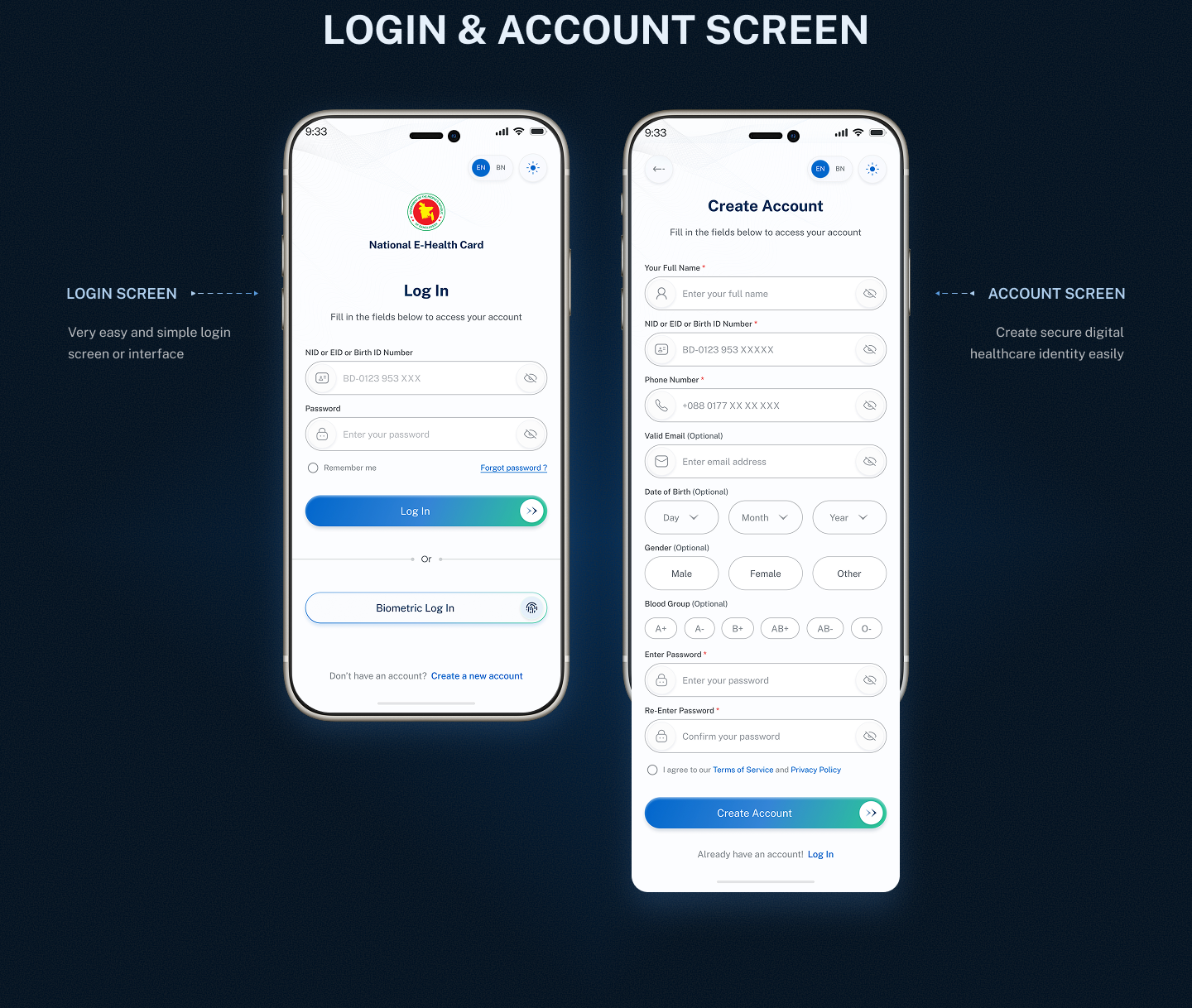
DIGITAL WIREFRAME
USABILITY TESTING
IMPACT & TAKEAWAYS
Impact
This project helped show how a well-designed healthcare app can make daily life easier for users and their families. The research highlighted real problems people face, like long queues, lost prescriptions, and poor access to trusted health information. By designing simple solutions like digital booking, secure prescription storage, and emergency access, the app demonstrates how technology can reduce stress in healthcare management. Working as a team also improved our understanding of user-centered design and how research directly shapes better product decisions.
What I Learned
User research helps create better healthcare solutions, and a simple UI makes apps easier to use for all age groups. Healthcare apps need strong trust and security. QR-based systems can reduce waiting time at hospitals, and clear information helps users understand the app easily. Emergency features must always be fast and easy to access. In Bangladesh, managing family healthcare together is very valuable. Using a consistent design system improves the overall user experience. Finally, AI tools can help speed up UX research and idea generation.
Future Plan
Moving forward, the app could be expanded with more features like AI-based health suggestions, integration with real hospitals and clinics, and multi-language support to reach more users across Bangladesh. Conducting more usability testing with a wider range of users, including elderly users and people in rural areas, would also help improve accessibility further. Future versions could focus on strengthening data security and building partnerships with healthcare providers to make the platform more reliable and widely trusted.
Challenges Overcome
Working in a team came with its own challenges, especially aligning everyone’s ideas into one clear design direction. Conducting user research was difficult at times, since many users were unfamiliar with digital healthcare tools and needed extra explanation. Designing for accessibility across different age groups, especially older users, required several rounds of testing and adjustment. Balancing offline access with essential features was also challenging, since reliable internet isn’t always available. Building trust around sensitive health data meant the design had to feel secure without becoming complicated. Finally, managing time between research, design, and testing within a group project schedule was one of the biggest overall challenges.